
-
by sayum
29 August 2026 3:15 PM







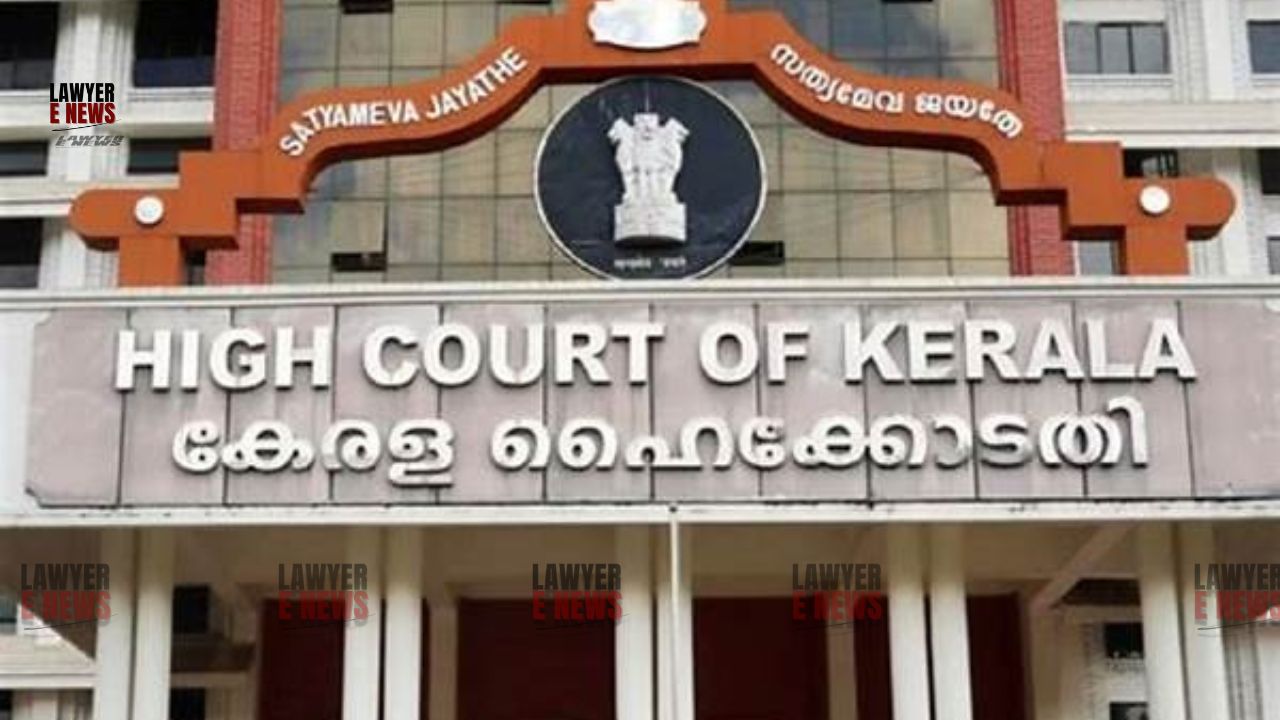
“A private arrangement and a private contract cannot have any backing of law” – Kerala High Court struck down land acquisition proceedings carried out under the Land Acquisition Act, 1894, holding that minority educational institutions cannot be acquired indirectly through private arrangements or compromises with the State.
The Division Bench of Justice A. Muhamed Mustaque and Justice Harisankar V. Menon condemned the government’s method as a “deceitful means adopted by the State to get over the constitutional embargo” under Article 30(1A) of the Constitution.
The State sought to widen access to a bridge at Thripunithura. The land needed belonged to Sree Venkateswara English Medium School, run by Thulu Brahmana Yogam, a recognized linguistic minority community.
Since Article 30(1A) prohibits compulsory acquisition of minority institution property without a specific law ensuring fair compensation, the State could not lawfully proceed. To bypass this hurdle, it entered into a compromise: the school surrendered its land, and the State promised to compensate it by acquiring the lands of adjacent private citizens (the appellants).
The affected landowners challenged the move as a colourable exercise of power. A Single Judge dismissed their plea, but the Division Bench revisited the issue in appeal.
Minority Protection under Article 30(1A)
The Court recalled the mandate of Article 30(1A):
“In making any law providing for the compulsory acquisition of any property of an educational institution established and administered by a minority… the State shall ensure that the amount… would not restrict or abrogate the right guaranteed under that clause.”
Referring to Society of St. Joseph’s College v. Union of India [(2002) 1 SCC 273], the Court reiterated that a specific law is essential for compulsory acquisition of minority institutions’ property. Executive compromises or settlements cannot substitute statutory authority.
“A Private Arrangement Cannot Become Law”
The Bench strongly rejected the State’s compromise with the school:
“This is a private arrangement and a private contract. Such an agreement cannot have any backing of law… It rather reflects a deceitful means adopted by the State to get over the constitutional embargo.”
It clarified that the acquisition was not founded on any public purpose, but solely on the promise made in settlement.
The Court declared: “We hold that the entire land acquisition proceedings have to be set aside, including the notification under Section 4(1) of the 1894 Act.”
However, since possession had already passed to the school, the appellants sought compensation rather than return of land. The Court directed that compensation be calculated under the 2013 Land Acquisition Act, with the State bearing all expenses, and the appellants executing conveyance deeds in favour of the Government or its nominee.
The writ appeal was allowed, and the award in OP(C) No.1802 of 2011 was quashed.
The Kerala High Court’s decision lays down an emphatic principle:
Minority educational institutions cannot be acquired by way of private contracts or compromises with the State. Such arrangements are unconstitutional and have no force of law.
By branding the State’s action a “dubious attempt to wriggle out of the constitutional embargo”, the Court reaffirmed that Article 30(1A) remains an inviolable shield, ensuring that minority institutions cannot be stripped of property except through a valid legislative framework.
Date of Decision: 21 August 2025