-
by sayum
11 August 2026 2:00 PM







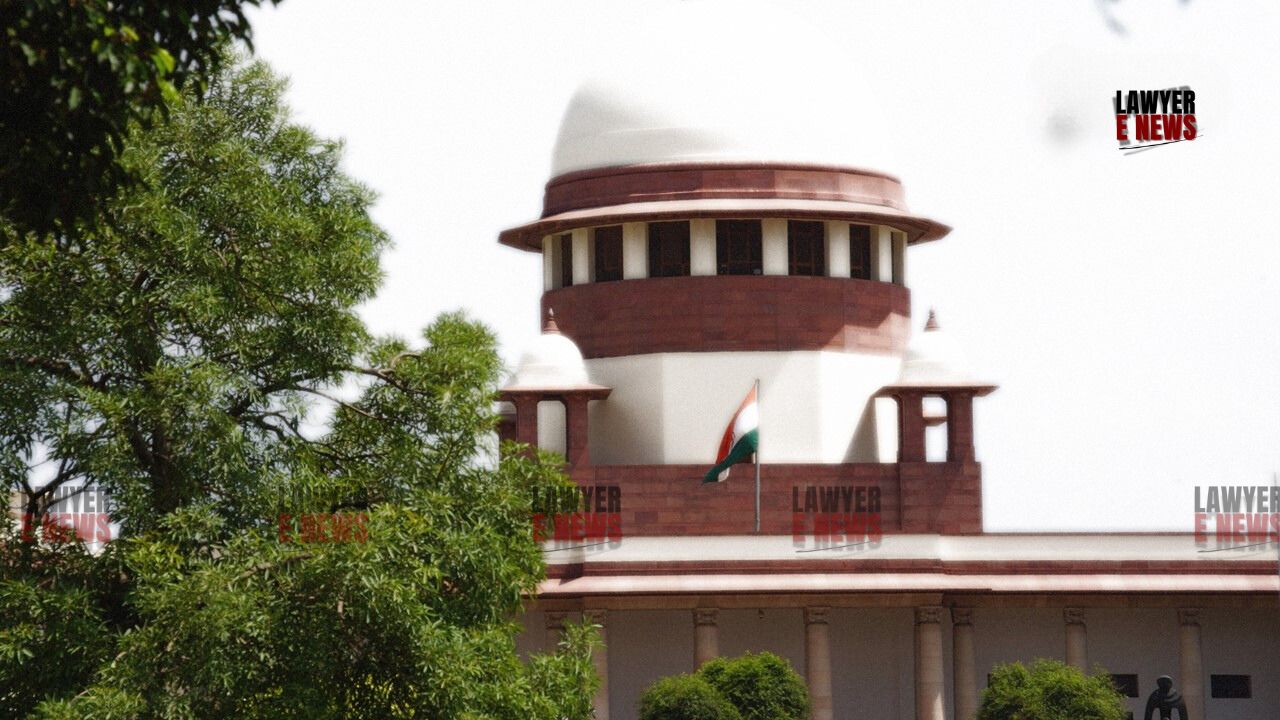
“They May Be a Spent Force for the Military, But Are Young and Capable for Civil Life” — In a progressive ruling Supreme Court held that officers of the Indian Military Nursing Service (IMNS) are entitled to benefits under the ‘ex-servicemen’ category for recruitment under the Punjab Civil Services. The Court upheld a Punjab and Haryana High Court ruling that recognized IMNS officers as part of the “Military” under the Punjab Recruitment of Ex-Servicemen Rules, 1982.
Rejecting the State’s objection and a contrary view of the single judge, the Supreme Court ruled that the exclusion of IMNS from the ex-servicemen quota was both legally untenable and contrary to the constitutional values of fairness and recognition of service.
The case arose from a recruitment advertisement issued on 12.12.2020 by the Punjab Public Service Commission for the post of Extra Assistant Commissioner under the Punjab Civil Services (Executive Branch), which reserved vacancies for “Ex-Servicemen” (ESM) as per the Punjab Rules, 1982.
The appellant, Irwan Kour, an ex-Army officer, was selected and appointed under the ESM category on 09.12.2022. The contesting respondent, a former IMNS officer, was denied candidature under the ESM category by the State on the ground that IMNS personnel were not “ex-servicemen” under the rules.
While the single judge upheld this rejection, the High Court Division Bench reversed it, holding that IMNS personnel are indeed entitled to be considered as “ex-servicemen” under Rule 2(c) of the Punjab Rules. The appellant challenged this decision before the Supreme Court.
“Is the Indian Military Nursing Service (IMNS) a part of the ‘Military’ under Rule 2(c) of the Punjab Rules, 1982?”
The Supreme Court answered emphatically in the affirmative, citing the Military Nursing Service Ordinance, 1943, which states: “There shall be raised and maintained, as part of the armed forces of the Union… an auxiliary force which shall be designated the Military Nursing Services (India).”
It noted that IMNS officers hold commissioned ranks, serve alongside the regular military under the Army Act, and are governed by military law.
The Court declared: “From a combined reading of these provisions, it is clear that IMNS has been constituted as a ‘part of the Indian military’ and ‘part of the armed forces of the Union’.”
It also relied on Jasbir Kaur v. Union of India [(2003) 8 SCC 720], which had already recognized IMNS as a “part of the Indian Army”.
“Does the Definition of ‘Ex-Serviceman’ in Rule 2(c) of Punjab Rules Cover IMNS?”
Rule 2(c) of the Punjab Rules defines an “ex-serviceman” as someone who has served in any rank, combatant or non-combatant, in the Naval, Military, or Air Forces and has retired or been released under specified circumstances, including on completion of service with gratuity.
The Court observed:“Respondent No. 4 squarely falls within this definition… she served as a Short Service Commissioned Officer in the IMNS and was released with gratuity after completion of her service term.”
It further emphasized: “We see no reason to exclude IMNS personnel from the category of ‘ex-servicemen’… Rule 2(c) specifically includes ‘Military’, and IMNS is unequivocally a part of the Military.”
“State Cannot Use Central Government Clarifications to Override Its Own Recruitment Rules”
The State had relied on clarifications issued by the Kendriya Sainik Board (KSB) in 2019 and 2021 to argue that IMNS officers were excluded from the ESM category. The Court rejected this outright: “Such clarifications have no bearing on the Punjab Rules, 1982, which are framed under Article 309 of the Constitution… The KSB’s role is advisory and policy-based; it cannot override State legislation.”
“Military Personnel May Be Spent Force for Defence, But Are Still a Young and Capable Force for the Civil State”
In a poignant reflection on the purpose behind ex-servicemen reservation, the Court observed: “Serving the nation as part of the armed forces requires physical fitness and that has everything to do with age. As they serve and exit the armed forces, they may be spent force for military, but continue to be young and capable for civil life.”
The Court recognized Punjab’s contribution to the Indian military: “Punjab accounts for 7.7% of the Army’s rank and file, though its population share is just 2.3%. Ignoring the resettlement of its veterans could demotivate youth from joining the forces.”
The Court affirmed the High Court’s judgment, declaring that: “Respondent No. 4 qualifies as an ex-serviceman and must be considered under the ‘ex-servicemen’ category. If she is otherwise eligible and found meritorious, she must be given appointment.”
However, the Court protected the appointment of the appellant, noting that she had served since 09.12.2022 without interruption: “It will cause great injustice to her if her appointment is cancelled at this point in time.”
Thus, the Court ordered:
Respondent No. 4 shall be appointed with notional seniority, but
She will not be entitled to back wages, and
The appellant’s appointment will not be disturbed.
The Supreme Court has laid down a landmark precedent affirming that officers of the Military Nursing Service are integral members of the Armed Forces, and cannot be arbitrarily excluded from post-service benefits like ESM reservation. The ruling reinforces the principles of inclusion, constitutional fairness, and purposive interpretation of service rules.
Date of Decision: April 16, 2025