-
by sayum
26 August 2026 10:38 AM







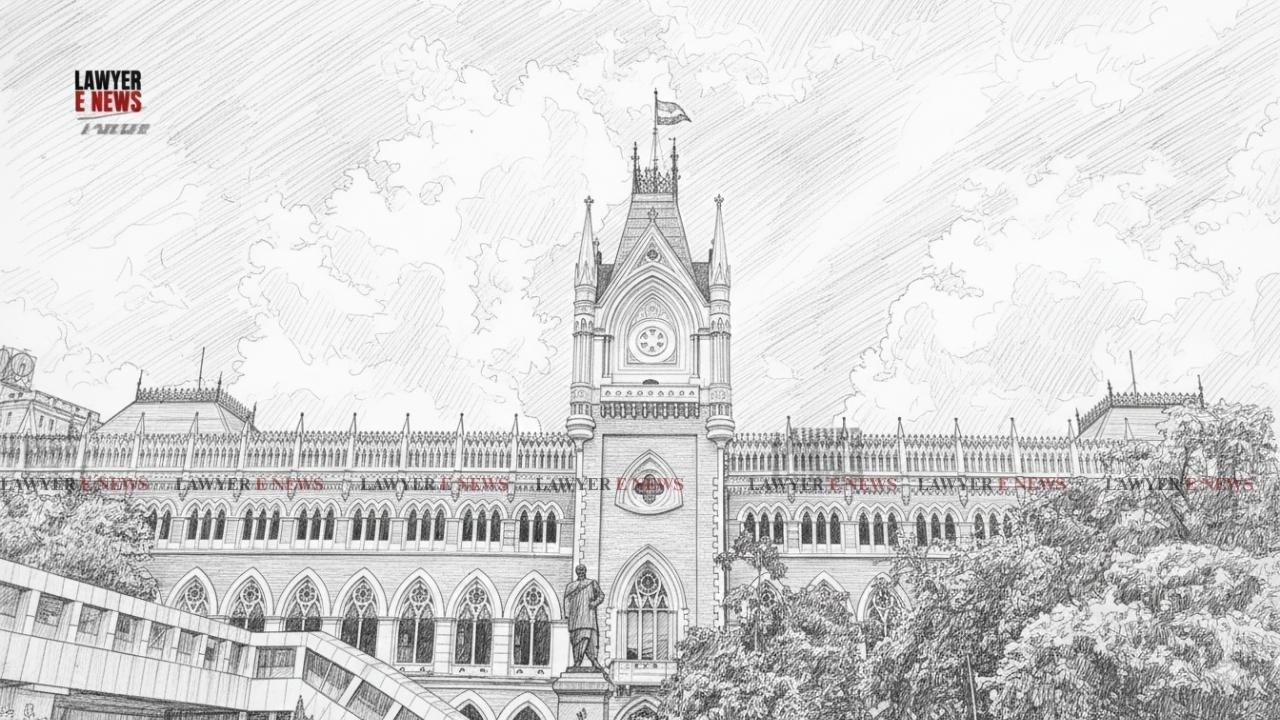
Directors Not Automatically Liable for Cheque Bounce Without Specific Role, In a detailed judgment that reinforces the strict requirements of vicarious liability under cheque bounce laws, the Calcutta High Court set aside proceedings initiated under Section 138 read with Section 141 of the Negotiable Instruments Act, 1881, against four directors of a private company, holding that absence of specific allegations regarding their role in the business renders the complaint unsustainable.
Justice Krishna Rao held that "a director cannot be deemed liable merely because of his or her designation", and the complaint must clearly set out how each accused was in charge of or responsible for the conduct of the company’s business at the relevant time.
The Court also ruled that the proceeding was not maintainable against the company itself as an order of winding up had already been passed, with the Official Liquidator appointed before the complaint was filed.
“Averments Must Explain the Role of Each Accused – Reproducing Legal Phrases is Not Enough”
At the heart of the controversy was a cheque for Rs. 5,00,000 allegedly issued by Sumoson Exports Pvt. Ltd. which was dishonoured with the remark “Other Reasons”. The complainant, Mrs. Shweta Singhania, had initiated proceedings against the company and four directors, alleging that they were responsible for the conduct of its business.
However, the Court found that the complaint did not contain any specific averment as to the role played by the directors in the day-to-day affairs of the company, and instead merely reproduced the standard language of Section 141 NI Act.
Justice Rao emphasised:
"Mere reproduction of statutory provisions or bald assertions that a person is a director cannot be the basis of criminal prosecution. The law requires that the complaint must spell out how the director was in charge of and responsible for the company’s business at the relevant time."
The judgment relied extensively on the landmark decisions of the Supreme Court, including S.M.S. Pharmaceuticals Ltd. v. Neeta Bhalla, Ashutosh Ashok Parasrampuriya v. Gharrkul Industries, and National Small Industries Corp. Ltd. v. Harmeet Singh Paintal, reiterating that vicarious liability under Section 141 is a penal provision and must be strictly construed.
“Cheque Dishonour for 'Other Reasons' Does Not Attract Section 138 Liability”
In a further blow to the sustainability of the complaint, the Court noted that the reason for dishonour of the cheque was “Other Reasons”, which does not constitute an offence under Section 138 NI Act, which is limited to dishonour due to insufficiency of funds or exceeding arrangements.
Justice Rao categorically held:
“Dishonour for any reason other than what is specified under Section 138 is outside the scope of criminal liability under the Act. This alone renders the complaint liable to be quashed.”
“Directors Who Had Already Resigned Cannot Be Prosecuted”
Two of the petitioners, Mrs. Rekha Malhotra and Mrs. Urvashi Korpal, had resigned from the company over a year before the alleged offence, as evidenced by Form-32 filings with the Registrar of Companies.
The Court found no material to show that these individuals were associated with the company at the time the cheque was issued or dishonoured.
“When directors have resigned and the resignation has been duly accepted, continuation of proceedings against them is wholly without basis and is an abuse of process of law,” the Court stated.
“No Proceedings Can Continue Once Company is Under Liquidation”
Another crucial aspect considered by the Court was that the Company Court had already passed a winding-up order against Sumoson Exports Pvt. Ltd. on 30 August 2011, well before the complaint was filed in November 2011.
“Once an Official Liquidator is appointed, no suit or legal proceeding can be initiated or continued against the company. The proceedings against the company and its directors were therefore legally barred,” observed the Court.
Court Criticises Mechanical Issuance of Summons Without Proper Scrutiny by Magistrate
In sharp words, the Court criticised the Magistrate’s mechanical approach in taking cognizance of the complaint without examining the sufficiency of the averments. Justice Rao noted that the complaint failed to satisfy the basic requirements laid down by the Supreme Court for invoking criminal liability under Section 141 NI Act.
“The Learned Magistrate failed to consider that the complaint did not disclose how the petitioners were responsible for the day-to-day business. Summoning individuals without this scrutiny amounts to misuse of criminal process,” the judgment observed.
High Court Allows Petition Under Section 482 CrPC, Quashes Complaint Entirely
Invoking its inherent powers under Section 482 CrPC, the High Court held that allowing the complaint to proceed would be an abuse of process, and accordingly quashed Complaint Case No. C-824 of 2011 pending before the Learned 4th Metropolitan Magistrate, Calcutta.
Justice Rao concluded:
“In such view of the matter, this Court is of the view that if the opposite party is allowed to continue with the proceeding, the same would amount to abuse of process of law.”
The Court also permitted the petitioners to act on the basis of a server copy of the judgment and directed that certified copies be issued on compliance with formalities.
Date of Decision: 22 December 2025