-
by sayum
30 August 2026 4:28 AM







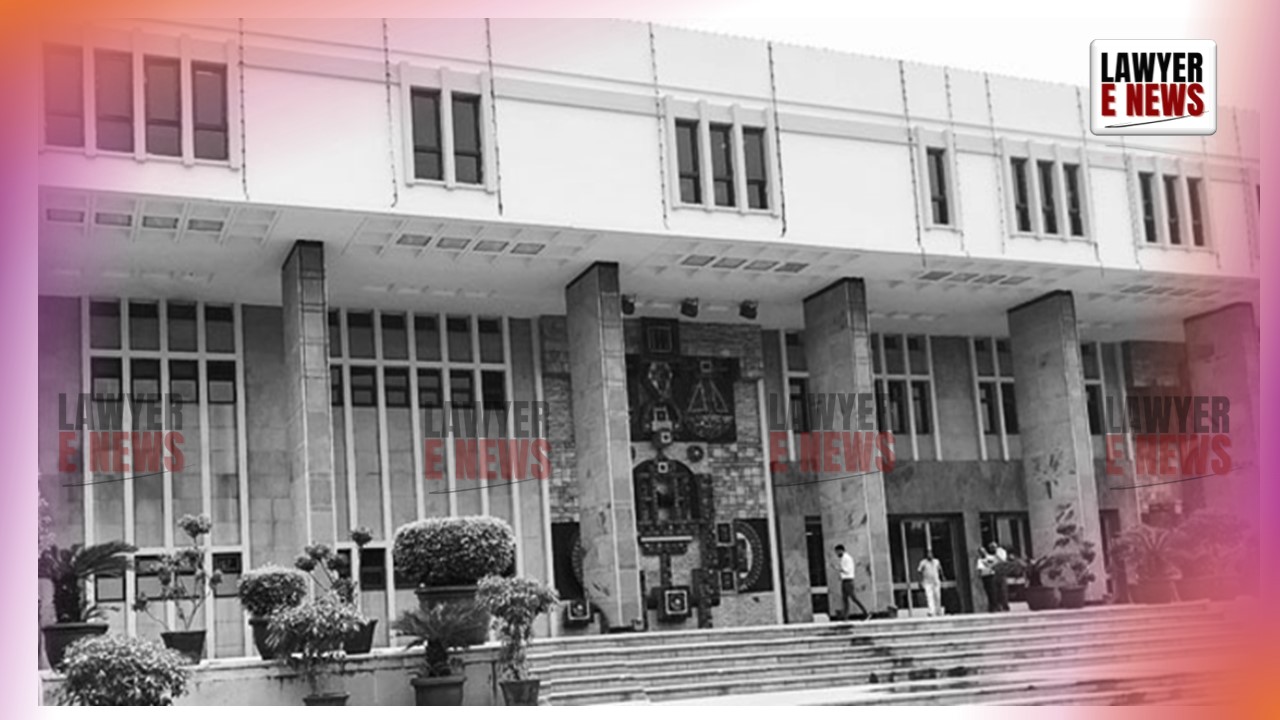
“Similarity Between 'NEWGEN SOFTWARE' and 'NEWGEN IT' Is Striking — Mere Substitution of 'Software' with 'IT' Will Not Avert Confusion” Delhi High Court, comprising Justice Navin Chawla and Justice Harish Vaidyanathan Shankar, delivered a detailed ruling in the matter of Newgen IT Technologies Limited vs. Newgen Software Technologies Limited, affirming an injunction against the appellant’s use of the trademark “NEWGEN IT” and its corporate name “NEWGEN IT TECHNOLOGIES LIMITED”.
The Court observed, “When two entities operate in the same domain of IT services, the substitution of the word ‘Software’ with ‘IT’ is entirely insufficient to distinguish one from the other in the eyes of the average consumer.”
Dismissing the appeals filed under Section 13(1A) of the Commercial Courts Act, 2015 read with Order 43 Rule 1(r) CPC, the Court upheld the District Judge’s orders dated 27.02.2025 and 05.03.2025, stating, “Trademark rights arise from prior use, not from transient partnerships or post-termination name changes designed to leverage reputation unlawfully.”
The Respondent, Newgen Software Technologies Ltd., established in 1992, is a pioneer in the software development business and the registered proprietor of the 'NEWGEN' trademarks since 1999, with continuous use since 1992.
In 2023, the Appellant, originally known as VCARE InfoTech Solutions and Services Pvt. Ltd., entered into a Partnership Agreement with the Respondent. Notably, the agreement contained an explicit clause — Article 14 — which unequivocally acknowledged that all rights to the 'NEWGEN' trademarks belonged solely to the Respondent.
In a move that the Court termed as anything but innocent, the Appellant changed its corporate name to 'NEWGEN IT Technologies Limited' in July 2024, shortly after the partnership soured and was terminated. This prompted the Respondent to initiate legal proceedings for trademark infringement and passing off.
Court’s Observation on Similarity of Marks — “A Consumer of Software Could Easily Be Misled by the Swap of 'Software' With 'IT'”
The Court emphatically noted, “The dominant feature of both marks is the word 'NEWGEN'. The difference between 'Software' and 'IT' is insignificant for the average consumer, who does not possess technical knowledge to discern between the two entities merely on that distinction.”
It further stressed, “It is not a case where consumers will parse business models to differentiate between IT technologies and software services — the risk of confusion is palpable, substantial, and actionable.”
“Trademark Rights Are Rooted in Prior Use — Partnership Does Not Create Ownership”
Rejecting the Appellant’s argument that the prior partnership conferred some implicit rights over the mark, the Court held, “The Appellant’s reliance on the past partnership as a basis to justify its adoption of the name 'NEWGEN IT Technologies' is wholly misplaced. The terms of the Partnership Agreement itself explicitly acknowledged that all trademark rights vested exclusively with the Respondent.”
Referring to Article 14 of the Partnership Agreement, the Court emphasized, “The Appellant’s right to use the 'NEWGEN' mark was strictly conditional and co-terminus with the partnership. Once the agreement was terminated, no rights survived.”
Ex-Parte Injunction Was Fully Justified — “Failure to Serve a Proper Caveat Nullifies Natural Justice Plea”
The Appellant’s argument that the injunction was granted without notice, violating principles of natural justice, was dismissed outright. The Court categorically observed, “The Appellant failed to serve the caveat on the Respondent. Serving a caveat on oneself is a procedural absurdity and cannot be a ground to claim violation of natural justice.”
It further held, “The urgency created by the Appellant’s IPO justified the ex-parte injunction. The remedy of setting aside such an order lies under Order 39 Rule 4 CPC, which was duly availed and rightly rejected.”
Acquiescence Argument Crumbles — “Mere Silence During Partnership Does Not Confer Trademark Rights”
On the plea of acquiescence, the Court invoked the landmark ruling in Power Control Appliances v. Sumeet Machines Pvt. Ltd. (1994) 2 SCC 448, declaring, “Acquiescence is not mere silence. It requires a positive act showing consent. The Appellant’s use of ‘NEWGEN’ was known to the Respondent only within the limited scope of the partnership. The moment the partnership ended, so did any semblance of permission.”
The Court observed, “Adoption of the name 'NEWGEN IT' immediately after termination is not a bonafide act but an opportunistic exploitation of the goodwill built by the Respondent over decades.”
Suppression Argument Fails — “Trademark Law Does Not Penalize for Not Disclosing Irrelevant Third-Party Users”
Rejecting the argument that the Respondent suppressed material facts by not disclosing the existence of other companies with 'NEWGEN' in their names, the Court held, “Trademark protection is territorial, contextual, and specific. The existence of third-party users neither dilutes the rights of a registered proprietor nor constitutes suppression material to this lis.”
In addressing the Appellant’s reliance on a disclaimer in one trademark registration, the Court clarified, “The disclaimer on a label registration does not strip the Respondent of its statutory and common law rights over the dominant element 'NEWGEN', which appears across multiple registrations without disclaimers.”
Court on Appellate Jurisdiction — “Wander Ltd. Doctrine Fully Applies”
Citing Wander Ltd. v. Antox India Pvt. Ltd., 1990 Supp SCC 727, the Court reinforced that appellate interference in interim injunction matters is narrowly limited. It reiterated, “The appellate court does not sit in appeal over the discretion of the trial court unless the discretion is shown to be perverse, arbitrary, or contrary to settled legal principles. None of these conditions are satisfied here.”
The Delhi High Court concluded, “The Appellant’s attempt to appropriate the Respondent’s brand equity under the guise of a post-partnership name change is a textbook case of passing off and trademark infringement.”
The Court finally ordered, “The interim injunction passed by the District Judge is hereby affirmed. The Appellant is restrained from using ‘NEWGEN’, ‘NEWGEN IT’, or ‘NEWGEN IT Technologies Limited’ in any form until the final adjudication of the suit.”
It, however, clarified, “The observations made are prima facie in nature and shall not prejudice the outcome at trial.”
Date of Decision: 12th June 2025