-
by sayum
26 August 2026 10:38 AM







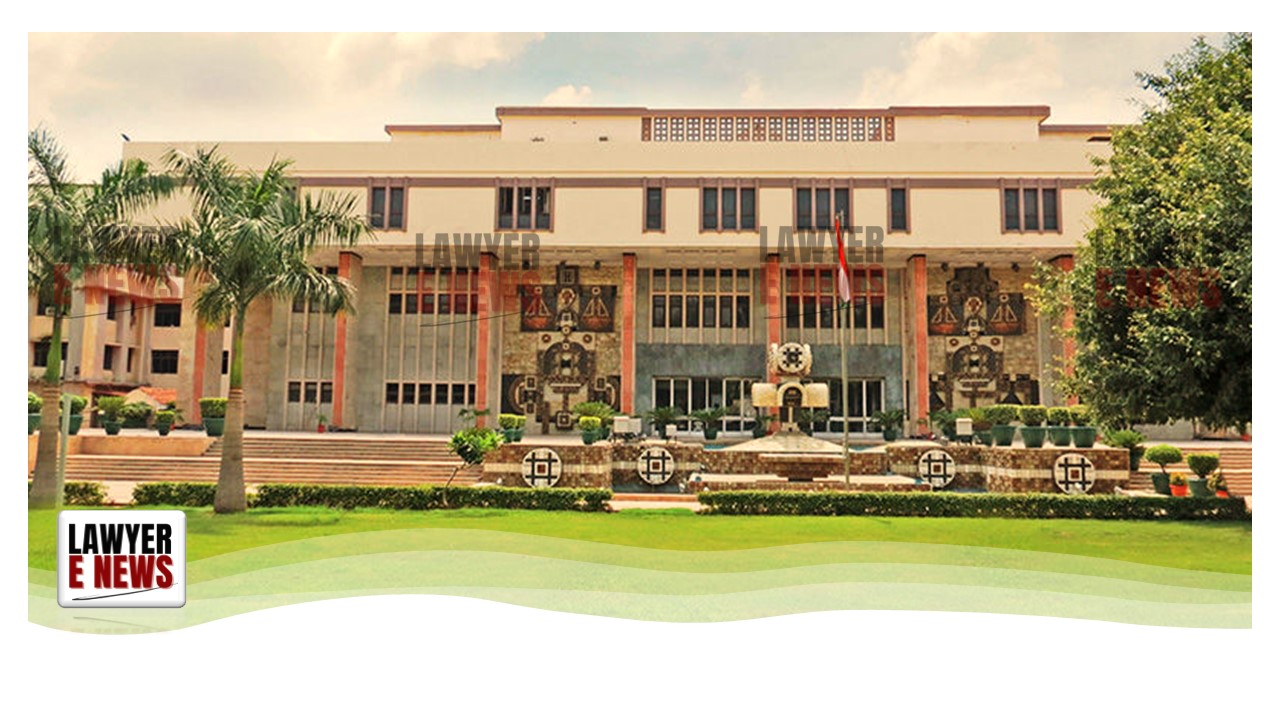
“Inability to repay debt cannot be a reason to deprive a citizen of the fundamental rights under Article 21” – In a landmark ruling Delhi High Court, in a batch of Letters Patent Appeals filed by Bank of Baroda, upheld the decisions of a Single Judge quashing Look Out Circulars (LOCs) issued at the Bank’s request against directors and partners of borrower entities who had been declared wilful defaulters. The Division Bench comprising Chief Justice Devendra Kumar Upadhyaya and Justice Tushar Rao Gedela firmly ruled that mere civil loan defaults without any criminal proceedings do not warrant such coercive restrictions on the fundamental right to travel under Article 21 of the Constitution of India.
The Court held: “Merely, the inability to repay the debt, without there being a criminal case, cannot be a reason to deprive a citizen of this country of the fundamental rights envisaged and guaranteed under Article 21.”
The appeals were dismissed at the admission stage itself, with the Court finding no perversity or legal infirmity in the reasoning adopted by the Single Judge.
No Criminal Case, Only Debt Recovery Proceedings Under SARFAESI Act
The appeals arose from multiple writ petitions where respondents were directors or partners of borrower entities, including M/s Sahil Home Loomtex Pvt. Ltd. and M/s S.M. Global. These companies had availed credit facilities from Bank of Baroda but were subsequently declared Non-Performing Assets (NPAs) in 2019. The Bank had initiated SARFAESI proceedings under Sections 13(2) and 13(4) of the Securitisation and Reconstruction of Financial Assets and Enforcement of Security Interest Act, 2002 and had also filed Original Applications before the Debt Recovery Tribunal (DRT), Chandigarh for recovery of dues.
However, no FIR or criminal prosecution had been initiated against the directors/partners. Despite this, the Bank requested the issuance of Look Out Circulars (LOCs) from the Bureau of Immigration (BoI), citing the respondents’ wilful default status and invoking “detriment to the economic interest of India” as the basis.
The Single Judge had quashed the LOCs, leading to the present appeals by Bank of Baroda.
“Office Memorandum Cannot Override MHA Guidelines”
A pivotal issue before the Court was the validity of the Finance Ministry’s Office Memorandum dated 22.11.2018, which permitted CMDs of Public Sector Banks to seek issuance of LOCs against wilful defaulters, even in the absence of criminal proceedings. The Bank had heavily relied on this OM and on Para 82 of the Delhi High Court’s decision in Prateek Chitkara v. Union of India, 2023 SCC OnLine Del 6104, which discussed the impact of economic frauds on national interest.
However, the Division Bench categorically held that the Ministry of Home Affairs (MHA) is the sole nodal authority empowered to frame and regulate LOC guidelines. The Finance Ministry’s OM, at best, could be treated as advisory, and could not expand the scope of the LOC regime.
The Court observed: “Even if we take the contents of Para 3 of the said OM on its face value, it would, at best, amount to an advisory… We cannot conceive that the same would be of a binding nature.”
Detriment to Economic Interest: Must Show Larger National Impact
Bank of Baroda argued that the cumulative defaults in these cases were “detrimental to the economic interest of India” and hence justified LOCs under the broader interpretation in Prateek Chitkara. But the Court rejected this reasoning, observing that:
“Issuance of LOC cannot be resorted to in each and every case of bank defaults… Circumstances must reveal a higher gravity and a larger impact on the country.”
The Court reiterated that routine business failures, even if resulting in large defaults, cannot justify a coercive action like an LOC unless they pose a real threat to national economic security or demonstrate intent to abscond with criminal elements involved.
Reliance on Wilful Default Status Insufficient Without Criminality
The Bank contended that being declared a wilful defaulter should itself justify issuance of LOCs. The Court disagreed, stating that such declarations, while serious, do not in themselves indicate criminal wrongdoing, and:
“So long as the defaults remain in the realm of civil breach of contract or liability, restrictions such as LOCs cannot be imposed in the absence of criminal proceedings.”
The Bench drew support from its earlier decisions in Apurve Goel v. Bureau of Immigration, W.P.(C) 5674/2023 and reiterated that “foundational facts” must show that a person's travel would adversely affect the sovereignty, integrity, or economic interest of India. In these cases, no such material was shown by the Bank.
No Authority Left with Banks to Request LOCs: Reliance on Viraj Chetan Shah
Perhaps the most decisive blow to the Bank’s case was the Court's reliance on the Bombay High Court’s decision in Viraj Chetan Shah v. Union of India, W.P.(C) 719/2020, where the Court had quashed Clause 8(b)(xv) of the MHA’s 2010 Office Memorandum, which previously empowered CMDs of Public Sector Banks to request LOCs.
The Delhi High Court noted: “The very right, authority and jurisdiction of the Principal Officers of the Public Sector Banks to make a request for issuance of LOC having been divested, the question of relying on the OM issued by the Ministry of Finance would be rendered meaningless.”
Thus, even assuming that wilful default fell within the scope of “detrimental to economic interest,” the Bank lacked statutory authority to even request the LOCs under the current regime.
Right to Travel is Fundamental, Not Subject to Routine Executive Discretion
Rejecting the Bank’s argument that Article 21 right to travel is not absolute, the Court clarified: “Undoubtedly, the right to freedom to travel may not be an unrestricted or unfettered right, however, the restrictions... must pass the test of judicial review.”
In these cases, the Court found no justification that could withstand scrutiny. It affirmed that civil debt alone, in the absence of fraud, criminality, or evidence of absconding, cannot justify curtailing constitutional liberties.
All Appeals Dismissed, Single Judge’s Orders Upheld
In a resounding affirmation of personal liberty and due process, the Division Bench concluded: “We do not find any reason, much less a cogent reason, to interfere with the well-reasoned judgment of the learned Single Judge.”
Accordingly, all Letters Patent Appeals were dismissed at the admission stage. No costs were imposed.
Date of Decision: December 18, 2025