-
by sayum
26 August 2026 12:18 PM








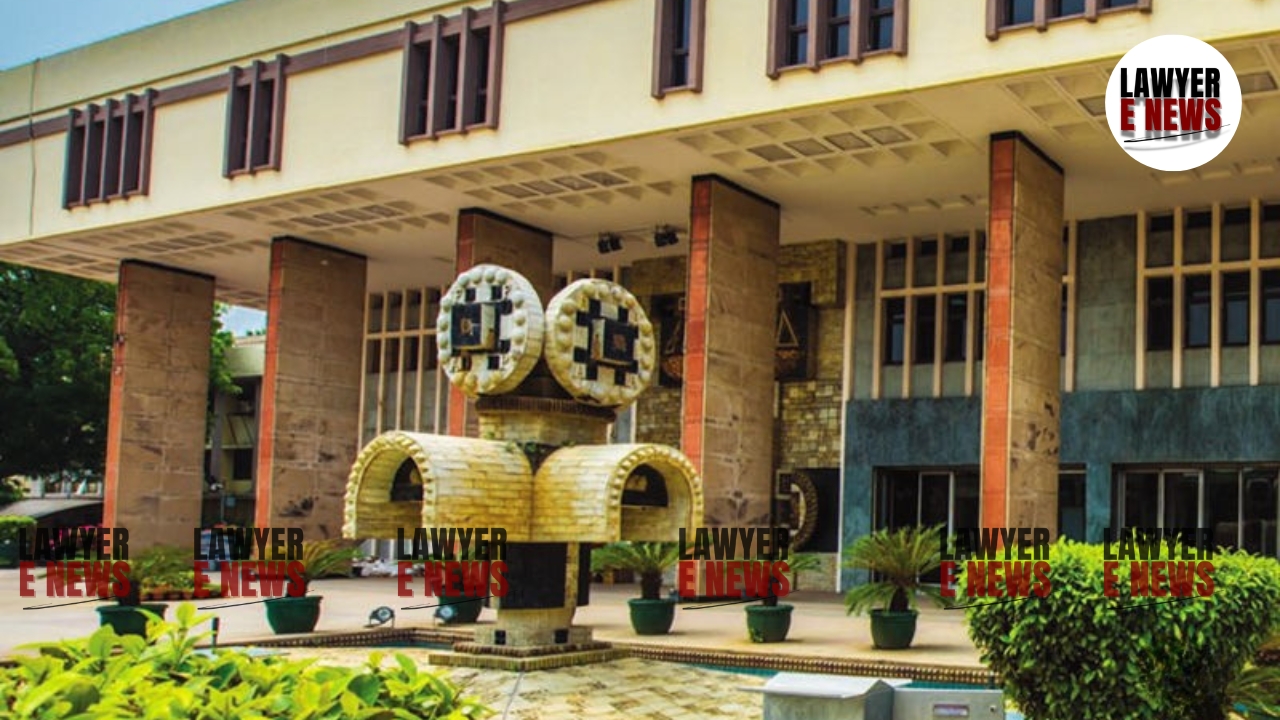
"No Infirmity, No Perversity – Judicial System Not a Forum for Fishing Enquiries Based on Suspicion Alone" - In a judgment delivered on 12 November 2025, the Delhi High Court, through Justice Girish Kathpalia, dismissed a petition filed under Article 227 of the Constitution, challenging a trial court order which refused to send certain documents—submitted in a sealed envelope—for forensic examination. The documents in question included a Will, General Power of Attorney, and Possession Letter. The petitioner, Rahul Tyagi, alleged suspected tampering merely based on cracks in the lac seal of the envelope, but the Court found the claim entirely unsubstantiated.
Rejecting the plea, the Court remarked, “The present petition and the accompanying applications are not just completely devoid of merit but are also totally frivolous,” and imposed costs of ₹10,000 on the petitioner, to be deposited with the Delhi High Court Legal Services Committee (DHCLSC) within a week.
“Section 45 of the Evidence Act Does Not Support Fishing Expeditions Without Foundation”
The petitioner sought to invoke Section 45 of the Indian Evidence Act, 1872, which deals with expert opinions, arguing that the broken seal gave rise to a "reasonable apprehension" of tampering and thus warranted forensic analysis by a government-approved laboratory.
The High Court firmly rejected this argument, stating:
“The apprehension that the documents were tampered with is mere apprehension. It is not with certainty that the petitioner/plaintiff would allege tampering of the documents. Merely on such apprehension, sending the documents to government approved forensic analyst would unnecessarily protract the suit.” [Para 5]
It held that without any concrete allegation or discrepancy in the contents of the documents, merely suspecting damage to the seal is not a sufficient ground for invoking forensic jurisdiction. The Court stressed that Section 45 cannot be weaponised to delay proceedings on speculative grounds.
“Storage Conditions, Not Tampering, Caused Seal Damage”: Court Upholds Trial Court's Administrative Inquiry
The judgment recounts that after the concern was raised, the trial court had already conducted an administrative enquiry into the integrity of the sealed envelope. It was found that the plastic tape remained intact, and the lac seal had likely cracked due to the pressure of bulk storage in the Ahlmad's room—where documents are commonly stacked.
The High Court affirmed this factual finding, observing:
“It is not unimaginable that when sealed envelopes are stored in almirahs or racks of Ahlmad rooms, flooded with files, the seal made of lac does get damaged/cracked. This does not mean that the documents inside it do not remain safe.” [Para 6]
Further, the Court pointed out that the originals matched the photocopies already submitted earlier by the petitioner himself—clearly negating any allegation of tampering.
“Sending Only the Envelope for Forensics Serves No Purpose”: Court Rejects Vague and Irrelevant Prayer
One of the alternative prayers of the petitioner was to at least send the envelope (without the documents) for forensic testing. The Court dismissed this suggestion as wholly irrelevant to the lis, stating:
“On this aspect, submission of learned counsel for petitioner/plaintiff that at least the envelope be sent to forensic expert falls completely beyond the domain of the lis.” [Para 6]
It clarified that there was no forensic purpose that could be achieved from examining the outer cover, particularly when there was no discrepancy between the original documents and their previously filed photocopies.
“Misplaced Reliance on Thiruvengadam Pillai – No Handwriting Dispute Here”
The petitioner relied on the Supreme Court’s decision in Thiruvengadam Pillai v. Navaneethammal, 2008 SCC OnLine SC 321, to argue for the necessity of expert analysis. However, the Court found this reliance completely misconceived.
Justice Kathpalia held:
“The precedent... would not help the petitioner/plaintiff because it was held in the said precedent that instead of relying upon personal comparison of the disputed handwritings, it would be preferable if the trial court gets the documents forensically examined. That is not the issue in this case.” [Para 4]
The present case, the Court underscored, had nothing to do with handwriting analysis or disputed signatures—it was purely an allegation of possible tampering of a sealed envelope, unsupported by factual basis.
“Frivolous Litigation Has a Price”: High Court Imposes Costs on Petitioner
Finding no illegality, infirmity, or perversity in the trial court’s rejection of the forensic request, the High Court declined to interfere under its supervisory jurisdiction under Article 227.
Justice Kathpalia concluded:
“I am unable to find any infirmity, much less any perversity in the impugned order that would call for intervention of this Court under Article 227 of the Constitution of India.” [Para 8]
Terming the petition as completely devoid of merit, the Court dismissed it with costs of ₹10,000, payable to the Delhi High Court Legal Services Committee, and directed the trial court to ensure compliance. [Paras 9–10]
Article 227 Not a Platform for Speculative Allegations
The judgment in Rahul Tyagi v. Kamlesh & Ors. is a strong restatement of the limits of Article 227 jurisdiction and the proper invocation of expert evidence under Section 45 of the Evidence Act. It confirms that courts will not indulge litigants who attempt to delay civil trials based on speculative or paranoid apprehensions, especially in the absence of any tangible discrepancy or foundational material.
In Justice Kathpalia’s words, the judiciary cannot be converted into an avenue for “unnecessary protraction of suits based on mere apprehension,” particularly where administrative enquiry has ruled out tampering and documentary integrity is intact.
Date of Decision: 12 November 2025