
-
by sayum
26 August 2026 1:49 PM







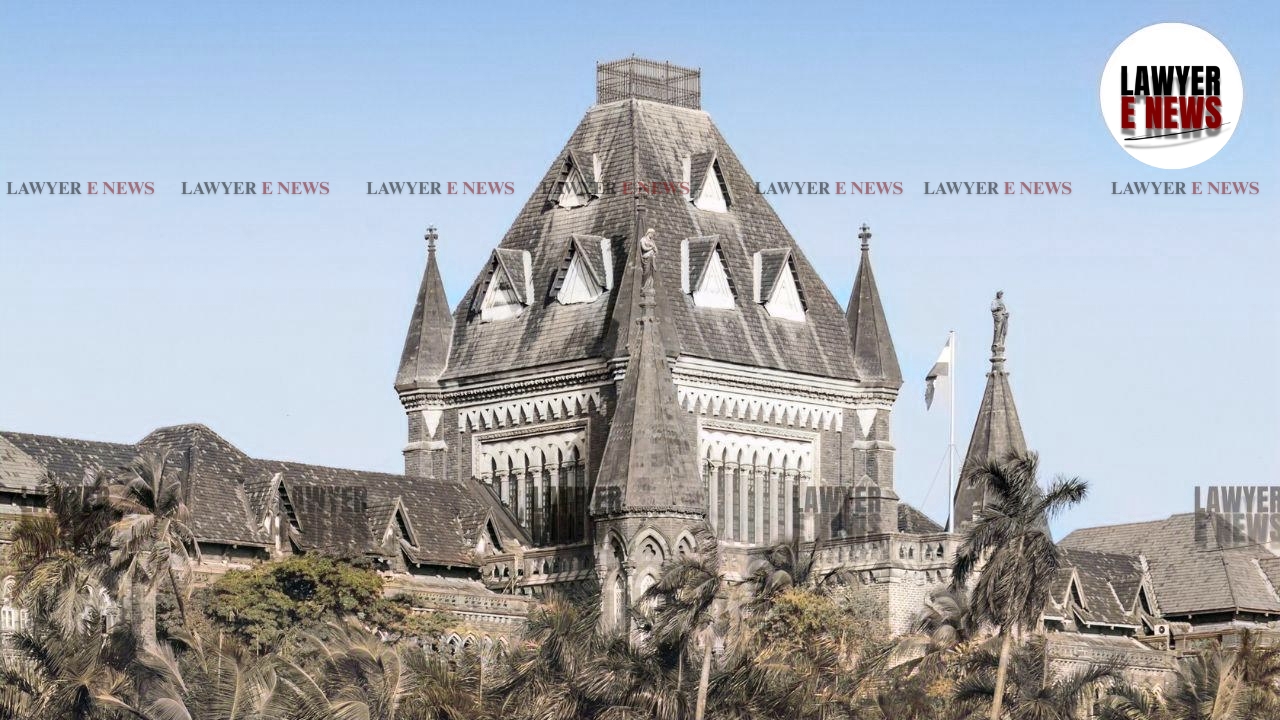
“Doctrine of locus poenitentiae applies only before effective date of retirement; after that, employee ceases to be in service”, Bombay High Court (Aurangabad Bench) dismissed a writ petition filed by a former government medical officer seeking reinstatement post voluntary retirement, invoking mental illness under the Rights of Persons with Disabilities Act, 2016. The Court upheld the Maharashtra Administrative Tribunal’s (MAT) decision, refusing to interfere with the rejection of her claim.
The Division Bench of Justice Kishore C. Sant and Justice Abasaheb D. Shinde ruled that once voluntary retirement is accepted and comes into effect, the employment relationship terminates, and it is not open to the retired employee to later plead disability to re-enter service. The Court emphasized that the plea of mental illness raised four months post-retirement could not be accepted as a ground to nullify a resignation already accepted and acted upon in terms of Rule 66 of the Maharashtra Civil Services (Pension) Rules, 1986.
“No illegality in acceptance of resignation; theory of mental disability is an afterthought”
The central legal issue before the Court was whether an employee, whose voluntary retirement had been accepted and had come into effect, could invoke the Rights of Persons with Disabilities Act, 2016 to claim that her resignation was not valid due to depression amounting to a mental disability.
The petitioner, a medical officer in the Public Health Department, had initially given notice for voluntary retirement on 5th April 2023, citing personal loss (death of her husband) and medical reasons such as hypertension and hyperlipidemia. Although she attempted to withdraw her retirement notice on 17th April 2023, her resignation was ultimately accepted by the State on 4th July 2023, and she was relieved from service.
However, after four months of retirement, she wrote to the Principal Secretary claiming that she had been suffering from depression at the time of her retirement and had not been in a sound mental state. This plea was made without any supporting medical certificate or contemporaneous evidence, and for the first time, she invoked Section 2(5) and Section 20 of the Disabilities Act, 2016, contending that her condition constituted a “mental illness” protected under the statute.
The MAT had dismissed her application in January 2025, holding that her retirement was processed in accordance with Rule 66 of the Pension Rules, and no illegality was committed by the authorities. The Tribunal noted that there was no disability claim raised contemporaneously with her resignation or before the Tribunal, and no psychiatric certificate was produced in evidence.
“Disabilities Act does not override statutory retirement rules where disability is neither established nor pleaded in time”
In affirming MAT’s order, the High Court held:
“It is only the case that after her voluntary resignation was accepted, one friend of her found abnormal behavior… However, no such certificate is produced on record.”
The Court distinguished precedents relied upon by the petitioner, including Kunal Singh v. Union of India (AIR 2003 SC 1623), Bhagwan Dass v. Punjab State Electricity Board (AIR 2008 SC 990), and Geetaben Ratilal Patel v. District Primary Education Officer (AIR 2013 SC 3092), stating that in those cases, disability existed and was known during the period of service, unlike the present case, where the claim arose post-retirement and was unsupported by medical records.
The Court reiterated that under Rule 66(5), the doctrine of locus poenitentiae—the right to withdraw a resignation—applies only until the effective date of retirement, not afterward. Once retirement has taken effect, the employment ceases, and the State is under no obligation to reinstate the employee.
Citing Gajanan s/o Siddappa Maitri v. Union of India, the Court observed:
“A government employee will have locus poenitentiae to withdraw his request for voluntary retirement only before the intended date of retirement and not thereafter.”
The Court further emphasized that no procedural illegality or violation of statutory rules was demonstrated by the petitioner. The authorities had acted well within the framework of the Maharashtra Civil Services (Pension) Rules, 1986, and the Maharashtra Civil Services (Leave) Rules, 1981.
“Writ jurisdiction cannot compel authorities to act contrary to Rules”: Court warns against judicial overreach
The Court also reaffirmed the principle laid down by the Supreme Court in State of U.P. v. Harish Chandra [(1996) 9 SCC 309], holding that courts cannot issue writs directing authorities to act contrary to statutory provisions:
“Allowing the writ petition would amount to directing the authorities to act against the Rules, which is not permissible.”
Importantly, the Court noted that if the petitioner truly believed herself to be suffering from a mental disability, her remedy lay before the Commissioner under the Disabilities Act, as mandated by statute. Her failure to approach the appropriate forum, and raising the plea only after losing before MAT, further undermined the credibility of her claim:
“Not approaching the Commissioner at the first instance also shows that the theory of disability is developed only after losing before MAT.”
The Bombay High Court decisively rejected the petitioner’s post-retirement claim of mental disability as a ground to undo her voluntary retirement, terming it an afterthought unsupported by evidence. It reiterated that voluntary retirement, once accepted and acted upon, brings the employer-employee relationship to an end, and statutory rules cannot be bypassed by invoking belated, unsubstantiated claims.
Date of Decision: 25 November 2025





