“Failure To Specifically Deny Allegations Amounts To Admission”: J&K High Court Reiterates Law Under Order VIII CPC Arbitrator Cannot Rewrite Contract Or Travel Beyond Pleadings: Punjab & Haryana High Court Quashes ₹5.18 Crore Award Director’ in GeM Clause 29 Does Not Mean ‘Independent Director’: Gujarat High Court Sets Aside Technical Disqualification Section 25(3) Is Sacrosanct – Removal of a Trademark Cannot Rest on a Defective Notice: Delhi High Court Not Every Broken Promise Is Rape: Delhi High Court Draws Clear Line Between ‘Suspicion’ and ‘Grave Suspicion’ in False Promise to Marry Case Section 37 Is Not A Second Appeal On Merits: Delhi High Court Refuses To Re-Appreciate Evidence In Challenge To Arbitral Award Recovery After Retirement Is Clearly Impermissible: Bombay High Court Shields Retired Teacher From ₹2.80 Lakh Salary Recovery Successive FIRs Cannot Be Used to Thwart Bail: Supreme Court Invokes Article 32 to Protect Personal Liberty Supreme Court Enforces Contractual Bar Against Interest in Government Contracts Ex Parte Decree Not a Blank Cheque - Merely Because Defendant Absent, Plaintiff’s Case Not Presumed True: Madras High Court Mandatory Injunction Cannot Be Kept in Cold Storage: Supreme Court Enforces Strict Three-Year Limitation for Execution Senior Citizens Act Is for Maintenance, Not a Shortcut to Eviction: Calcutta High Court Restrains Tribunal’s Overreach Statement ‘Counsel Says’ Is Not a Binding Undertaking Without Client’s Specific Authorization: Allahabad High Court Declines to Initiate Contempt Rigours of Section 43-D(5) Melt Down When Liberty Is at Stake: Punjab & Haryana High Court Grants Bail in UAPA Case After 2.5 Years’ Custody Vakalatnama Is Not a Mere Form – Attestation Is a Legal Safeguard: Andhra Pradesh High Court Cautions Advocates and Registry on Procedural Sanctity Right to Be Considered for Promotion Is Fundamental – Employer’s Unfairness Cannot Defeat It: : Gujarat High Court Panchayat Statement Implicating Others Is Not a Confession Proper: J&K High Court Rejects Extra-Judicial Confession in Murder Appeal Contempt Lies Only on ‘Wilful and Deliberate Disobedience’ – Fresh KASP Appointments Not Replacement of Daily Wage Workers: Kerala High Court 498A Cannot Become a Dragnet for Entire Family: Orissa High Court Shields Distant In-Laws but Sends Husband to Trial Forgery Of ACR Is No Part Of Official Duty: Punjab & Haryana High Court Refuses To Quash FIR Against IFS Officer Sole Eye-Witness Not Wholly Reliable, Conviction Cannot Stand: Orissa High Court Acquits Accused in Alleged Witchcraft Double Murder Case Functional Disability, Not Mere Physical Percentage, Determines Compensation: Kerala High Court Remands Employees’ Compensation Case for Medical Board Assessment Conviction Cannot Rest On Fictitious Memorandums – When Investigation Is Tainted, Benefit Of Doubt Must Follow: MP High Court Legal Objection Cannot Be Sprung in Second Appeal: P&H High Court Draws Sharp Line Between ‘Legal Plea’ and ‘Legal Objection’ When Foundational Facts Are Seriously Disputed, Writ Court Ought Not To Undertake A Fact-Finding Exercise: Kerala High Court Compliance Affidavits Are Nothing But Admission of Disobedience: Punjab & Haryana High Court Puts Chief Secretaries and DGPs in Dock Over Arnesh Kumar Violations Husband’s Salary Slips Are Personal Information: Rajasthan High Court Refuses Disclosure Under RTI

Marriage Ended, Dignity Preserved: Kerala High Court Grants Mutual Divorce, Records Return of 115 Sovereigns and ₹3.5 Lakh Settlement

18 August 2025 12:30 PM

By: sayum


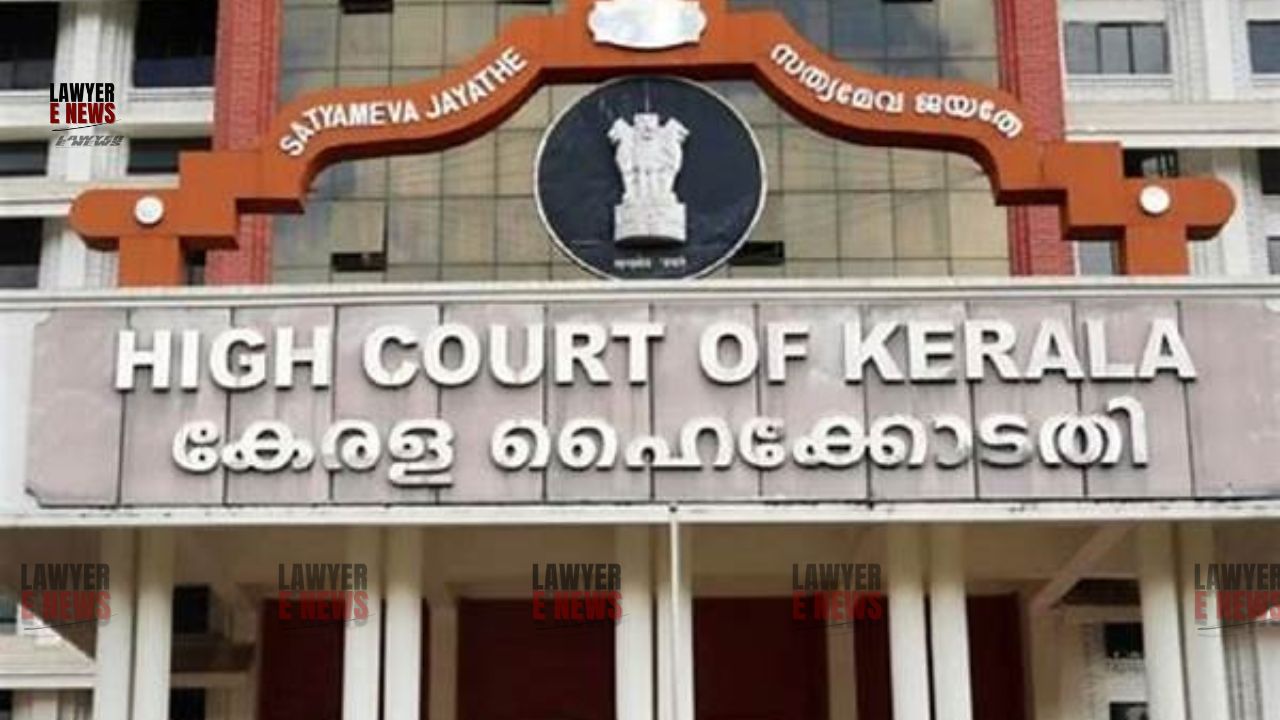
“Cooling-Off Period Waived—Irretrievable Breakdown Proven, Consent Free from Fraud or Coercion”: In a sensitive yet firm affirmation of mutual agency and dignity in matrimonial dissolution, the Kerala High Court granted divorce by mutual consent under Section 13B of the Hindu Marriage Act, 1955. The Court also formally recorded a comprehensive settlement that included the return of 115 sovereigns of gold and payment of ₹3.5 lakhs for maintenance arrears.

A Division Bench comprising Justices Devan Ramachandran and M.B. Snehalatha observed: “We are convinced that the marriage between the spouses has been irretrievably broken down… divorce is the only viable option. There is no collusion, and the consent is genuine and voluntary.”

The marital relationship between Anu Vidhya Rajendran and Aravind R. had collapsed irreversibly, with both parties living separately since 2017. Initially, the Family Court, Alappuzha, had granted divorce to Aravind on the ground of cruelty. There were cross-appeals filed—by the wife challenging the divorce decree and by both parties relating to claims over gold ornaments.

When the appeals were taken up for final hearing, the parties informed the High Court that the entire dispute had been amicably resolved through a joint petition. Both spouses filed an application under Section 13B of the Hindu Marriage Act seeking mutual divorce.

The Court was presented with the settlement terms and the signed joint petition, which were accepted after verification.

The High Court meticulously scrutinized the terms of the compromise and emphasized that mutual consent must be untainted by coercion, fraud, or external pressure. It found:

“The petition under Section 13B has been filed voluntarily... there is no collusion, no coercion, and the parties are living separately for over seven years.”

In recognition of the irretrievable breakdown and the futility of further litigation, the Court waived the statutory cooling-off period:

“This is a fit case to waive the waiting period. Attempts at reunion have failed, and both parties affirm that reconciliation is impossible.”

As per the mutually agreed terms:

  • The husband, Aravind, returned 115 sovereigns of gold ornaments to Anu Vidhya in full and final settlement.

  • He also paid ₹3,50,000 by demand draft towards arrears of maintenance for their minor child.

The Court specifically endorsed these aspects: “We record with satisfaction that the wife’s claims have been fairly settled and the child’s rights acknowledged.”

With this judgment, the Kerala High Court has not only concluded a protracted legal battle but has also set a tone of equitable closure. The decree of divorce by mutual consent was made effective immediately.

“The marriage is dissolved with effect from today,” declared the Bench, affirming that “respect and legal dignity must survive even when relationships end.”

This ruling stands out for its balanced sensitivity, effective settlement enforcement, and reaffirmation of mutual dignity in family litigation.

Date of Decision: May 19, 2025

 

Latest Legal News