-
by sayum
24 August 2026 3:22 PM







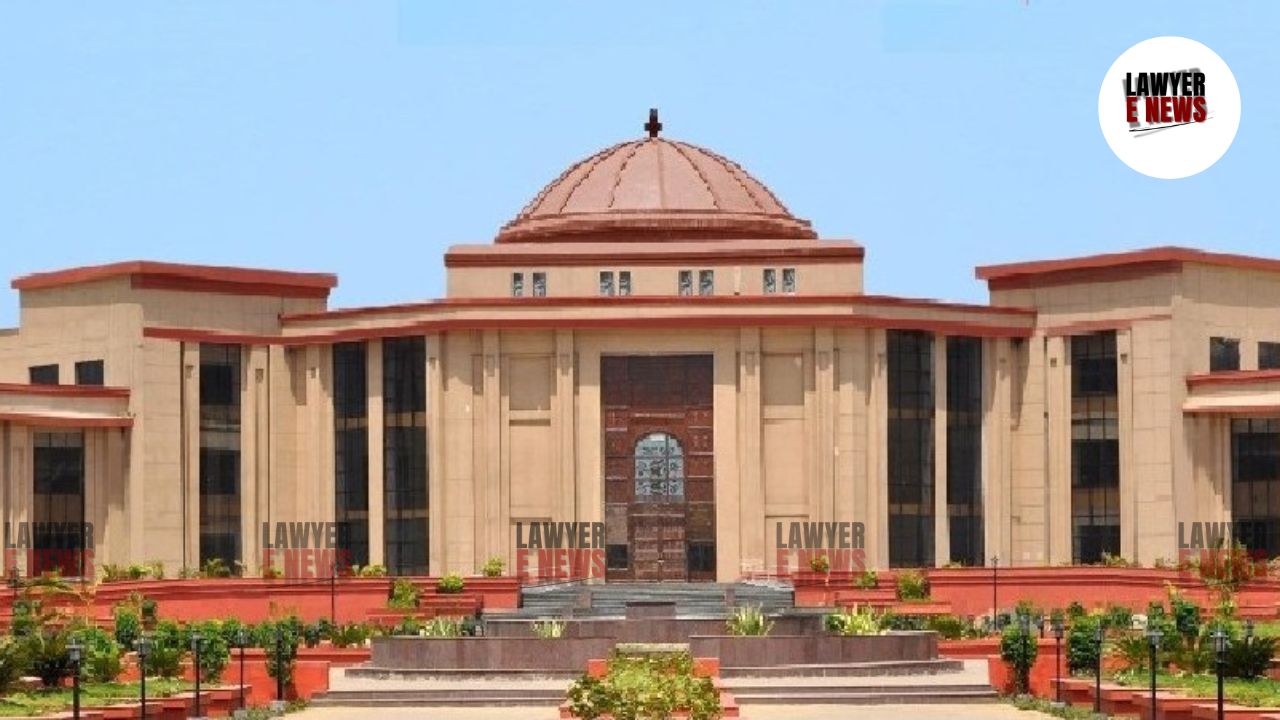
"Even without a written clause, care is an implied condition in transfers made by senior citizens—breach invites consequences under Section 23 of the Senior Citizens Act," holds Justice Narendra Kumar Vyas. In a telling commentary on the duty of care owed by family members to elderly relatives, the Chhattisgarh High Court refused to interfere with the concurrent findings of the Maintenance Tribunal and the Appellate Authority which had declared a registered gift deed as null and void on account of the donee’s failure to maintain the senior citizen donors.
Delivering judgment Justice Narendra Kumar Vyas ruled that "a gift deed made out of love and affection by elderly parents cannot be treated as a commercial transaction devoid of emotional and moral obligations. Where the donee fails to live up to those obligations, the deed is liable to be set aside under Section 23(1) of the Maintenance and Welfare of Parents and Senior Citizens Act, 2007."
"Section 23 doesn’t demand a written promise—care can be inferred from conduct, love and surrounding circumstances"
The Court reaffirmed that beneficial legislation cannot be defeated by technicalities. Citing the Supreme Court’s decisions in Sudesh Chhikara v. Ramti Devi and Urmila Dixit v. Sunil Sharan Dixit, the High Court emphasized that “for applicability of Section 23(1), the condition of maintenance need not be written into the deed. It can be deduced from the facts, the relationship, and the natural expectations between the donor and donee.”
The bench observed that “in this case, the gift was made not for commercial gain but because of trust reposed by the aged parents in their nephew and daughter. That trust was brutally betrayed.”
The Court noted that the senior citizen donors—both over 80 years of age—were harassed, starved of basic amenities like food, water, and electricity, and ultimately forced to live in an old-age home. There were even allegations of threats, physical abuse, and denial of medical aid.
"An unwritten bond of duty is no less binding" – Tribunal’s power to examine the real intent upheld
Rejecting the petitioner’s argument that the gift deed had no written clause regarding maintenance and hence could not be cancelled, Justice Vyas made it clear that "the Tribunal is not a court of technicalities. It is a forum of social justice."
The Court held: “Section 23 of the Act must be interpreted to protect the elderly from emotional and physical abandonment. The Tribunal is empowered to go beyond the formal language of the gift deed and examine the underlying circumstances and conduct of the parties.”
The Tribunal had found that despite the deed, the petitioners had cut off electricity, locked bathrooms and kitchens, abused and physically assaulted the elderly, and forcibly moved them to the upper floor of the house, denying them mobility and access to essentials. These findings, based on site inspections and reports, were upheld by the Collector in appeal.
The High Court held that these actions constituted a clear breach of the implied condition of maintenance and justified invocation of Section 23.
“Writ Court cannot function as a second appellate forum” – Judicial restraint under Article 226
On the issue of whether the High Court can re-examine findings of the Tribunal and Appellate Authority, the bench referred to the decision in Ajay Singh v. Khacheru (2025) 3 SCC 266 and stated:
"It is a well-settled principle that the writ court cannot reappreciate evidence or interfere with concurrent findings unless there is a glaring jurisdictional error or perversity. No such illegality has been demonstrated by the petitioners."
The Court also dismissed objections to the composition of the Tribunal, holding that it was constituted in strict conformity with Section 7 of the Act and applicable rules. The Tribunal was presided over by a Sub-Divisional Officer (Revenue) and assisted by four other members. The bench called the objections "misconceived and devoid of merit."
The petitioners also claimed that the senior citizen donors had alternative sources of income and property, and hence were not destitute. This argument too was rejected. Justice Vyas clarified that “Section 23 does not require the donor to be penniless. What matters is whether the transfer was conditional and whether the condition was breached.”
“The law protects the vulnerable, not the unscrupulous” – High Court dismisses writ petition
The High Court was categorical that the donee’s conduct amounted to undue influence and betrayal of trust, which rendered the gift voidable. It held:
"The implied promise of care, coupled with the donors’ advanced age and the subsequent neglect and cruelty they suffered, makes this a textbook case for invoking Section 23. It would be a travesty of justice to allow such transfer to subsist."
Finding no error, illegality or perversity in the orders passed by the Maintenance Tribunal or the Collector, the Court dismissed the writ petition and vacated the interim protection earlier granted.
The message is unmistakable—transfers made out of affection to close relatives carry with them a moral, if not legal, obligation to care for the donor. Breach of that duty invites judicial scrutiny and legal consequences.
Date of Decision: 20 January 2026