-
by sayum
05 August 2026 9:31 AM







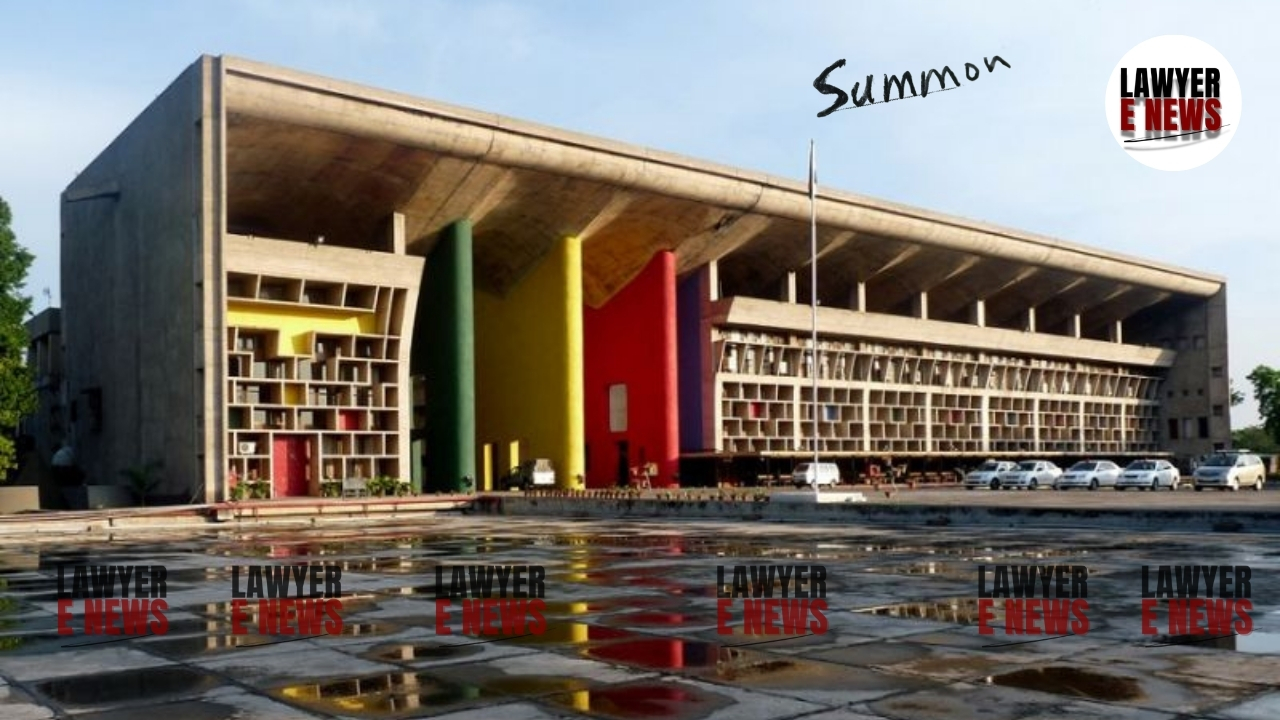
“Power under Section 210(1)(c) of BNSS is exclusive, independent, and of holistic value” – In a significant ruling Punjab and Haryana High Court dismissed a petition filed by police officers challenging the summoning order issued in a custodial death case. The summoning was based on a judicial inquiry conducted under Section 196 of the Bharatiya Nagarik Suraksha Sanhita, 2023 (BNSS) into the death of one Bhinder Singh. The Court held that a Magistrate is competent to take cognizance under Section 210(1)(c) even on the basis of his own knowledge derived from a judicial inquiry and is not bound to follow complaint procedure under Chapter XVI of BNSS.
The decision affirms the independent power of Magistrates to act upon judicial inquiries and provides clarity on procedural distinctions between police investigations, complaint cases, and magisterial cognizance under BNSS.
“Magistrate’s Cognizance Based on Own Knowledge Is Lawful When Derived from Judicial Inquiry” – Court Rejects Procedural Challenge
The petitioners, all Punjab police officials, were summoned by the Judicial Magistrate, Bathinda, under Sections 103, 238, 340 read with 190 of the Bharatiya Nyaya Sanhita, 2023 (BNS) (corresponding to Sections 302, 201, 470/471 r/w 149 IPC), on the basis of a judicial inquiry conducted under Section 196 BNSS into the custodial death of Bhinder Singh.
The case arose after Bhinder Singh, reportedly in police custody, died by drowning in a thermal plant lake on 17 October 2024. His death was initially recorded as accidental; however, multiple complaints, media reports, and a protest by family members alleging custodial torture prompted the District & Sessions Judge, Bathinda, to initiate a judicial inquiry.
The inquiry concluded that the deceased was in illegal custody and the explanation given by the police that he had voluntarily jumped into the lake was “highly improbable”. Based on sworn depositions of over 20 witnesses, including doctors, police officials, and civilians, the Magistrate issued process under Section 227(1)(b) BNSS and took cognizance under Section 210(1)(c).
The police officials challenged the summoning order dated 18.02.2025, arguing that:
The Magistrate could not take cognizance under Section 210(1)(c) without following Chapter XVI complaint procedure (including recording of statements under oath).
The same Magistrate who conducted the judicial inquiry could not later take cognizance, as it violated principles of natural justice.
No list of prosecution witnesses or documents had been filed, thereby breaching Section 231.
Statements of the accused recorded during the judicial inquiry had been improperly relied upon in the summoning order.
Rejecting the objections, Justice Sanjay Vashisth delivered a comprehensive and reasoned judgment affirming the validity of cognizance under Section 210(1)(c):
“The Magistrate’s power to take cognizance under Section 210(1)(c) is exclusive, independent, and of holistic value. It is not fettered by procedural requirements under Chapter XVI, which applies only to complaint cases under Section 210(1)(a).”
The Court clarified that judicial inquiries under Section 196 BNSS have a wider scope and are distinct from police investigations. A Magistrate conducting such an inquiry may, upon satisfaction from depositions recorded under oath, proceed to take cognizance independently.
Quoting relevant statutory provisions, the Court emphasized: “Bare reading of the provision is entirely based upon the satisfaction of the Magistrate, who comes to know of happening of some offence, on his own or even upon information from any person, other than the police officer.”
On the issue of bias or conflict of interest, the Court held that: “The statute provides an inbuilt remedy under Section 211 BNSS—if the accused apprehends bias, he may object and seek inquiry or trial by another Magistrate. That remedy must be exhausted before invoking writ jurisdiction.”
The Court noted that none of the petitioners had availed this remedy, making the petition premature.
On procedural objections regarding non-compliance of Section 231, the Court observed:
“The inquiry report contains depositions recorded on oath. Paragraph 10 of the impugned order details statements of 20+ witnesses, including doctors, police officers, and nodal officers. This satisfies the requirement of material for issuance of process.”
“Accused Have No Locus to Challenge Cognizance Under Section 210(1)(c) at Pre-Evidence Stage” – High Court
The Court reiterated the settled legal position that accused persons do not have the right to contest the act of cognizance itself, unless and until it leads to procedural irregularity during the trial:
“Once a Magistrate forms a tentative opinion based on material before him, he is empowered to take cognizance and issue process under Section 227 BNSS. At that stage, the accused has no locus to intervene.”
The Court cited the Supreme Court’s decisions in Smt. Nagawwa v. Veeranna Shivalingappa Konjalgi (1976) and A.R. Antulay v. Ramdass Sriviniwas Nayak (1984), observing that interference at the cognizance stage is unwarranted unless there is patent illegality.
Dismissing the petition, the Punjab and Haryana High Court held that the order of summoning dated 18.02.2025 was legally valid and well-supported by the inquiry record. The Court noted that the petitioners were free to raise objections before the Magistrate under Section 211 BNSS, and if such objection was not raised, the Court could proceed accordingly.
“There is no infirmity in the impugned order… The instant petition is dismissed with liberty to petitioners to exercise their statutory rights under Section 211 BNSS.”
Date of Decision: 1 July 2025