-
by sayum
29 August 2026 3:15 PM







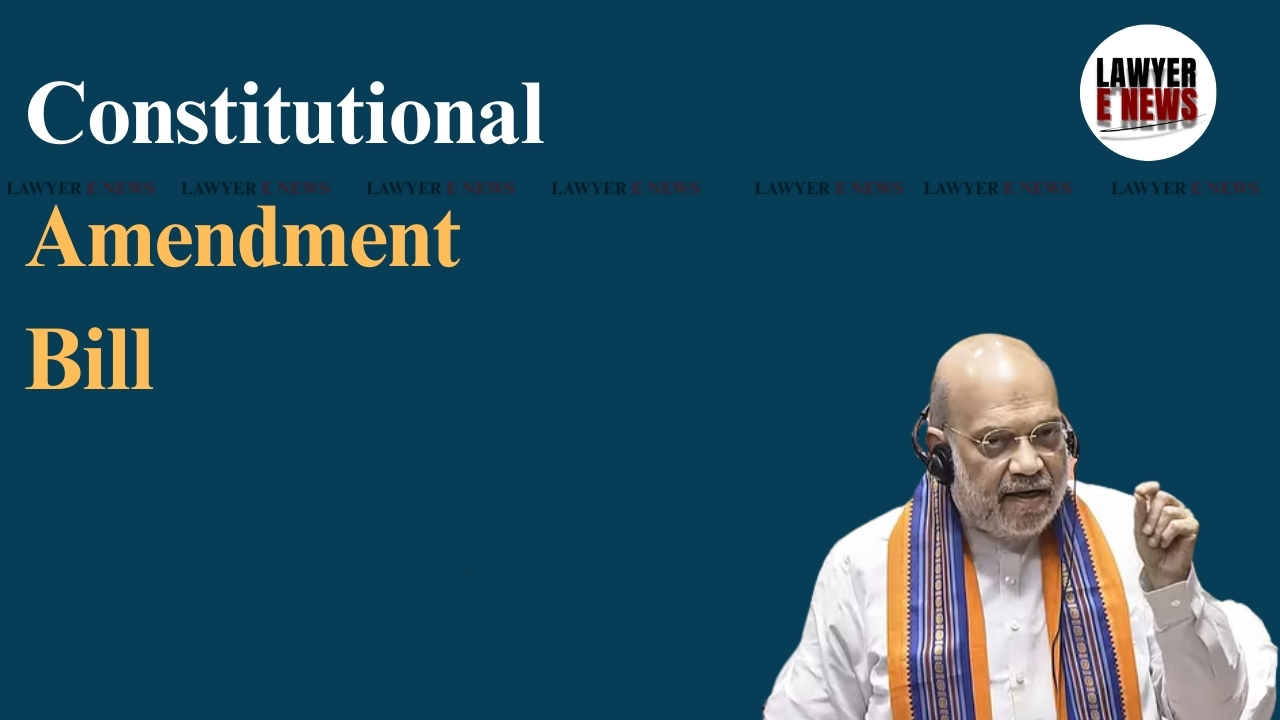
New Delhi, August 20, 2025 – In a high-voltage session of Parliament, Union Home Minister Amit Shah introduced the Constitution (One Hundred and Thirtieth Amendment) Bill, 2025 in the Lok Sabha. Popularly referred to as the 113th Amendment, the Bill proposes sweeping changes to ensure that the Prime Minister, Chief Ministers, and other ministers cannot continue in office if detained for 30 consecutive days on serious criminal charges.
What the 113th Amendment Proposes
Automatic Removal of Ministers – If any minister is arrested and detained for 30 days for an offence punishable with five years or more imprisonment, they must resign. Failing that, their office will automatically fall vacant on the 31st day.
Reappointment Permitted – Such individuals may be re-appointed after release, subject to constitutional procedure.
Applicability –
Article 75 – Union Council of Ministers, including the Prime Minister.
Article 164 – State Chief Ministers and Ministers.
Article 239AA – Chief Minister and Ministers of the NCT of Delhi.
This move is aimed at strengthening constitutional morality and ministerial accountability, ensuring that those under prolonged detention do not continue to wield executive power.
Introduction in Lok Sabha
The Bill was formally placed before the Lok Sabha on August 20, 2025.
It has been referred to a Joint Parliamentary Committee (JPC) for detailed consideration.
Alongside, the Government also tabled the Government of Union Territories (Amendment) Bill, 2025 and the Jammu & Kashmir Reorganisation (Amendment) Bill, 2025.
Opposition Uproar
The introduction of the Bill led to dramatic protests:
Opposition MPs tore up copies of the Bills inside the House.
Pieces of paper were hurled towards Home Minister Amit Shah during his address.
Opposition leaders labelled the proposal “unconstitutional” and “undemocratic”, expressing fears of potential misuse against political rivals.
The uproar forced repeated interventions from the Speaker and highlighted the deep divisions across party lines.
Legal and Political Significance
Supporters’ View: The amendment bolsters political integrity, making it impossible for ministers under prolonged detention on serious charges to continue in constitutional positions.
Critics’ Concern: The measure may dilute the presumption of innocence and risks being weaponised in politically motivated cases.
As a constitutional amendment, the Bill will require a special majority in both Houses of Parliament, and possibly ratification by states, depending on the interpretation of federal provisions.
What Lies Ahead
The Joint Parliamentary Committee will now examine the Bill clause by clause.
After committee review, it will return to the Lok Sabha for debate and voting, and then move to the Rajya Sabha, where the Government faces a tougher test of numbers.
Constitutional scholars predict a long, contentious debate balancing rule of law, democratic safeguards, and political accountability.
The 113th Constitutional Amendment Bill, 2025 seeks to disqualify ministers automatically if detained for 30 days on serious criminal charges. While projected as a step towards clean politics, the uproar in Parliament and strong opposition resistance suggest a turbulent legislative journey ahead.