-
by sayum
05 August 2026 9:31 AM







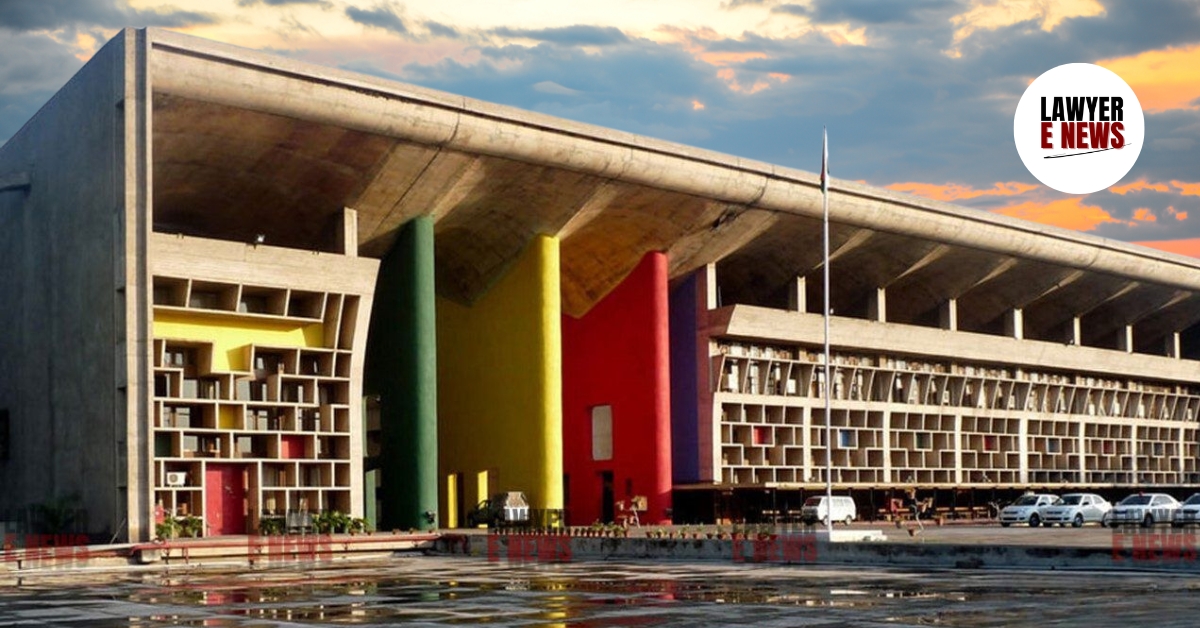
“Section 89 CPC Encourages Alternative Dispute Resolution; Refund Of Court Fees Furthers That Legislative Goal” — Punjab and Haryana High Court allowed the withdrawal of a second appeal after parties amicably settled their dispute through mediation. Justice Alka Sarin, emphasizing the spirit of Section 89 of the Code of Civil Procedure (CPC) and Section 16 of the Court Fees Act, directed refund of court fees to the appellants.
The Court reiterated that once litigation is resolved through compromise—especially via Court-annexed mediation centres—the parties are entitled to refund of court fees, in line with settled jurisprudence.
Justice Alka Sarin observed: “In the present case, admittedly, a compromise has been entered into between the parties before the Mediation and Conciliation Centre of this Court. In view thereof and in view of the above settled position of law, the parties are entitled to refund of the court fee as per Rules.”
The appellants, Karam Chand and others, had filed a Regular Second Appeal (RSA) challenging judgments of the subordinate courts. However, during the pendency of the appeal, the parties amicably resolved their dispute. They filed an application under CM-802-C-2024 for withdrawal of the appeal and refund of court fees.
Pursuant to a direction issued by the High Court on 7th March 2024, the parties appeared before the Mediation and Conciliation Centre, where they recorded their statements and executed a formal compromise deed dated 7th March 2024.
The primary issue before the Court was whether, upon a compromise being recorded before the Mediation and Conciliation Centre, the parties were entitled to a refund of the court fees affixed before the First Appellate Court and the High Court.
The Court referred to several precedents, including: “In Pritam Singh v. Ashok Kumar [2019 (1) Law Herald 721], the Hon’ble Supreme Court recognized the applicability of Section 89 CPC and Section 16 of the Court Fees Act even in appeals, counter objections, and counter claims, clarifying that refund cannot be denied merely because the compromise did not take place in a Lok Adalat.”
Further, relying on the judgment in Pradeep Sonawat v. Satish Prakash [2015 (1) RCR (Civil) 955], the Court emphasized:
“Settlement in terms of Section 89 CPC results in complete end to the litigation. Merely because the matter was not taken up in a daily Lok Adalat should not prejudice the litigants’ claim to refund.”
The Court also cited Surender Kumar v. Hans Raj Mandi [2021 (2) RCR (Civil) 851], reiterating that refund of court fees applies equally to settlements arrived at within or outside the Court proceedings.
Key Observations of the Court on Refund of Court Fees
The Court summarized the settled legal principles on refund of court fees as follows:
“A conjoint reading of Section 16 of the Court Fees Act with Section 89 of CPC leaves no doubt that the legislative endeavor is to encourage amicable settlement and alternative dispute resolution mechanisms.”
“Whether the compromise is before the Court, Mediation Centre, Lok Adalat, or even outside the Court, courts should allow refund of court fees to foster the goal of ending litigation amicably.”
Justice Alka Sarin concluded: “The present appeal is dismissed as withdrawn in terms of the compromise dated 07.03.2024 arrived at between the parties which is marked as ‘Ex.C-1’. The compromise (Ex.C-1) be made a part of the decree-sheet.”
“Accordingly, court fee be refunded to the parties as per Rules.”
The Court ordered drawing up of a decree reflecting the compromise and directed refund of court fees, closing the litigation formally.
This judgment affirms the judiciary’s policy of promoting settlements and ensuring that court fees do not become an obstacle to amicable resolution of disputes. The Punjab & Haryana High Court reiterated that courts must facilitate return of court fees when litigations conclude through compromise, especially via structured mechanisms like mediation centres.
Date of Decision: 07.07.2025