-
by sayum
26 August 2026 10:38 AM







"Once a Controversy Has Been Judicially Determined, It Cannot Be Relitigated Under Guise of New Technical Grounds" – High Court Slams Constructive Res Judicata Violation
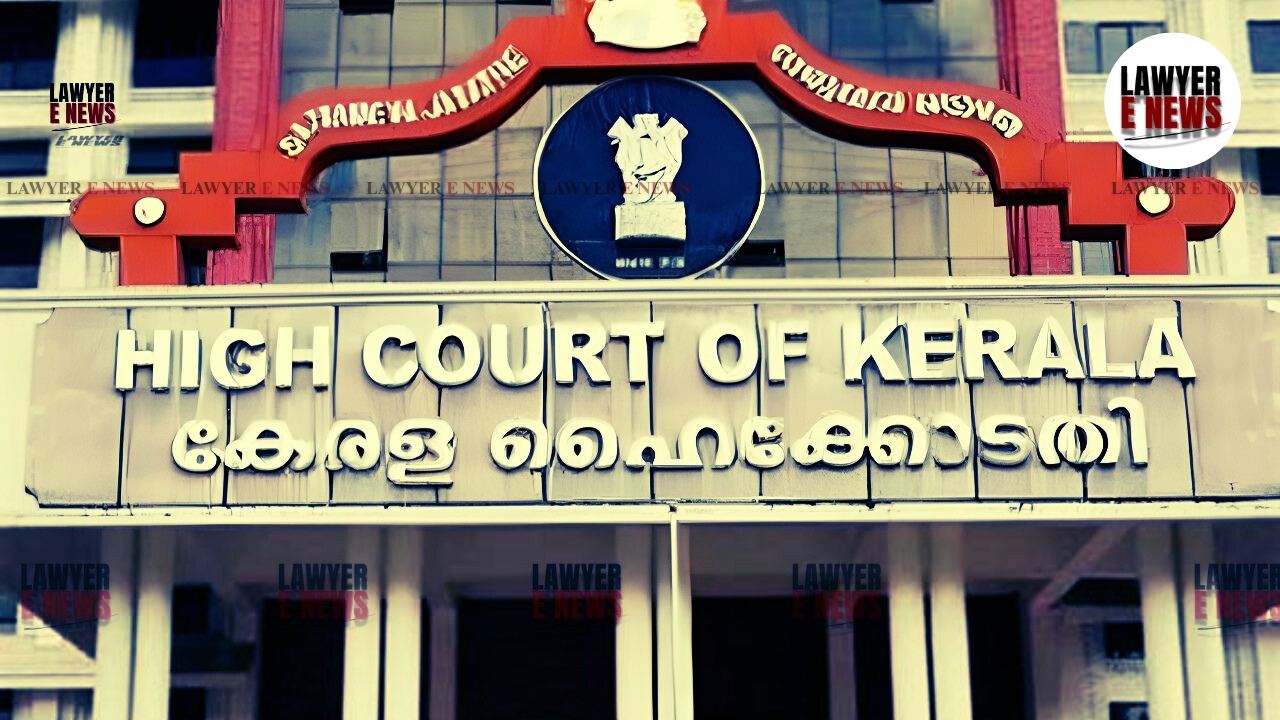
In a judgment reiterating the sanctity of finality in judicial adjudication, the Kerala High Court observing that the petitioners had engaged in repeated and fragmented litigation to stall SARFAESI recovery proceedings, despite multiple prior dismissals all the way up to the Supreme Court of India.
Division Bench comprising Justice Anil K. Narendran and Justice Muralee Krishna S. not only dismissed the appeal for non-prosecution but also delivered strong observations condemning the abuse of judicial process through relitigation of concluded matters, invoking the doctrine of constructive res judicata under Explanation VII to Section 11 of the CPC and the Henderson Principle.
High Court Declares: "Judicial Discipline Demands Concluded Controversies Not Be Reopened Under Guise of Technicalities"
The main grievance of the appellant company was against the SARFAESI proceedings initiated by Dhanlaxmi Bank, including actions under Sections 13(2), 13(4), and 14 of the Securitisation and Reconstruction of Financial Assets and Enforcement of Security Interest Act, 2002, contending that parallel proceedings under SARFAESI and the RDB Act could not simultaneously be sustained.
However, the High Court noted that identical arguments were previously raised in W.P.(C) No. 46514 of 2024 and W.P.(C) No. 45166 of 2024, and had been dismissed by a Single Judge on 11.03.2025. Appeals (W.A. Nos. 481 and 484 of 2025) against those decisions were also dismissed on 24.06.2025, and SLP (C) No. 17263 of 2025 filed before the Supreme Court met the same fate on 09.07.2025. A subsequent Review Petition (R.P. No. 797 of 2025) was also dismissed.
Despite this finality, the petitioners filed W.P.(C) No. 17617 of 2025, once again challenging the SARFAESI action—this time on the ground that SARFAESI proceedings are void unless a suit under Section 19 of the RDB Act is withdrawn.
Rejecting this attempt to re-agitate settled legal issues, the learned Single Judge in the impugned judgment dated 28.07.2025 held:
“All claims and grounds of defence or attack which could and ought to have been raised in earlier proceedings are barred from being reagitated subsequently. This rule stems from the Henderson Principle, a corollary of constructive res judicata under Explanation VII to Section 11 CPC.”
The Court emphasised that even if the issues are framed slightly differently or filed in a different forum, the core controversy having been previously adjudicated with finality bars fresh challenges, especially those disguised through technical reframing.
SARFAESI and Parallel Proceedings: No Bar After Transcore
The appellants had contended that under Section 13(10) of SARFAESI Act, banks cannot initiate SARFAESI proceedings unless they withdraw proceedings under the RDB Act. However, the learned Single Judge rejected this by reiterating the binding precedent in Transcore v. Union of India, (2004) 4 SCC 311, which authoritatively held that SARFAESI and DRT proceedings can run in parallel, and recovery can be pursued under both mechanisms until dues are satisfied.
The Court rejected the petitioner’s argument seeking a review of Transcore, observing:
“The petitioners’ contention that Transcore has not been correctly decided was already rejected. On that ground alone, this writ petition lacks merit.”
Piecemeal Challenges and Silence on Prior Litigation Are Strategic Abuse
The Court also expressed displeasure that the appellants concealed the full history of prior litigation in the fresh writ petition, calling it a "strategic fragmentation of causes of action".
Citing the Supreme Court's decision in Celir LLP v. Sumati Prasad Bafna, 2024 SCC OnLine SC 3727, and English precedent Greenhalgh v. Mallard, the judgment observed:
“Fragmented litigation aggravates the burden of the courts and is impermissible. Courts must examine whether the matter could and should have been raised earlier.”
Further, the High Court made it clear that judicial finality must be respected, stating:
“Judicial discipline demands that concluded controversies not be reopened under the guise of new technical challenges.”
Multiple Adjournments, Counsel Changes, and Absence: Appeal Dismissed for Non-Prosecution
Apart from legal infirmities, the appeal also suffered due to a repeated pattern of delay and non-appearance. The Court recorded in detail the history of adjournments, relinquishment of vakalat, and multiple changes in counsel. After repeated indulgences, including allowing time for filing vakalat and impleading legal heirs of a deceased appellant, the Court noted that:
“Despite opportunities and repeated postings, there was no representation on 12.12.2025, 18.12.2025, and finally on 19.12.2025.”
Accordingly, the writ appeal was dismissed for non-prosecution, and I.A. No. 1 of 2025, which sought impleadment of legal heirs, was also dismissed.
Courts Will Not Tolerate Tactical Re-Litigation or Abuse of SARFAESI Framework
This decision sends a strong message that constructive res judicata is not merely a procedural bar but a substantive protection of judicial integrity. Litigants, especially those trying to stall financial recovery under the SARFAESI Act, cannot approach courts with reworded challenges or suppressed facts, especially once matters have attained finality in the judicial hierarchy.
By dismissing the appeal both on merits and for non-prosecution, the Kerala High Court has reaffirmed that the SARFAESI mechanism must not be thwarted by repetitive, tactical litigation.
Date of Decision: 19 December 2025