-
by sayum
26 August 2026 12:18 PM







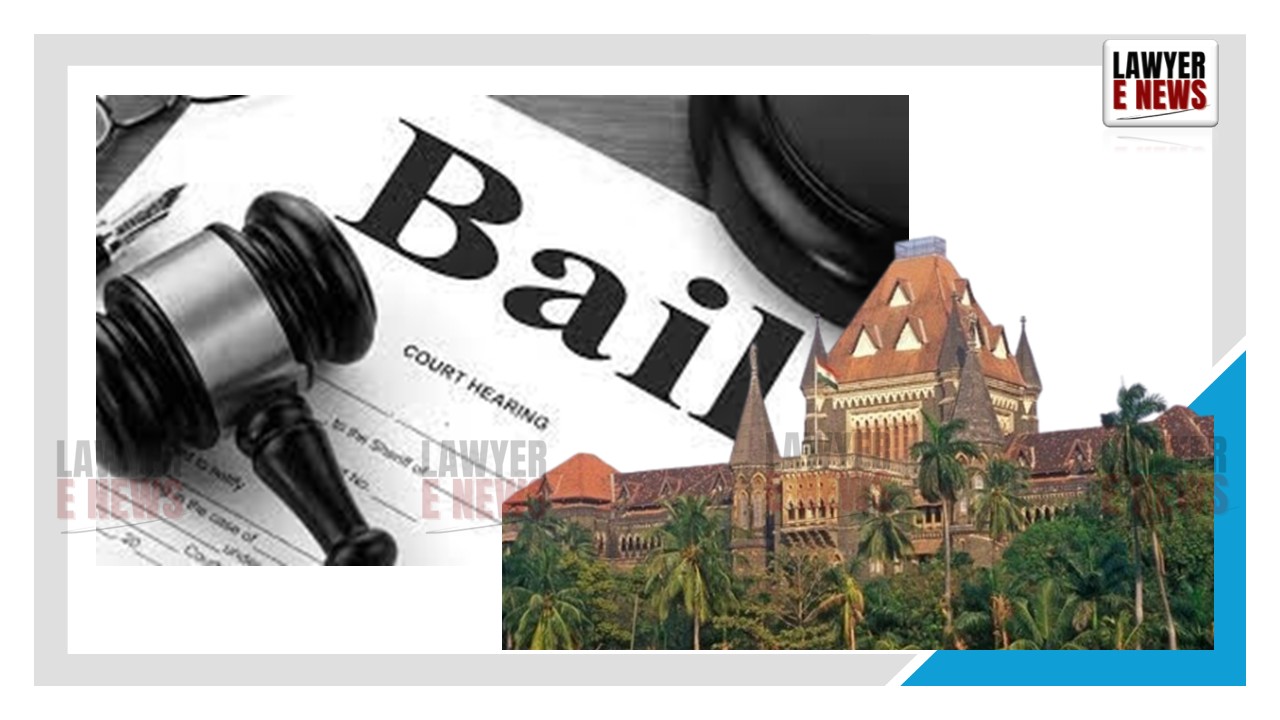
“The role of each accused must be weighed individually – Parity is not a straightjacket formula” – In a detailed and firmly reasoned order Bombay High Court rejected the bail applications of three men accused in the gruesome Palghar mob lynching case of April 2020, which had shocked the nation during the COVID-19 lockdown. The case involved the violent public killing of three individuals—including two Hindu ascetics—by a mob of hundreds, in a chilling episode of vigilante justice rooted in rumor and mob frenzy.
Justice Dr. Neela Gokhale, dismissing the bail plea in Sunil @ Satya Shantaram Dalvi & Ors. v. State of Maharashtra & Anr., held that the applicants were clearly identified as active participants in the lynching, with overt acts supported by eyewitness testimony, CCTV footage, forensic evidence, and recovery of incriminating material. The Court observed:
“Liberty of a person accused of an offence would depend upon the exigencies of the case. It is possible that, in a given situation, the collective interest of the community may outweigh the right of personal liberty.”
The judgment addresses in depth the principle of parity, the ground of long incarceration, and the gravity of mob violence, ultimately holding that the case is “not fit for grant of bail at this stage.”
“Overt Acts of Violence and Incitement Caught on CCTV — Bail Rejected Despite 5.5 Years of Custody”
The applicants—Sunil @ Satya Dalvi, Sajanya Barkya Burkhud, and Vinod Ramu Rao—had moved the High Court seeking bail on the grounds that they had already spent over five and a half years in jail and claimed parity with co-accused who had been released on bail earlier.
The prosecution, represented by Special Public Prosecutor Amit Munde for the CBI and APP Ms. Anuja Gotad for the State, vehemently opposed the plea, arguing that the three accused were among the main assailants, and their acts were not only brutal but also well-documented and corroborated by multiple sources.
The charge-sheet, now under the aegis of the CBI, lists the following key roles:
Sunil Dalvi was caught on CCTV beating one of the victims, Kalpavrikshagiri Maharaj, with a stick and stones, recorded the incident on his mobile (later deleted), and even assaulted police officer Salunkhe who tried to intervene.
Sajanya Burkhud allegedly incited the mob, used a wooden stick to assault victims inside a police van, and participated in conspiring to gather the mob.
Vinod Rao allegedly took part in a clandestine meeting to spread rumors, threw stones and used a stick to beat victims, and was actively involved in encouraging violence.
The Court noted that each applicant was directly linked to the act of lynching and not merely part of a general assembly. Citing forensic reports, test identification parade, recovered weapons and clothes, and witness statements—including those of police personnel injured during the incident—the Court found that there was sufficient prima facie material to deny bail.
“The role of the Applicants is not merely of presence; they have been identified through CCTV, Test Identification Parade and corroborating forensic evidence as having taken part in the actual assault,” the Court held.
“Parity Not Applicable Where Individual Role Is Distinct and Grave” — High Court Distinguishes Co-accused Already on Bail
One of the main arguments advanced by defence counsel Mr. Sachin Ramrao Pawar was that 42 other accused had already been granted bail, and that the applicants stood on similar footing. But Justice Gokhale decisively rejected this contention, distinguishing the earlier bail orders based on absence of overt acts.
“Only those accused have been granted bail against whom no overt act is attributed. The present Applicants are not similarly placed,” the Court clarified.
Citing the Supreme Court’s recent ruling in Sagar v. State of U.P., (2025 SCC OnLine SC 2584), and the Calcutta High Court’s ruling in Subires Bhattacharya v. CBI (2024 SCC OnLine Cal 11889), the Court reiterated:
“Parity cannot be the sole ground for granting bail. It depends upon the role played, evidence collected, and gravity of participation.”
In fact, while the co-accused had been part of the crowd or were seen with sticks but not using them, the present applicants were seen directly assaulting the deceased, and in some cases, conspiring and inciting others. The High Court referred to these distinctions as "material and disqualifying in nature" for seeking parity.
“Length of Custody Alone Not Enough in Heinous Crimes” — Court Cites Societal Interest in Denying Bail
The Court acknowledged that the applicants had been incarcerated for over five years, but held that long incarceration does not entitle an accused to bail in cases involving murder and mob violence, especially where the maximum sentence is life imprisonment or death.
Justice Gokhale observed: “While liberty is a valuable right, it cannot be absolute. The community’s interest, especially in cases of brutal public lynching, can outweigh personal liberty.”
Quoting from the Supreme Court’s judgment in Shahzad Hasan Khan v. Ishtiaq Hasan Khan, the Court reminded that justice must also serve the interests of the victims and the society:
“Liberty is to be secured through process of law, which is administered keeping in mind... the collective interest of the community so that parties do not lose faith in the institution and indulge in private retribution.”
The Court thus concluded that the long custody period did not amount to disproportionate incarceration in the facts of the case.
CBI Directed to Conclude Investigation Quickly – Applicants May Reapply After That
While rejecting the bail application, the Court issued a direction to the CBI to complete the investigation expeditiously, noting that the probe was transferred only recently in August 2025.
“The Applicants are at liberty to renew their prayer for bail after the investigation is completed,” Justice Gokhale ordered, making it clear that the present denial was not absolute, but based on the current stage and material available.
The Court also clarified that all findings in the present order were prima facie, and not binding on the Trial Court, which must decide the case independently on the basis of evidence.
Law Must Balance Liberty With Justice — No Bail for Main Accused in Lynching of Sadhus
With a strong emphasis on individual roles, seriousness of the crime, and the need to preserve public faith in justice, the Bombay High Court refused to extend the protection of bail to the three applicants involved in the Palghar lynching case.
The judgment reflects a careful and principled approach to bail jurisprudence, particularly in cases involving collective violence, conspiracy, and mob criminality, reaffirming that parity and incarceration cannot override the weight of grave and credible accusations.
Date of Decision: 23 December 2025