-
by sayum
05 August 2026 3:07 PM







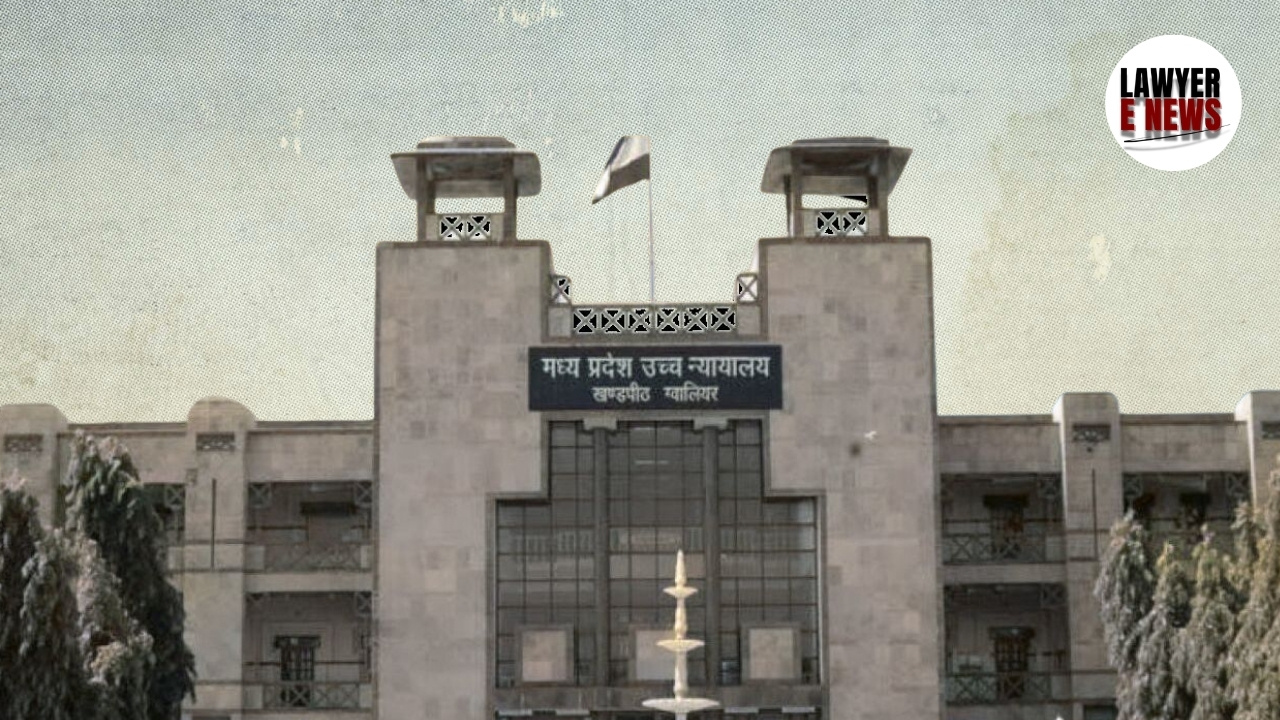
“Absence of Motive Cannot Override Compelling Circumstantial Evidence” — Madhya Pradesh High Court upheld the conviction and life sentence of the appellant under Sections 302 and 120-B of the Indian Penal Code, 1860, for conspiring to murder a 9-year-old boy by drowning him in a stepwell. The division bench comprising Justice Vijay Kumar Shukla and Justice Prem Narayan Singh meticulously examined the principles of circumstantial evidence and declared:
“When the chain of circumstances is unbroken, corroborated by last seen evidence, motive, incriminating conduct, extra-judicial confession, and medical evidence, conviction stands firmly established beyond reasonable doubt.”
High Court Begins with Foundational Principles of Circumstantial Evidence
The Court reiterated the settled Panchsheel principles of circumstantial evidence from Sharad Birdhichand Sarda v. State of Maharashtra, AIR 1984 SC 1622, emphasizing that the chain must be complete, pointing only to the guilt of the accused and excluding every hypothesis of innocence. The judgment clarified:
“In circumstantial evidence, the facts must be of conclusive nature and tendency, showing that in all human probability, the act must have been committed by the accused.”
A Conspiracy Rooted in Family Dispute Ends in Brutal Murder
The prosecution established that on 25 November 2011, the appellant Narmadabai, after a domestic altercation with Hariom (father of the deceased Ganesh), conspired with Manoj (a child in conflict with law), offering ₹5,000 to murder Ganesh. The boy was last seen with Manoj near a stepwell, after which he was found dead. The Sessions Court convicted Narmadabai based on circumstantial evidence, which the High Court meticulously reviewed.
“Motive Is Not Essential Where Circumstantial Chain is Complete”
Addressing the appellant’s contention of lack of motive, the Court clarified:
“It is now well-settled that absence of motive is not fatal to prosecution when other circumstances clearly prove the crime.”
Referring to Amitava Banerjee v. State of West Bengal, AIR 2011 SC 2913, the Court held that motive strengthens the case but is not indispensable where independent and convincing circumstantial evidence exists. In this case, motive was established through uncontroverted testimony about prior family quarrels.
“Last Seen Theory Gains Weight When Supported by Other Factors”
The Court acknowledged established jurisprudence that last seen evidence alone cannot sustain conviction, citing Kanhaiya Lal v. State of Rajasthan and Padman Bibhar v. State of Odisha. However, the bench highlighted:
“In the present case, last seen evidence is powerfully corroborated by other factors — motive, conspiracy, witness testimony, suspicious behaviour, and medical findings — creating a complete chain without missing links.”
The Court dismissed the defence argument, stating that reliance on last seen evidence was permissible in conjunction with other compelling facts.
Medical and Behavioural Evidence Align with Prosecution Case
Medical testimony established death by drowning within 24-48 hours, matching the timeline of the incident. Furthermore, multiple witnesses testified about Manoj’s nervous and unusual demeanour post-incident, including facial redness and tardiness in school, strengthening the prosecution’s narrative.
Justice Singh observed:
“Behavioural indications post-incident, unexplained nervousness, and medical findings synchronize seamlessly with the prosecution version, closing all avenues of reasonable doubt.”
“Incriminating Circumstances Not Explained Are an Additional Link of Guilt” — Court Relies on Wazir Khan Principle
The Court further invoked Wazir Khan v. State of Uttarakhand, (2023) 8 SCC 597, to hold:
“Failure to offer any credible explanation regarding incriminating circumstances forms an added link in the chain of guilt.”
Here, the appellant did not rebut evidence of conversation regarding conspiracy, nor explained the child’s death after last being seen with Manoj.
No Leniency in Heinous Crimes
The Court rejected the plea for leniency based on prolonged custody, noting:
“Murder of an innocent child, executed through manipulation of a juvenile, is a grave offence, attracting the minimum statutory punishment of life imprisonment under Section 302 IPC, which this Court cannot dilute.”
Conviction Upheld, Appeal Dismissed
Concluding that the prosecution proved its case beyond reasonable doubt through a complete chain of circumstances, the High Court dismissed the appeal, affirming life imprisonment with a fine of ₹2,000.
“This Court finds no illegality or perversity in the conviction under Section 302 read with Section 120-B IPC,” the judgment declared, sealing the appellant’s fate.
Date of Decision: 15 July 2025