-
by sayum
24 August 2026 3:22 PM







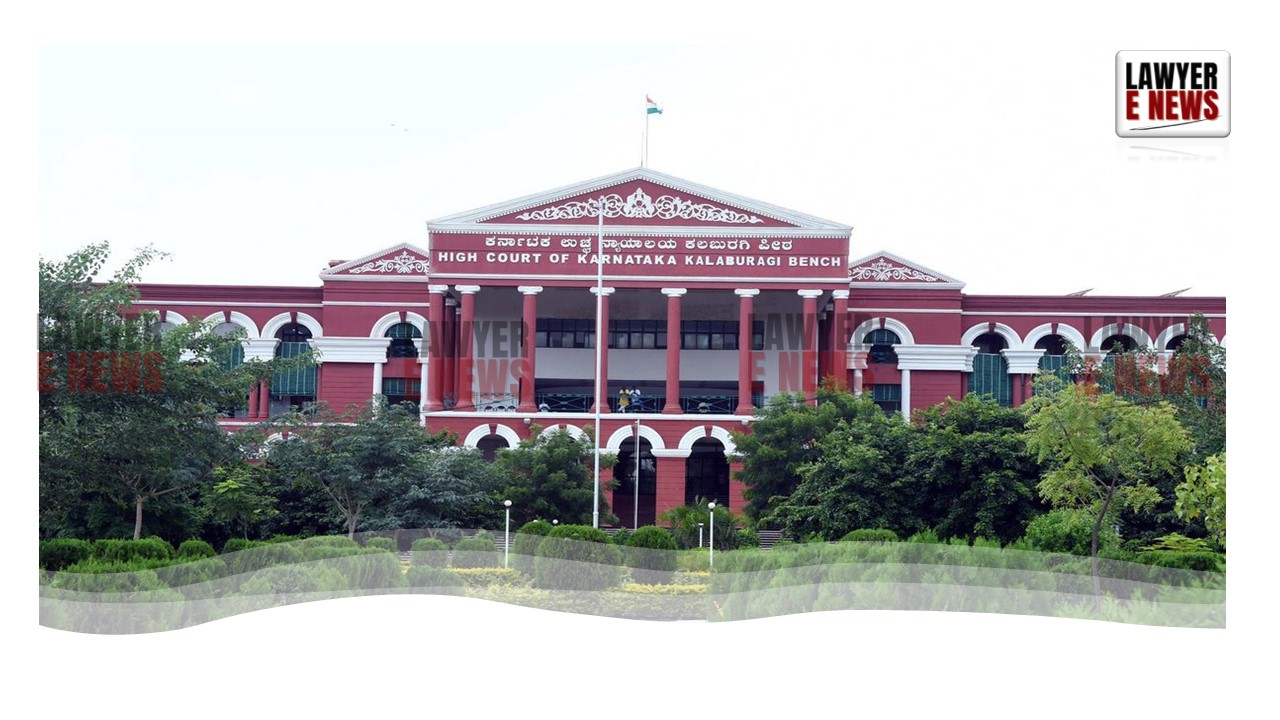
Suspicion, however strong, cannot substitute proof. The prosecution must establish guilt beyond reasonable doubt. Failure to examine key witnesses, procedural lapses, and unreliable testimony warrant acquittal. The Karnataka High Court has set aside the conviction and life sentence of five individuals accused in a double murder case, citing serious lapses in investigation, unreliable eyewitness testimony, and the failure of the prosecution to prove guilt beyond reasonable doubt.
A division bench comprising Justice S. Sunil Dutt Yadav and Justice Rajesh Rai K delivered the judgment, allowing the criminal appeals filed by the appellants against their conviction by the III Additional Sessions Judge, Vijayapur in S.C. No. 108/2014.
The Court held that the benefit of doubt must be given to the accused, as the prosecution failed to establish the charges under Sections 143, 147, 148, 302, 307, 201, and 120B read with Section 149 IPC beyond doubt.
"Child Witness Testimony Must Be Corroborated: Sessions Court Failed to Scrutinize Competency"
The prosecution primarily relied on the testimony of an 8-year-old child, claiming he was an eyewitness to the crime. The High Court, however, found the testimony inconsistent and unreliable, stating:
"A child witness’s testimony must be corroborated by independent evidence before it can be relied upon. In this case, the Sessions Court failed to conduct a proper preliminary examination to ascertain the competency of the child witness." [Paras 18-22]
Citing Pradeep v. State of Haryana, 2023 SCC OnLine SC 777, the Court emphasized that a child's testimony must be closely scrutinized to rule out tutoring. The child's three-year delayed statement was suspiciously identical to the prosecution's version, making it unsafe to convict based solely on his account.
"Key Eyewitness Not Examined: Investigation Found to Be Incomplete and Deficient"
The non-examination of crucial witnesses further weakened the prosecution’s case. The injured sister of the child witness, who was present at the scene, was not examined, nor was the individual who took the injured child to the hospital.
The Court ruled: "Failure to examine key witnesses who were present at the scene creates a serious gap in the prosecution's case and raises doubts about the genuineness of the allegations." [Paras 30-31]
This violated the prosecution's duty to present the best available evidence and significantly weakened the credibility of the case.
"Motive Based on Land Dispute Not Proven Beyond Doubt"
The prosecution claimed that the motive for the murders was a property dispute. However, the Court found that: "The land dispute had been settled years before the incident. The prosecution failed to establish motive, which is a crucial factor when the case relies on circumstantial evidence." [Para 26]
Without a clear motive, the case against the accused lacked credibility, further raising doubts about the allegations.
"Illegal Recovery of Weapons: Section 27 Evidence Act Violated"
The recovery of weapons allegedly used in the crime was not conducted as per legal standards under Section 27 of the Indian Evidence Act. The Court found:
"The recovery process lacked independent witnesses and was a joint recovery, which is legally impermissible. The prosecution failed to prove that the recovered weapons were actually used in the crime." [Paras 27-28]
Referring to Subramanya v. State of Karnataka, (2023) 11 SCC 255, the Court ruled that such recoveries cannot be relied upon to convict the accused.
"Police Investigation Lacked Diligence: Serious Lapses Noted"
The Court strongly criticized the investigation, highlighting multiple failures:
Delay in registering the FIR despite the police station being nearby
Failure to visit the crime scene immediately
Non-examination of crucial witnesses
Failure to establish ownership of the vehicle allegedly used in the crime
"The police's failure to conduct a thorough and impartial investigation raises serious concerns about the fairness of the trial and the credibility of the prosecution’s case." [Para 30]
The Court reiterated that: "Conviction cannot be based on moral conviction or suspicion. The prosecution must establish guilt beyond reasonable doubt." [Para 32]
Relying on Mousam Singha Roy v. State of W.B., (2003) 12 SCC 377, the Court emphasized that suspicion, however strong, cannot substitute proof.
Conclusion: Conviction and Sentence Set Aside, Accused Acquitted
In light of the unreliable eyewitness testimony, defective investigation, lack of corroborative evidence, and procedural lapses, the High Court held that the prosecution had failed to prove its case beyond reasonable doubt.
Accordingly, the Court allowed the appeals and acquitted the accused, directing their immediate release if they were not required in any other case.
Date of Decision: January 20, 2025