-
by sayum
09 August 2026 1:53 PM







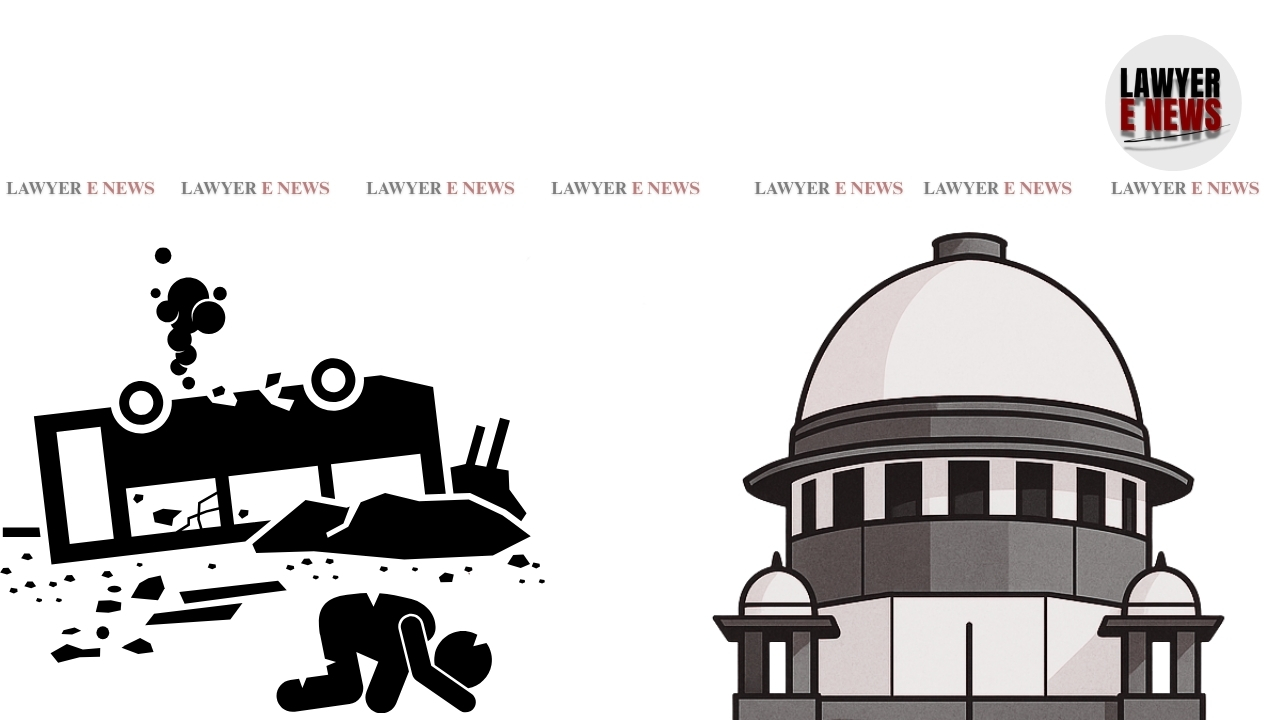
“Loss to Estate Continues Despite Death”: Supreme Court of India, in a poignant decision affirming the rights of the legal heirs of accident victims, enhanced compensation in a motor accident claim despite the death of the injured claimant during the pendency of the appeal. In the case of Meena (Dead) Represented through LRs v. Prayagraj & Others, a bench comprising Justice Sudhanshu Dhulia and Justice K. Vinod Chandran firmly held that compensation for injuries resulting in prolonged suffering continues to form part of the deceased’s estate, and legal heirs are entitled to pursue such claims.
Opening the judgment with clarity, Justice K. Vinod Chandran remarked, “We see absolutely no reason to differ from the declaration of law that the claim for compensation survives to the estate of the deceased, and the legal heirs are entitled to succeed to it.”
The case involved Meena, a 50-year-old woman who suffered 100% disability following a motor vehicle accident on 04.06.2005. After being rendered vegetative, she lived in a permanently disabled state for nearly 19 years before her death on 25.01.2024. Her husband and two daughters were substituted as appellants to pursue the appeal for enhancement of compensation.
The Motor Accidents Claims Tribunal had earlier awarded ₹8.56 lakhs, which the High Court marginally enhanced. However, the Supreme Court noted that considering the “extensive suffering” and “vegetative condition for nearly two decades,” further enhancement was warranted.
The Court relied on the ruling in Oriental Insurance Company Limited v. Kahlon @ Jasmail Singh Kahlon, (2022) 13 SCC 494, observing, “If legal heirs can pursue claims in case of death, there is no reason to prohibit them from pursuing compensation for injury-caused loss to the estate if the injured dies subsequently.”
Addressing the income assessment, the Court accepted the lower courts' determination of ₹3,000 per month, noting the deceased was a homemaker without regular employment but acknowledged her asserted contribution through stitching and embroidery.
Notably, the Court was mindful of the complex issue of medical expenses, stating, “The appellant survived almost 19 years in a vegetative state, and while not all medical bills can be attributed directly to the accident, there is definite scope for further enhancement.” On this basis, the Court enhanced future treatment compensation to ₹2,00,000.
Enumerating the final compensation, the Supreme Court ordered a total of ₹12,53,770, significantly higher than the previous awards. The Court directed, “The remaining amount, after deducting what has already been paid, shall be released to the legal heirs of the deceased claimant within two months, along with interest as per the Tribunal’s directions.”
Reinforcing the living spirit of justice, the Court concluded, “The claim for damages did not extinguish with the claimant’s death; it transitioned to her estate, which the legal heirs rightfully inherit.”
This judgment serves as a resounding reminder that in personal injury claims, especially where disability results in prolonged suffering, the legal heirs' right to just compensation remains intact, honoring the legacy and dignity of the deceased.
Date of Decision: 14 July 2025