-
by sayum
12 August 2026 1:53 PM







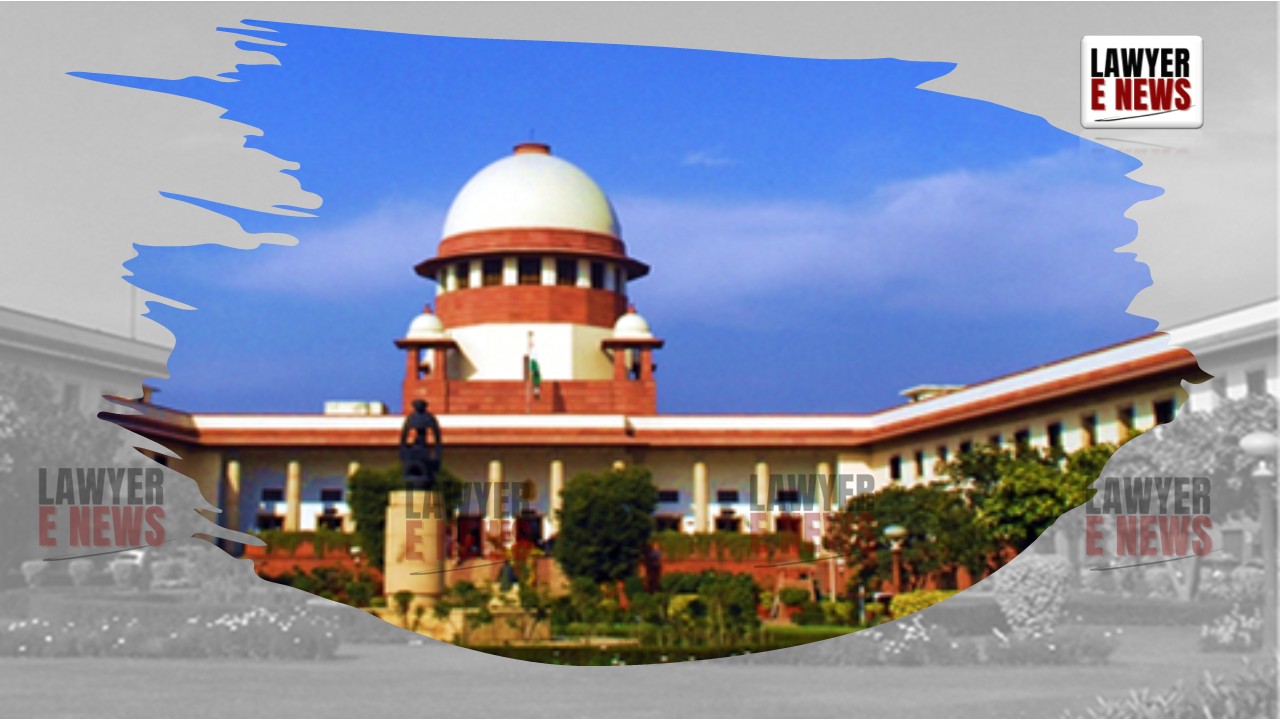
"A Judgment Without Execution Is a Mockery of the Justice System" - Supreme Court of India, in a significant ruling, has issued strict directions to all High Courts and subordinate courts, mandating that execution proceedings must be completed within six months. The Court has made it abundantly clear that judicial officers will be held accountable if execution is not completed within the stipulated timeframe.
Observing the persistent delays in enforcement of decrees, the Supreme Court lamented, “Justice cannot remain confined to the four corners of a judgment—it must reach the hands of the litigant.” It further noted, “A decree-holder who has fought for years to establish his rights should not be made to suffer again during execution. The law cannot allow judicial victories to become hollow formalities.”
The directions were issued in the case of Periyammal (Dead) Through LRs & Ors. v. V. Rajamani & Anr., where the decree-holders had been waiting for nearly two decades to take possession of their rightful property. Condemning the abuse of execution proceedings, the Supreme Court ordered immediate compliance within two months, emphasizing that the era of endless delays must end.
"Execution Cannot Be a Second Round of Litigation"
The Court took serious exception to the practice of treating execution as a fresh trial, allowing judgment-debtors and obstructionists to prolong proceedings indefinitely. It observed, “There is a steady rise of proceedings akin to a retrial at the time of execution, causing failure in realization of the fruits of a decree. Courts must not allow execution proceedings to become an open-ended dispute resolution mechanism where decree-holders are sent from pillar to post.”
It was further stated that judicial officers have a duty to ensure that decrees are enforced without delay, and that procedural loopholes must not be used to defeat the rightful claims of decree-holders. The Court underscored, “The solemnity of a judicial decree must be preserved. The law cannot allow decree-holders to walk away empty-handed while judgment-debtors exploit procedural loopholes to evade compliance.”
Condemning the widespread delays in enforcement of decrees, the Supreme Court remarked, “Courts exist not just to pronounce judgments but to ensure that they are carried out in letter and spirit. Execution is not a matter of discretion but a judicial duty.”
"High Courts Must Take Responsibility—Nationwide Compliance Ordered"
The Supreme Court, recognizing that delayed execution is a nationwide issue, has directed all High Courts to take immediate corrective measures. The Court has mandated that all High Courts must collect data on pending execution petitions and ensure strict compliance.
“The failure to execute a decree is a failure of justice itself. High Courts cannot remain silent spectators to the sufferings of decree-holders. They must ensure that every judicial officer under their jurisdiction follows the law in its true spirit,” the Court emphasized.
The Supreme Court further warned, “The High Courts must ensure compliance, failing which the concerned judicial officers shall be answerable on the administrative side. No decree should remain unexecuted merely because the system allows for unwarranted delays.”
The Court has directed that a compliance report be submitted to the Supreme Court within seven months, detailing the steps taken to clear execution backlogs.
"Frivolous Objections Will No Longer Be Tolerated"
The Supreme Court also took strong note of obstructionist tactics employed by judgment-debtors to evade execution. The Court emphasized, “Frivolous third-party claims and obstructionist behavior must be dealt with strictly. Courts must not mechanically entertain objections designed solely to prolong the agony of decree-holders.”
Further strengthening its stance, the Court directed that, “If necessary, police assistance must be provided for execution. Courts must ensure that decree-holders do not remain trapped in procedural labyrinths, waiting endlessly for justice to be served.”
The Court condemned the habitual misuse of Section 47 of the CPC, warning that execution courts must not permit retrial of settled matters under its garb. It was observed, “A decree-holder cannot be made to relitigate the same issues which have already been conclusively decided. The Court must not allow execution proceedings to become a second round of litigation.”
"Justice Must Be Delivered, Not Just Declared"
In its concluding remarks, the Supreme Court reminded all courts of their primary duty—to ensure that justice is not merely declared but actually delivered. The Court observed, “A judgment without execution is a body without a soul. Courts must ensure that the victor in a legal battle does not leave empty-handed after years of litigation. The delay in execution proceedings not only frustrates decree-holders but also erodes public confidence in the justice system.”
Reiterating the importance of timely execution, the Supreme Court emphasized, “Justice delayed is justice denied—but justice obstructed is justice destroyed.”
The landmark ruling now stands as a warning to courts and litigants alike—delayed execution of decrees will no longer be tolerated, and those responsible for dragging proceedings will be held accountable.
2nd News
Justice Cannot Be Held Hostage by Procedural Delays – Supreme Court Slams Execution Roadblocks
A Judgment Without Execution is a Body Without a Soul - Supreme Court of India, in a scathing rebuke of procedural delays that plague execution proceedings, has ruled that decree-holders cannot be indefinitely denied the fruits of their hard-fought litigation. In the case of Periyammal (Dead) Through LRs & Ors. v. V. Rajamani & Anr., the Court has set aside the orders of the Madras High Court and the Executing Court, which had allowed obstructionist tactics to derail the enforcement of a decree for specific performance and possession.
"The seeker of justice, many a time, has to take long circuitous routes, both on account of hierarchy of courts and procedural law. Even after obtaining a decree, he breathes fear of receiving the fruits of that justice," the Court observed, lamenting how "what looked inevitable to him to receive at an arm’s distance is deluded back into the horizon."
Calling out the abuse of procedural law that allows wrongdoers to stretch litigation indefinitely, the Supreme Court declared that courts must act decisively to prevent execution proceedings from becoming a retrial. The bench, comprising Justice J.B. Pardiwala and Justice Pankaj Mithal, ordered the immediate enforcement of the decree within two months, warning that if necessary, police assistance must be provided to ensure compliance.
"Justice Won in Court, But Lost in Execution – The Endless Legal Battle"
The case originated in 1980, when Ayyavoo Udayar, the predecessor of the appellants, entered into an agreement to purchase property in Tamil Nadu. Despite paying an advance, the vendors refused to execute the sale deed, forcing Udayar to file a suit for specific performance in 1983.
On April 2, 1986, the Subordinate Judge, Salem, decreed the suit in Udayar’s favor. The vendors challenged the decree, but it was affirmed by the Madras High Court in 2004 and subsequently by the Supreme Court in 2006. With the decree attaining finality, the decree-holders initiated execution proceedings to take possession of the property.
Yet, despite exhausting all legal remedies, the vendors colluded with their nephews (Respondent Nos. 1 & 2) to obstruct execution. The respondents—who were parties to the original suit but had chosen not to contest it—now claimed tenancy rights over the property under the Tamil Nadu Cultivating Tenants’ Protection Act, 1955.
The Supreme Court expressed disbelief at the respondents' sudden assertion of tenancy rights, pointing out that they had not raised this claim for over two decades of litigation. “Litigation cannot be permitted to be dragged indefinitely by persons who were fully aware of their rights but chose to remain silent throughout the trial and appeal stages,” the Court remarked.
The decree-holders, after securing an executed sale deed in 2007, attempted to take possession in 2008. However, Respondent No. 1 physically obstructed the execution, going as far as threatening to self-immolate if anyone entered the property. This obstruction led to an execution application under Section 47 CPC, which shockingly succeeded before the Executing Court in 2011. The High Court upheld this decision in 2019, forcing the decree-holders to approach the Supreme Court once again—nearly two decades after obtaining a final decree.
"Execution Proceedings Are Not a Retrial – Supreme Court Denounces Collusion and Delay"
The Supreme Court made it abundantly clear that execution proceedings cannot be allowed to become fresh rounds of litigation. It condemned the abuse of Section 47 CPC by parties seeking to frustrate an already decided matter.
"A harmonious reading of Section 47 with Order XXI Rule 101 implies that questions relating to right, title, or interest in a decretal property must be related to the execution, discharge, or satisfaction of the decree. Issues that ought to have been raised during the original suit cannot be re-agitated in execution proceedings," the Court held.
The Court noted that the respondents had actively concealed their objections until the decree reached the execution stage, making their claims "a desperate afterthought designed to obstruct justice." It found their reliance on a 2008 revenue certificate—obtained with a ‘No Objection’ from the original vendors (who had already lost ownership in 2007)—to be a clear case of collusion.
"It is incomprehensible why, despite the decree attaining finality in 2006 and the sale deed being executed in 2007, the revenue authorities issued a possession certificate to the respondents in 2008," the Court remarked. "Such a certificate, procured in collusion with vendors who had no title left, does not and cannot establish any independent right of possession."
Rejecting the argument that the decree was a nullity due to lack of jurisdiction, the Court stated: “Execution proceedings cannot become a forum to undo what has already been adjudicated. A decree must be enforced with full authority, and its sanctity must not be diluted by delay tactics.”
"A Judgment Without Execution Is a Mockery of Justice – Supreme Court Issues Strong Directives"
With the decree-holders being denied possession for nearly 20 years, the Supreme Court issued strict directives to curb delays in execution proceedings across the country. It set aside the High Court’s 2019 order and the Executing Court’s 2011 ruling, ordering that possession be handed over within two months.
“The Executing Court shall now proceed to ensure that vacant and peaceful possession of the suit property is handed over to the appellants in their capacity as decree-holders, and if necessary, with the aid of police. This exercise shall be completed within a period of two months from today without fail,” the judgment declared.
The Court did not stop there. Recognizing that such delays are rampant in the legal system, it mandated all High Courts to collect data on pending execution petitions and ensure their disposal within six months.
“The general impression amongst the litigant public is that their real difficulties begin after obtaining a decree. The execution of a decree should not take decades, while decree-holders watch helplessly as judgment-debtors use procedural loopholes to delay compliance. The law must not permit the agony of decree-holders to be prolonged indefinitely.”
It reiterated its ruling in Rahul S. Shah v. Jinendra Kumar Gandhi (2021) 6 SCC 418, directing that:
• Execution courts must not issue notices on frivolous third-party claims.
• Obstructionist tactics must be dealt with stringently, including imposing compensatory costs.
• Police assistance must be provided where necessary to enforce the decree.
• Execution proceedings must be concluded within six months, and presiding officers will be answerable to the High Court for delays.
The Court further directed all High Courts to report back with compliance data within seven months, making it clear that judicial officers would face consequences for unnecessary delays.
"The Judiciary Must Restore Faith in Execution"
In its parting words, the Supreme Court issued a strong reminder to all courts handling execution matters: "The solemnity of a judicial decree must be preserved. Justice is not merely about obtaining a favorable judgment—it is about securing the actual relief granted by the court. A judgment without execution is a body without a soul. The law must ensure that the victor in a legal battle does not walk away empty-handed."
With this historic ruling, the Supreme Court has made it clear that delays in execution will no longer be tolerated. The judgment is a wake-up call to the judiciary, reinforcing that justice delayed is justice denied—but justice obstructed is justice destroyed.
Date of Decision: March 6, 2025