-
by sayum
24 August 2026 3:22 PM







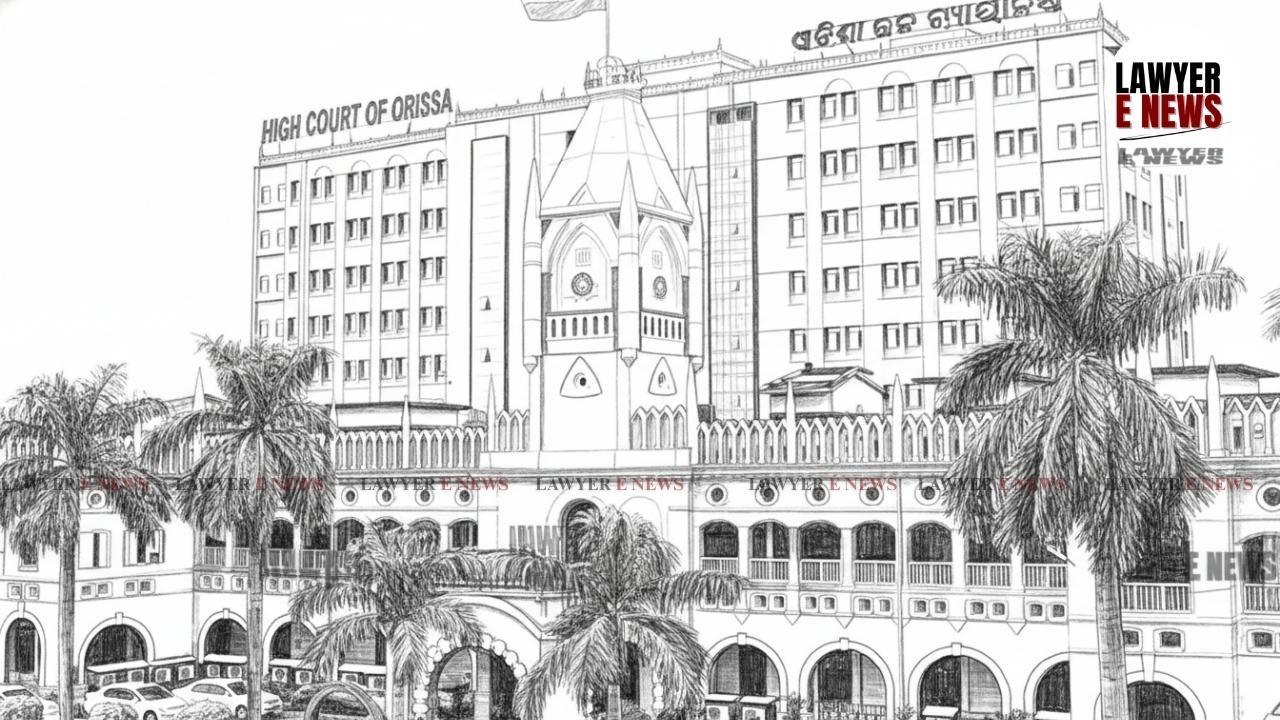
"Failure to consider official salary records and inquest findings amounts to a manifest error warranting judicial correction,” ruled the Andhra Pradesh High Court while invoking its review jurisdiction to rectify what it termed as a “palpable miscarriage of justice.”
In a significant verdict Justice A. Hari Haranadha Sarma of the Andhra Pradesh High Court allowed a review petition in a long-pending motor accident case, holding that the earlier judgment dated 27.07.2017 had erroneously failed to consider crucial documentary and oral evidence regarding the deceased’s income. The Court observed that such a lapse not only violated binding precedent but also struck at the heart of the principle of just compensation enshrined under the Motor Vehicles Act, 1988.
Terming the non-consideration of key salary and employment records as an “error apparent on the face of the record,” the Court revised the compensation from ₹2,30,200 to ₹11,52,432, invoking its powers under Section 114 and Order XLVII Rule 1 of the Civil Procedure Code, 1908.
“A Court’s Mistake Must Not Burden the Victim Twice”: Material Overlooked in Salary, Inquest Records Warranted Judicial Correction
The claim arose from a fatal motor accident on 6 November 2003, in which Jadapalli Muni Ramayya, a government jeep driver with the Irrigation Department, lost his life. His wife, four daughters, and mother—completely dependent on him—had filed a claim for ₹15 lakhs under Section 166 of the Motor Vehicles Act. However, both the Motor Accident Claims Tribunal (MACT), Nellore, and the High Court in appeal wrongly treated his income as notional at just ₹1,500 per month, despite the existence of Ex.A6 Salary Certificate and evidence in the inquest report.
“Ex.A6, the salary certificate of the deceased, clearly shows a net monthly income of ₹6,335. Yet, both the Tribunal and this Court failed to even refer to this decisive evidence,” lamented the High Court while reviewing its earlier appellate judgment.
Refusing to let procedural rigidity trump justice, the Court reminded that “doctrine of ‘actus curiae neminem gravabit’—the act of the court shall prejudice no man—must be kept alive in every forum of justice.”
“Review is not a rehearing but a remedy against manifest injustice”: Court Clarifies Scope of Order XLVII Rule 1 CPC
Opposing the review, the Insurance Company contended that the applicants were trying to re-argue the appeal by disguising it as a review. The Court rejected the contention emphatically, stating:
“When vital evidence, available on record, is overlooked and the result is a patently unjust award—then the Court is duty-bound to exercise review jurisdiction.”
Relying on the Supreme Court’s rulings in Board of Control for Cricket in India v. Netaji Cricket Club, Oriental Insurance Co. Ltd. v. Kalawati Devi, and Pranay Sethi, the Court clarified that “review is not an appeal in disguise, but a judicial duty when a mistake by the Court leads to injustice.”
It further observed, “If the test under the Kalawati Devi case is applied, overlooking official evidence like the inquest report and salary certificate squarely brings this case within the permissible domain of review.”
“The Power to Award Just Compensation Cannot Be Trapped in a Technical Straitjacket”: Tribunal's Mechanical Approach Set Aside
The Court held that the MACT’s rejection of the salary certificate for want of examination of its author was hyper-technical, especially when the employment was not disputed and the widow had deposed credibly regarding her husband's income.
“There is no oath against oath. The wife of the deceased spoke credibly about his employment, and her version remained unshaken in cross-examination,” said the Court.
Referring to the inquest report which recorded the deceased’s status as a government driver for 20 years, the Court said that this was an “official record prepared in discharge of public duty” and could not be brushed aside.
“The inquest specifically mentions that the deceased went to his office and met with an accident while returning on official work. Ignoring such material amounts to miscarriage of justice,” noted the Court.
“Compensation Must Match the Reality of the Loss Suffered”: Income Assessment Revised, Future Prospects and Multiplier Applied
The High Court meticulously recalculated compensation by accepting the net monthly salary of ₹6,335 and adding 30% towards future prospects as mandated in Pranay Sethi.
After deducting one-third for personal expenses, the annual contribution to the family was assessed at ₹65,888. Applying the multiplier of 14 (for the age group 41–45 as per Sarla Verma), the loss of dependency was recalculated at ₹9,22,432.
Further, citing Magma General Insurance Co. Ltd. v. Nanu Ram, the Court awarded ₹40,000 each to the wife and four daughters under the head of loss of consortium, adding ₹2,00,000.
An additional ₹15,000 each was awarded under loss of estate and funeral expenses, taking the total to ₹11,52,432, payable with 6% interest from the date of the petition.
“When Justice Demands Correction, Delay Cannot Be the Excuse”: Additional Evidence, Enhancement Pleas Dismissed as Redundant
While the review was allowed, the Court dismissed two applications:
“A review is not the stage to introduce new evidence—the time for that has long passed. But where the existing record itself reveals injustice, the Court cannot shut its eyes,” the Court clarified.
Review Allowed, Judgment Modified, Compensation Quadrupled
Holding that a grave error of non-consideration of material evidence occurred in the earlier decision, the High Court ruled:
“Empathetic concern in dealing with the evidence was missing. Justice demands that this oversight be rectified without further delay.”
Accordingly, the Court modified its earlier judgment and awarded ₹11,52,432 to the claimants with 6% interest. Apportionment was ordered with ₹5,52,432 going to the widow and ₹1,50,000 each to four daughters. The Insurance Company was directed to satisfy the award within two months, failing which execution proceedings may follow.
Date of Decision: 22 January 2026