-
by sayum
05 August 2026 3:07 PM







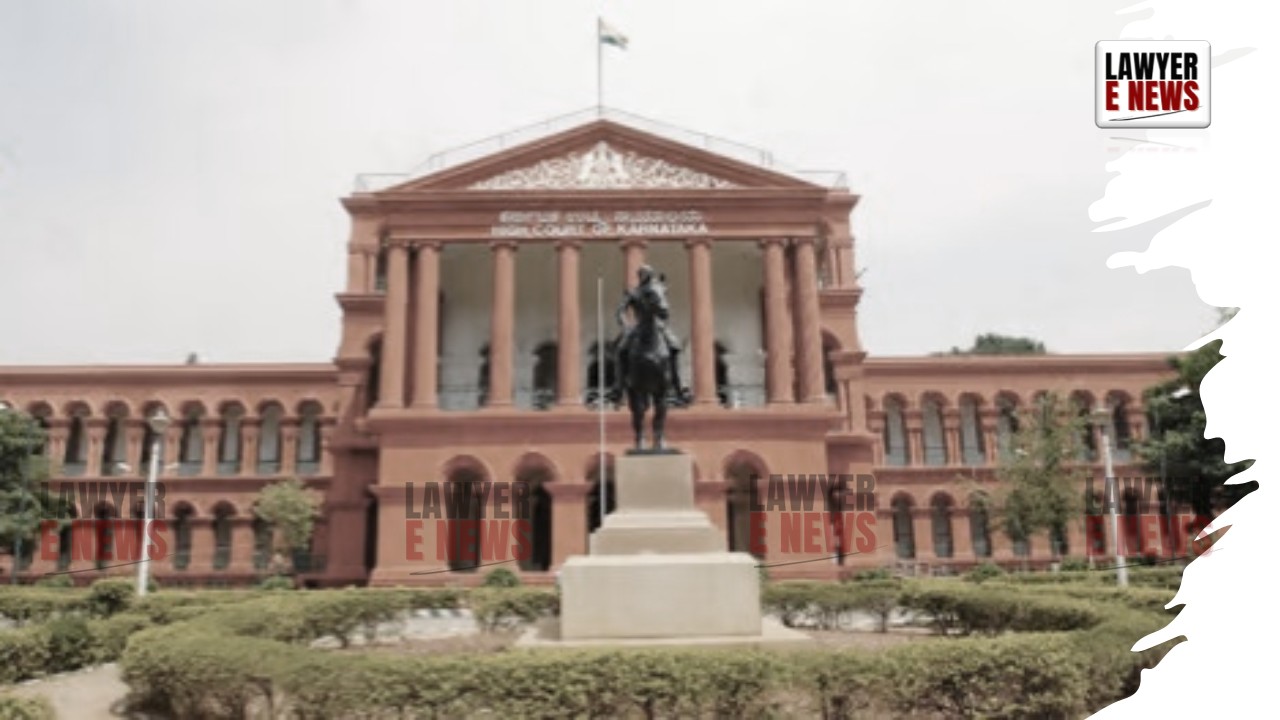
“This Court Witnesses Not Justice but Judicial Hide and Seek”, In a powerfully worded judgment, the Karnataka High Court emphatically shut the door on a decades-long litigation saga, where the petitioners repeatedly challenged a concluded land acquisition by invoking shifting grounds across nine rounds of litigation. In the case of Smt. Gangamma and Others versus State of Karnataka and Others, Justice M. Nagaprasanna dismissed the latest writ petition with ₹10,00,000/- exemplary costs, categorically condemning the petitioners for “gross abuse of process,” “suppression of material facts,” and “polluting the stream of justice.”
At the very outset, the Court underlined the central issue in scathing terms: “What this Court witnesses is not the pursuit of justice, but a game of judicial hide and seek… such cynical use of writ jurisdiction under Article 226 of the Constitution of India must be arrested in its tracks.” (Para 26)
This judgment represents a defining moment in reinforcing the principle that litigation must end, judicial orders must attain finality, and courts cannot be reduced to instruments of endless re-litigation.
High Court Dismantles Successive Challenges Based on Non-Existent Rights
The case involved a parcel of land, measuring 2 acres and 20 guntas, granted to the petitioners’ predecessors in 1979, which was acquired by the State in 1986-87 for a cooperative housing society. Acquisition proceedings were completed, compensation paid, possession taken, and subsequent suits and petitions filed by the petitioners and their predecessors were dismissed repeatedly over the next four decades.
Despite this, the petitioners approached the Court again in 2025, basing their claim on a supposed Section 48(1) withdrawal notification of 1993. The Court, unimpressed by the eleventh-hour discovery of this so-called notification, slammed the petitioners for playing tactical games with judicial proceedings:
“The first petition was filed in 1994… The information about Section 48(1) notification was always available to the petitioners. During eight rounds of litigation, this ground is not taken… this becomes a case to caution every litigant that if they want the relief before this Court, they ought not to approach the doors of this Court with unclean hands.” (Para 23)
Judicial Patience Exhausted: Court Chronicles 40 Years of Frivolous Litigation
Justice Nagaprasanna meticulously traced the timeline of abuse, recounting eight rounds of litigation — including multiple writ petitions, civil suits, and writ appeals — all dismissed by learned Single Judges, Division Benches, and even the Supreme Court. By suppressing these prior unsuccessful proceedings, the petitioners attempted to resurrect a settled issue.
Reflecting on the petitioners’ conduct, the Court observed: “Eight rounds of suffering of orders against them and those orders having become final are conveniently suppressed in the subject petition, on a specious plea that in 1993, about 32 years ago, there was a notification dropping the lands from acquisition.” (Para 22)
Court Applies the Full Weight of Constructive Res Judicata and the Henderson Principle
The High Court invoked robust jurisprudence on finality of litigation, citing Constitution Bench decisions and Supreme Court precedents, including Forward Construction Co. v. Prabhat Mandal, Dalip Singh v. State of Uttar Pradesh, CELIR LLP v. Sumati Prasad Bafna, and several others.
Expounding on the legal reasoning, the Court stated: “No litigant may withhold a plea and preserve it for further battle. The law frowns upon fragmented litigation and strategic silence. The reason is to prevent abuse of judicial process and give quietus to litigation and finality to judicial decisions.” (Para 27)
“The Apex Court has expounded the aforesaid doctrines of constructive res judicata and the Henderson principle with luminous clarity… which would unmistakably mean, that no litigant may withhold a plea and preserve it for further battle.” (Para 27)
By invoking the doctrine of constructive res judicata (Explanation IV, Section 11 of CPC) and the common law Henderson principle, the Court reinforced that parties cannot reserve grounds to agitate in future after losing in prior rounds.
An Exemplary Judgment of Judicial Integrity and Accountability
Delivering a crushing blow to the petitioners’ misuse of the judicial process, the Court not only dismissed the petition but imposed exemplary costs. Justice Nagaprasanna highlighted that judicial process must not become a playground for unscrupulous elements:
“Justice, if it is to remain untainted, demands that those who attempt to pervert its course must be met not only with stern repudiation but with consequences potent enough to serve as a salutary warning to others.” (Para 25)
The concluding order of the Court declared: “The writ petition is dismissed with exemplary costs of ₹10,00,000/- to be paid by the petitioners to the Karnataka State Legal Services Authority within a period of four weeks from the date of receipt of this order.” (Para 29)
A Judicial Stand Against Endless Litigation
In this landmark decision, the Karnataka High Court sounded a clarion call for respect to judicial finality, the sanctity of process, and truthfulness in pleadings. It reaffirmed that litigation is not a never-ending right but a structured process governed by fairness, diligence, and finality. By enforcing heavy costs, the Court underscored the message that courts are not to be trifled with by litigants indulging in concealment, forum-shopping, and tactical abuse.
“Litigation must end somewhere. If the Court entertains such petitions, it would amount to putting a premium on litigative persistence and rewarding abuse of process and tacit fraud played on this Court.” (Para 28)
This judgment stands tall as a testament to judicial resolve in protecting the justice system from vexatious re-litigation and restoring faith in the sanctity of court proceedings.
Date of Decision: 21 July 2025