-
by sayum
23 August 2026 2:56 PM







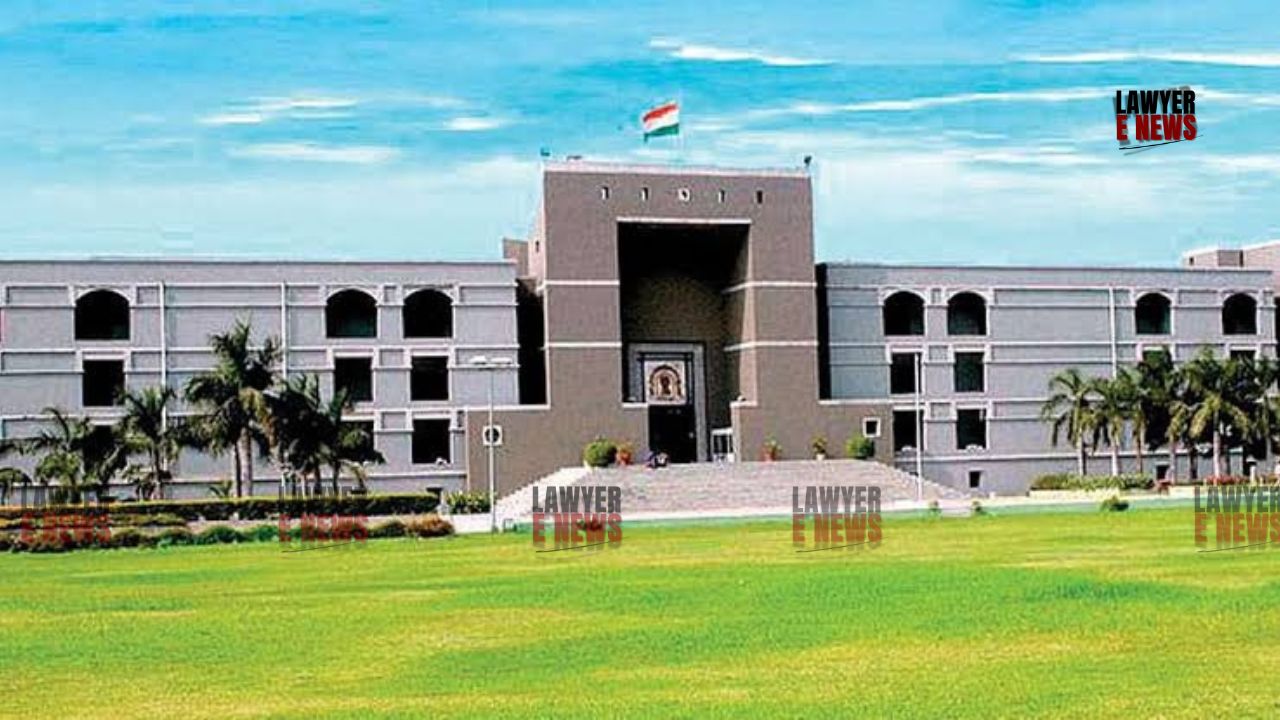
“Compensation under the MV Act is not a bonanza or a jackpot” — Gujarat High Court decisively recalibrating compensation in a fatal motor accident claim. Sitting in Civil Appellate Jurisdiction, Justice Hasmukh D. Suthar ruled that while courts must prevent claimants from treating compensation under the Motor Vehicles Act as a "windfall", they are equally bound to ensure that all genuine losses suffered—including post-discharge medical expenses and consortium for multiple dependants—are fully recognised and compensated.
The High Court enhanced the total compensation from Rs.41,05,240/- awarded by the Motor Accident Claims Tribunal (MACT) to Rs.45,57,739/-, setting an important precedent on the assessment of “just compensation” under Section 166 read with Section 173 of the Motor Vehicles Act, 1988.
"Medical bills dated after discharge cannot be disregarded where the treatment is demonstrably linked to the accident"
The Court observed at the outset that the present appeal did not involve any dispute over negligence or liability. The only question before the Court was whether the Motor Accident Claims Tribunal had erred in calculating the quantum of compensation.
“Where the Tribunal has ignored material evidence that affects the determination of just compensation, appellate interference is not only permissible but necessary,” the Court noted.
The deceased, Nileshbhai Mahendrabhai Vasant, had suffered critical injuries in a road accident on April 1, 2011, and ultimately died at home during ongoing treatment on February 28, 2012. The Tribunal had considered only in-hospital medical expenditure up to June 23, 2011, when the deceased was discharged. However, the High Court found that bills produced at Exhibit 71, amounting to Rs.2,52,899/-, clearly evidenced continued treatment for accident-related complications post-discharge.
“The deceased was undergoing extensive post-hospitalisation treatment, and medical bills produced were genuine and directly linked to the injuries sustained in the accident. Hence, the Tribunal erred in excluding these costs,” held Justice Suthar, allowing reimbursement under this head.
“Each dependant is entitled to separate consortium under settled law” – Consortium enhanced by applying Pranay Sethi principles
A major point of legal correction came in the application of the principles laid down in National Insurance Co. Ltd. v. Pranay Sethi, (2017) 16 SCC 680. While the MACT had awarded a mere Rs.44,000/- towards loss of consortium, the Court found this to be inconsistent with binding precedent.
“The deceased left behind four dependants. As per Pranay Sethi, each legal heir is entitled to Rs.40,000/- towards loss of consortium, revised to Rs.48,400/- after adjustment for inflation,” the Court observed. Consequently, the High Court enhanced the consortium amount to Rs.1,93,600/-, reflecting a per-dependant assessment.
Charitable Aid Not Recoverable by Claimants – Compensation Must Reflect Actual Out-of-Pocket Expenditure
One contentious claim pressed by the appellants was for recovery of Rs.10,86,415/- incurred by Shantaben Atmaramdas Patel Charitable Trust, which had financed a large part of the deceased’s hospitalisation.
The Court, however, categorically denied this part of the claim, holding:
“Compensation under the Motor Vehicles Act is intended to indemnify the actual financial loss borne by the claimants. It is not a bonanza or a jackpot. The said Trust is not a party to the proceedings and has not claimed reimbursement. Therefore, the claimants, having not paid this amount themselves, cannot recover it.”
The Court stressed that allowing such reimbursement would distort the principles of equitable compensation and possibly lead to unjust enrichment.
Attendant & Transportation Costs Must Be Reasonable, Not Inflated by Duplicates
On the claim for Rs.1,59,600/- towards attendant and transportation expenses, supported by Exhibit 72, the Court noted that many of the receipts were either overlapping or unreliable. Nevertheless, recognising the fact that the deceased remained hospitalised for 64 days, the Court awarded a lump sum of Rs.50,000/- under this head as a “reasonable estimation”.
Final Reassessment of Compensation: Modified Award Totals Rs.45,57,739/-
After detailed recalculation, the Gujarat High Court enhanced the total compensation to Rs.45,57,739/- under the following revised heads:
All other heads—including future loss of dependency, funeral expenses, and loss of estate—remained unchanged from the Tribunal’s award.
The Court directed the respondents (including the insurance company) to deposit the enhanced compensation amount within four weeks, along with interest at 7.5% per annum from the date of the original claim petition. The Tribunal was instructed to disburse the amount to the claimants after proper verification, through NEFT/RTGS or account payee cheque.
This judgment reiterates two vital principles in motor accident compensation jurisprudence: that just compensation must account for all genuine financial loss, and that compensation cannot be claimed for amounts not actually paid by the claimants. The Gujarat High Court’s ruling ensures a careful balance between fairness to claimants and fidelity to statutory limitations under the Motor Vehicles Act.
Date of Decision: January 8, 2026