Auction Purchaser Has No Vested Right Without Sale Confirmation: Calcutta HC Upholds Borrower’s Redemption Right Under Pre-Amendment SARFAESI Law Mere Breach of Promise to Marry Doesn’t Amount to Rape: Delhi High Court Acquits Man in False Rape Case Father Is the Natural Guardian After Mother’s Death, Mere Technicalities Cannot Override Welfare of Child: Orissa High Court Restores Custody to Biological Father Assets of Wife and Father-in-Law Can Be Considered in Disproportionate Assets Case Against Public Servant: Kerala High Court Refuses Discharge Identification Without TIP, Electronic Records Without 65B Certificate – Conviction Set Aside: Patna High Court Nothing Inflicts A Deeper Wound On Our Constitutional Culture Than A State Official Running Berserk Regardless Of Human Rights: Jharkhand High Court Orders ₹1.5 Lakh Interim Compensation Dishonour Due to ‘Account Blocked’ Not Attributable to Drawer—No Offence Under Section 138 NI Act: Delhi High Court Quashes Criminal Proceedings Presumption Under Section 139 NI Act Cannot Be Rebutted By Mere Assertions: Delhi High Court Affirms Conviction In 32-Year-Old Cheque Bounce Case Signature Alone Doesn’t Prove Debt: Kerala High Court Upholds Acquittal in Cheque Bounce Case, Rejects Blanket Presumption Under Section 139 NI Act Justice Cannot Be Left to Guesswork: Supreme Court Mandates Structured Judgments in Criminal Trials Across India Truth Must Be Proven Beyond Doubt—Not Built On Flawed FIRs, Tainted Witnesses And Investigative Gaps: Supreme Court Acquits Man in POCSO Rape-Murder Case Once parties agree and reconciliation is impossible, a fault-based decree is unnecessary: Supreme Court Sets Aside Divorce on Desertion No Escape from Statutory Ceiling: Exclusive Expenditure by Foreign Head Offices Also Attracts Section 44C Income Tax: Supreme Court Loss Of A Child Cannot Be Calculated In Rupees, But Law Must At Least Offer Dignity In Compensation: Supreme Court Enhances Compensation Sessions Court Cannot Direct Life Imprisonment Till Natural Life Without Remission: Supreme Court Reasserts Limits on Sentencing Powers of Subordinate Courts ‘Continuously Means Without a Single Break’: Supreme Court Bars Expired-and-Renewed Licences From Police Driver Recruitment Chief Justice’s Power Under Section 51(3) Is Independent and Continuing: Supreme Court Upholds Kolhapur Bench Notification Last Seen Evidence Alone Cannot Sustain Conviction: Supreme Court Acquits Accused in Murder Case No Cultivation on Forest Land Without Central Clearance: Supreme Court Cancels Lease Over 134 Acres, Orders Reforestation Appointment from Rank List Must Respect Communal Rotation: SC Declines Claim of SC Waitlisted Candidate After Resignation of Appointee Supreme Court Dissolves 20-Year Estranged Marriage Under Article 142 Despite Wife’s Objection Murder Inside Temple Cannot Be Treated Lightly: Supreme Court Cancels Bail of Father-Son Convicts in Group Killing Case No Notice, No Blacklist: Calcutta High Court Quashes Debarment Over Breach of Natural Justice Prosecution Must Elevate Its Case From Realm Of ‘May Be True’ To Plane Of ‘Must Be True: Orissa High Court Strict Compliance Is the Rule, Not Exception: Himachal Pradesh High Court Dismisses Tenant's Plea for Late Deposit of Rent Arrears When Accused Neither Denies Signature Nor Rebuts Presumption, Conviction Must Follow Under Section 138 NI Act: Karnataka High Court A Guardian Who Violates, Forfeits Mercy: Kerala High Court Upholds Natural Life Sentence in Stepfather–POCSO Rape Case Married and Earning Sons Are Legal Representatives Entitled to Compensation: Punjab & Haryana High Court Enhances Motor Accident Award to ₹14.81 Lakh Driver Must Stop, Render Aid & Report Accident – Flight from Scene Is an Offence: Madras High Court Convicts Hit-And-Run Accused Under MV Act Delay May Shut the Door, But Justice Cannot Be Locked Out: Gauhati High Court Admits Union of India’s Arbitration Appeal Despite Time-Bar Under Section 30 PC Act | Mere Recovery of Money Is Not Enough—Demand and Acceptance Must Be Proved Beyond Reasonable Doubt: Delhi High Court Allahabad High Court Slams Bar Council of U.P. for Ex Parte 10-Year Suspension of Advocate

Judicial Decisions Are Not Immune from Disciplinary Proceedings:  Punjab & Haryana High Court Allows Inquiry Against Judicial Officer

27 February 2025 7:57 PM

By: sayum


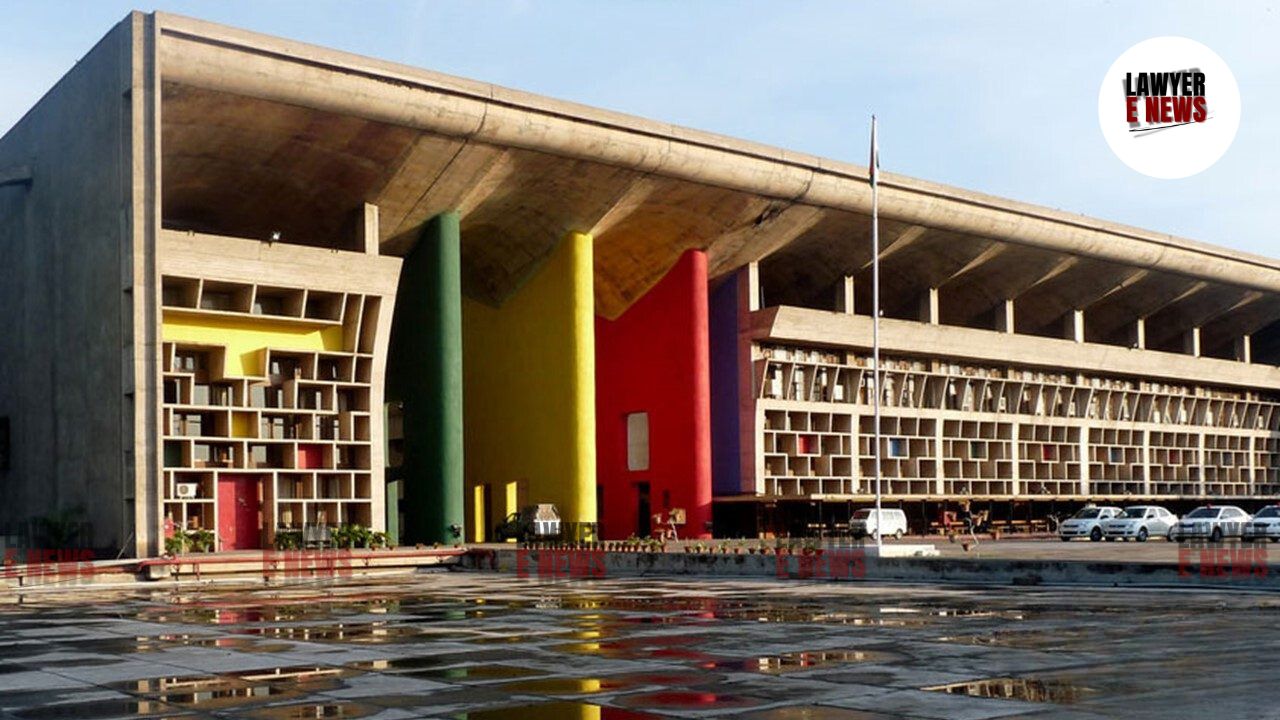
“Extraneous Considerations in Awarding Excessive Compensation Must Be Investigated” – Court Rejects Challenge to Departmental Inquiry - In a significant ruling, the Punjab & Haryana High Court has dismissed a writ petition filed by Sudhir Jiwan, a judicial officer from the Superior Judicial Services, challenging a charge-sheet dated June 7, 2014, and the rejection of his plea to drop the disciplinary inquiry.

Rejecting the judicial officer’s contention that judicial decisions are immune from administrative scrutiny, the court ruled: "While judicial officers must exercise independence, they are not beyond accountability. When a decision raises legitimate concerns of extraneous considerations, an inquiry is justified.”

The judgment was delivered by a Division Bench comprising Chief Justice Sheel Nagu and Justice Anil Kshetarpal, who vacated the interim stay on disciplinary proceedings and permitted the High Court to continue its inquiry against the officer.

Allegations of Extraneous Considerations in MACT Compensation Awards

The case revolved around multiple Motor Accident Claims Tribunal (MACT) awards issued by Sudhir Jiwan in his capacity as Additional District & Sessions Judge, Narnaul. He was accused of granting exorbitant compensation under the head of “loss of love and affection” without providing any legal justification or reliance on precedents.

The charge-sheet specifically cited two cases:

  • MACT Case No. 266/2010 (Saroj v. Ajit) – Compensation of ₹20,69,688/- awarded under “loss of love and affection.”

  • MACT Case No. 226/2010 (Beena Devi v. Anil) – Compensation of ₹18,25,400/- awarded under “loss of love and affection.”

The High Court noted that such awards were nearly 10 times the amount normally granted under this head, raising serious concerns about judicial propriety and bias. The charge-sheet further alleged that the judicial officer’s actions were influenced by “extraneous considerations,” though it did not specify what those considerations were.

“Judicial Independence Does Not Shield Officers from Accountability” – High Court Rejects Immunity Claim

The petitioner argued that his judicial decisions should not be subjected to administrative scrutiny, relying on the principle that judicial discretion is immune from disciplinary action.

However, the High Court firmly rejected this contention, ruling:

"A judicial officer is expected to work without fear, favor, ill-will, or malice. However, when decisions display bias, impropriety, or a disregard for legal principles, they become subject to scrutiny."

The court cited the fact that his awards were drastically reduced on appeal, with the compensation in FAO No. 276-2013 being lowered to ₹2,50,000/-, as proof that his original decisions lacked legal foundation.

Further, the court observed that disciplinary proceedings should not be interfered with unless there is clear mala fide intent, violation of statutory provisions, or lack of misconduct on the face of the record. None of these conditions were met in this case.

Concluding its judgment, the Punjab & Haryana High Court dismissed the petition, vacated the interim stay on disciplinary proceedings, and allowed the High Court administration to proceed with the inquiry expeditiously.

"A bare perusal of the charge-sheet reveals serious allegations warranting investigation. The judiciary’s credibility demands that such concerns be addressed through a fair and impartial inquiry."

With this ruling, Sudhir Jiwan remains subject to disciplinary proceedings, and the High Court is now free to examine whether his conduct violated judicial ethics and procedural fairness.

Date of decision : February 4, 2025

Latest Legal News