-
by sayum
23 August 2026 2:56 PM







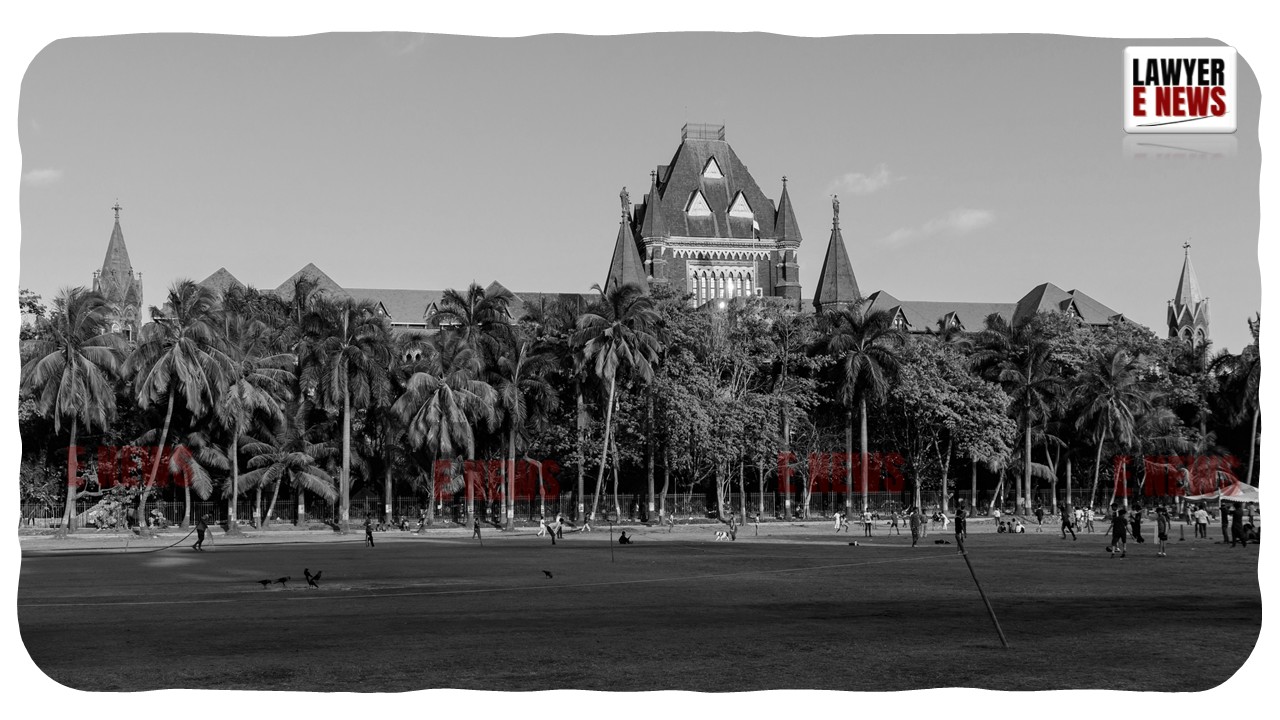
“Expert Opinion Cannot Be Discarded Merely for Lack of Prior Notice” – In a significant judgment Bombay High Court (Aurangabad Bench), presided by Justice R. M. Joshi, enhanced compensation awarded to farmers whose irrigated lands were compulsorily acquired for a percolation tank. Allowing First Appeal Nos. 3760 and 4300 of 2008 filed under Section 54 of the Land Acquisition Act, 1894, the Court held that “where the land acquired is irrigated, the valuation must be computed at double the rate applicable to jirayat land,” reaffirming the doctrine laid down in State of Maharashtra v. Baliram Girdhar Patil and SLAO v. Bhagwat Sonawane.
The Court also took exception to the Reference Court's rejection of expert valuation reports concerning trees and superstructures, calling it “unsustainable and unsupported by evidence.” Emphasising that expertise cannot be presumed absent merely because prior notice wasn’t served before site inspection, Justice Joshi observed: “In the absence of cross-examination or evidence to the contrary, the Valuer's testimony stands unshaken and must be accepted.”
Reference Court Ignored Established Principles of Irrigated Land Valuation
The controversy arose from the State Government’s acquisition of lands in Takli (Bombli), District Latur, in 2000 for the construction of a percolation tank. The appellants, Shrimant Bapurao Sonale and Sukhwant Bapurao Sonale, argued that the Special Land Acquisition Officer grossly undervalued their irrigated lands by relying on a sale deed dated 20 April 2000 involving jirayat land, fixing compensation at just Rs. 2,500/- per R.
While the Reference Court did accept this sale instance as a comparable transaction, it erred by applying only a 1.5x multiplier and settling compensation at Rs. 3,375/- per R, without granting the 12% annual increase which had already been considered by the Land Acquisition Officer. It also rejected additional claims for fruit-bearing trees and built structures, questioning the credibility of the valuer.
The High Court corrected these oversights, holding:
“The market price of irrigated land, in absence of any other evidence, is required to be taken as double the market rate of jirayat land. This Court finds no reason not to follow this principle.”
Justice Joshi underscored that where comparable sales pertain to jirayat land, doubling the rate for irrigated land is not discretionary but an established legal standard when better evidence is unavailable.
The Court also pointed out that the Reference Court had failed to grant an additional 12% increase for the time gap between the sale deed and the acquisition date, even though the SLAO had applied this enhancement himself.
“This Court finds no reason to deny 12% addition to the said valuation,” the Court declared, holding the final compensation payable at Rs. 6,346.66/- per R. Valuer’s Report Cannot Be Rejected in Vacuum – Expertise Must Be Disproved Through Evidence
Turning to the second limb of the appeal, the High Court held that the Reference Court had committed a serious error by rejecting the valuation report for the trees and superstructures. The only objection raised in cross-examination was the absence of prior notice of inspection. There was no challenge whatsoever to the valuer’s credentials or expertise.
Justice Joshi clarified: “In the absence of any suggestion or evidence that the Valuer lacked expertise, it was not open to the Reference Court to discard his evidence.”
Citing Pandhari s/o Dhondiba Nukuklwad v. State of Maharashtra, 2019 SCC OnLine Bom 2045, the Court held that the issuance of prior notice is not a legal requirement for admissibility of expert valuation. The real test is whether the opposing party challenges the methodology or qualifications—which was not done here.
“The findings to the effect that the Valuer was not an expert witness being unsupported by evidence, cannot sustain.”
Accordingly, the Court reinstated the claimants’ entitlement to tree and superstructure compensation, awarding Rs. 3,84,000/- and Rs. 63,900/- for trees, and Rs. 1,29,803/- and Rs. 24,450/- for built structures, in FA 3760 and FA 4300 respectively.
Compulsory Acquisition Demands Just Compensation – Not Mathematical Formalities
In one of the most notable observations in the judgment, the Court remarked on the very ethos of compulsory acquisition:
“There cannot be any dispute that this is a case of compulsory acquisition, and the claimants who have lost their lands are entitled to reasonable compensation.”
Justice Joshi affirmed that the State’s power to acquire land must be balanced by its obligation to compensate not just in form, but in substance. Compensation, the Court noted, must reflect true market value, inclusive of agricultural potential, existing infrastructure, and economic loss.
The final award also included statutory solatium at 30% under Section 23 of the Land Acquisition Act and interest at 9% per annum for the first year and 15% thereafter, until full realisation.
A Judicial Reminder That Farmers Deserve Justice, Not Lip Service
This judgment by Justice R. M. Joshi serves as a robust reaffirmation of two foundational principles in land acquisition law — that irrigated land carries higher intrinsic value and must be compensated accordingly, and that expert evidence cannot be casually dismissed without proper challenge.
By restoring full compensation, the Court protected not only the economic rights of the appellants but reinforced procedural fairness in compulsory acquisition cases.
“When the State exercises eminent domain, it must also shoulder the burden of fair recompense,” the Court’s ruling reflects in spirit and letter.
The judgment will stand as an instructive precedent for Reference Courts across the State and a warning against undervaluing agricultural lands under the guise of rigid valuation methods.
Date of Decision: 15 October 2025