
-
by sayum
26 August 2026 1:49 PM







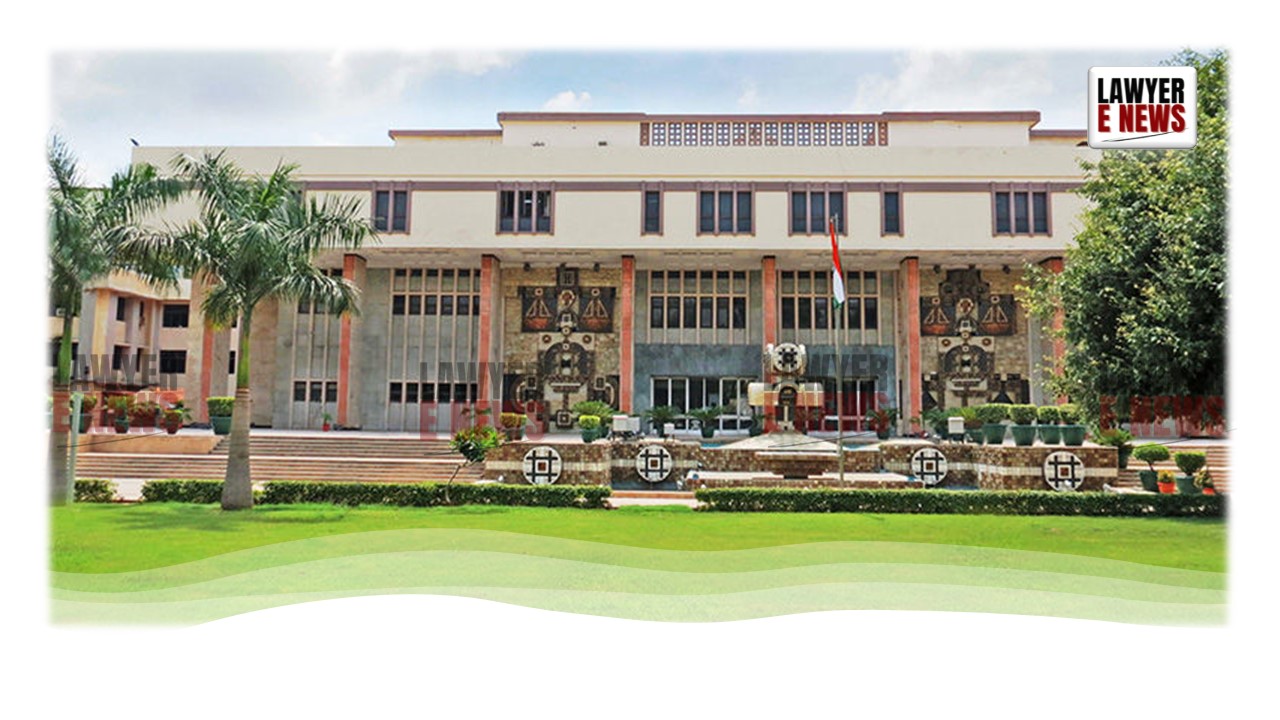
“Grave suspicion is not proof… The prosecution has failed to prove the charges beyond reasonable doubt” – In a case that highlights the high standard of proof required in criminal trials, the Delhi High Court dismissed the State’s appeal challenging the acquittal of Pawan Sehrawat, who had been charged with attempt to murder and other offences arising out of an alleged midnight assault in 2010. The Court, presided by Justice Neena Bansal Krishna, held that the trial court’s judgment was neither perverse nor illegal, and that serious lapses in investigation, inconsistencies in testimony, and grave doubts about the identity of the accused justified the acquittal.
The judgment in State (GNCT of Delhi) v. Pawan Sehrawat, a criminal appeal under Section 378(1) CrPC, stemmed from the State’s challenge to the 15 December 2016 acquittal verdict delivered by the Additional Sessions Judge, Saket Courts, in FIR No. 435/2010, Vasant Kunj Police Station.
“Injured Witness Picked Up Weapons of Assault and Handed Them Over Next Day — Recovery Unnatural and Unbelievable”
The case arose from an incident in the early hours of 23 December 2010, when the complainant Devender Singh Chahar alleged he was attacked with a danda and baseball bat by the accused, who also damaged his Scorpio vehicle. While Devender suffered injuries and was taken to Safdarjung Hospital, it was only the next day — after nearly 18 hours — that his detailed statement naming Pawan Sehrawat and his co-accused Rakesh Sehrawat was recorded.
But what caught the Court’s attention was the unusual manner in which the so-called weapons of assault were recovered.
“It is indeed intriguing that Devender Singh Chahar, after being injured, would pick up the weapons of assault from the spot and keep them in his custody till he handed them over to the Police,” the Court observed, holding that the recovery was “unnatural and creates great suspicion”.
The prosecution’s failure to seize the weapons at the spot, despite the Police arriving immediately after the incident, further eroded the credibility of its case.
“Names of Accused Suggested by Third Party, Not Known to Victims at Time of Incident” — Court Rejects Identification
Another critical weakness noted was the identity of the assailants. The complainant and his friend were admittedly under the influence of alcohol, as recorded in the MLC, and did not name the attackers immediately.
“At the time of assault, neither Devender Singh Chahar nor Navdeep Yadav were aware of the names of the assailants,” the Court noted, emphasizing that the names of the accused were suggested by a friend, Jasbir Singh, the next day, based on a vague description of “healthy-looking local boys.”
Jasbir Singh was later examined as a defence witness (DW-1) and confirmed that Devender and Navdeep were intoxicated and unable to identify the attackers that night. The prosecution did not challenge this key testimony.
“Grave suspicion created about the identity of the Respondents… is not sufficient for conviction,” the Court reiterated, drawing upon settled law that benefit of doubt must go to the accused when identity is not clearly established.
“PCR Was First on Spot, Apprehended Accused — But Not Examined” — Court Criticizes Investigation
A glaring hole in the prosecution's case was the non-examination of the PCR officials, who had first reached the scene and allegedly apprehended one of the accused, Rakesh. He later escaped — but the police did not record statements of these PCR officials, nor did they cite them as witnesses.
“Most material evidence about the assailant has thus not been collected by the IO,” Justice Krishna remarked, underlining how this failure "caused serious dent in the prosecution case."
Further, even arrest memos and site plans lacked signatures of the key eyewitnesses, PW-3 and PW-4, casting further doubt on the manner in which the accused were arrested and linked to the crime.
“FIR Says Two Accused, But DD Entry Mentions 4–5 Unknown Assailants” – Inconsistencies Undermine Credibility
The Court also pointed out glaring inconsistencies in the prosecution narrative. While the Daily Diary (DD) entry on the night of the incident recorded that 4–5 persons were involved, the FIR filed the next day named only two individuals — the respondents.
“Names were not disclosed immediately. There is no explanation why the FIR names only two persons when the initial entry refers to 4–5 assailants,” the Court said.
This disparity, coupled with delayed and post-suggestion identification, led the Court to hold that the prosecution had not proved the identity of the accused beyond reasonable doubt.
“Trial Court's Findings Based on Plausible View — No Ground to Interfere”
The Court reiterated that interference in an appeal against acquittal under Section 378 CrPC is warranted only where the judgment is perverse or manifestly illegal. In this case, the trial court had rightly considered contradictions, delayed statements, unreliable recoveries, and lack of independent evidence to grant benefit of doubt.
“Learned ASJ has rightly appreciated the prosecution evidence and held that prosecution has miserably failed to prove the Charges beyond the reasonable doubt,” the Court held.
The death of co-accused Rakesh Sehrawat during the pendency of the appeal also limited the scope of the case to Respondent No.2 Pawan Sehrawat, whose acquittal was upheld in full.
Benefit of Doubt Not a Technicality but a Right – Acquittal Justified
The judgment serves as a reaffirmation of the principle that criminal conviction must rest on clear, cogent, and credible evidence. The Delhi High Court refused to convict merely on suspicion, stating that the prosecution had “miserably failed to prove its case beyond reasonable doubt.”
Date of Decision: 22 December 2025





