-
by sayum
30 August 2026 4:28 AM







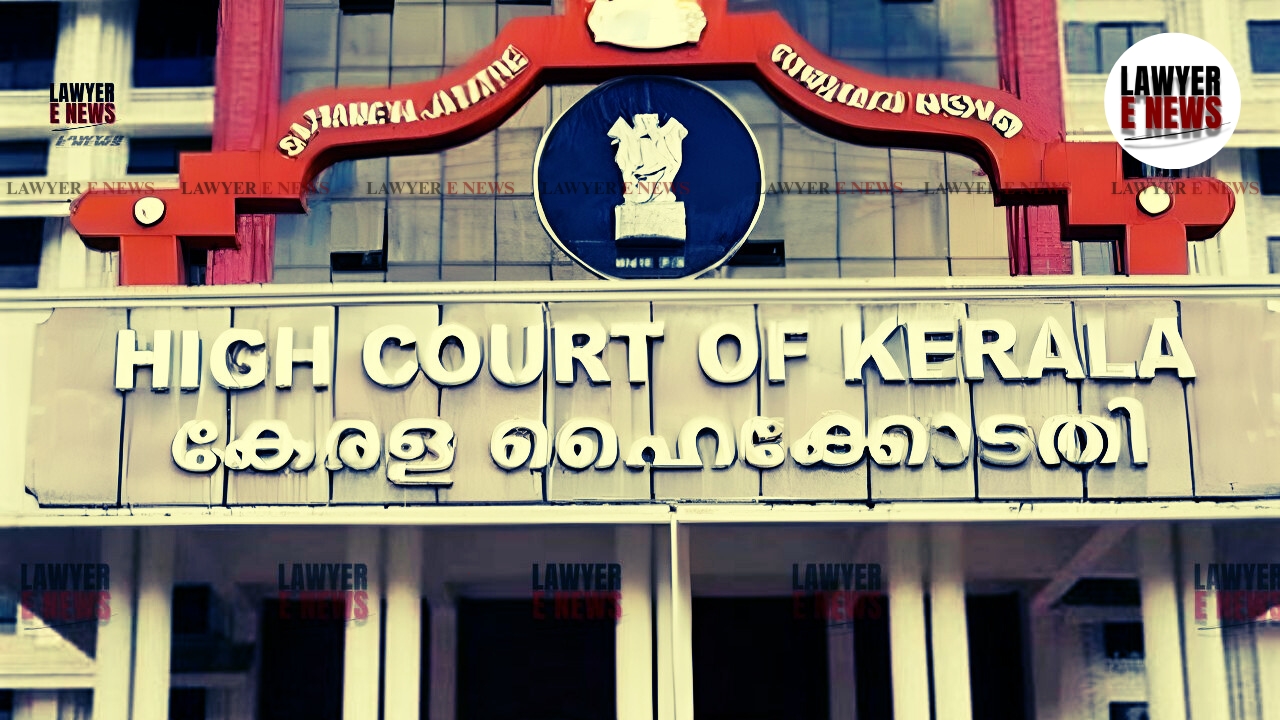
“A person who is not a legal heir of the senior citizen cannot be a ‘relative’… merely for the reason that he is in possession of the property” – Kerala High Court delivered a clear interpretation of Section 2(g) read with Section 4(4) of the Maintenance and Welfare of Parents and Senior Citizens Act, 2007. A Division Bench of Justice Sathish Ninan and Justice P. Krishna Kumar held that only a “legal heir” under the applicable personal law can be fastened with maintenance liability, and mere possession of a senior citizen’s property is insufficient.
The third respondent, T.E. Cicilet Rosilum, an unmarried and childless senior citizen, had in 1992 executed a gift deed in favour of her nephew. The nephew died in 2008, leaving the property to his wife, S. Sheeja, the present appellant.
The senior citizen approached the Maintenance Tribunal seeking maintenance under Section 4(4) of the Act, contending that the appellant, being in possession of her property, was bound to maintain her. The Tribunal accepted the plea; the writ petition challenging it was dismissed by a Single Judge, who reasoned that “if the person against whom maintenance is claimed is in possession of or would inherit the property of the senior citizen, then he would be construed as a ‘relative’…”.
The Bench began by setting out the four cumulative conditions in Section 2(g) defining “relative”:
“(i) The senior citizen must be childless; (ii) the person must be a legal heir of the senior citizen; (iii) such legal heir must not be a minor; and (iv) such legal heir must be in possession of, or would inherit, the property of the senior citizen.”
The judges underscored that the first condition — being a legal heir under personal law — is not optional:
“A ‘legal heir’ is a person who, under the personal law, is entitled to inherit the estate of the deceased… A person who is not a legal heir of the senior citizen cannot be a ‘relative’ under the Act merely for the reason that he is in possession of the property…”
They found the Single Judge’s construction impermissible, noting that it “would do injustice to the plain language of the section.”
It was admitted that under the Indian Succession Act, which governed the parties, the appellant was not a legal heir of the senior citizen. Her possession flowed from inheritance through her late husband — not by any direct legal heirship to the senior citizen.
The Court held:
“The mere fact that she succeeded to the property of her husband and that the said property was gifted to him by the third respondent, would not make her a ‘relative’ within the purview of the Act… such obligation [to maintain] cannot be cast upon her.”
The writ appeal was allowed; the orders of the Maintenance Tribunal and Appellate Tribunal were quashed, as was the Single Judge’s judgment. The Bench, however, expressly left open any rights the senior citizen might have outside the Act, such as enforcing terms of the 1992 gift deed.
Date of Decision: 7 August 2025