-
by sayum
28 August 2026 10:07 AM








“Suspicion Cannot Displace Proven Guilt” – Supreme Court Reinstates Compulsory Retirement of Canara Bank Employee Over Fraudulent Banking Practices. On 9th September 2025, the Supreme Court of India set aside the reinstatement ordered by the Central Government Industrial Tribunal and affirmed by the Karnataka High Court, restoring the disciplinary penalty of compulsory retirement imposed on a sub-staff bank employee for grave misconduct involving fraudulent banking transactions.
The apex court clarified that interference by industrial tribunals under Section 11A of the Industrial Disputes Act must be judicious and not extend to reappreciating findings in a properly held domestic enquiry—particularly when the charges are supported by admissions and documentary proof.
Tampering Bank Records and Coercing Managers – The Path to Suspension
The respondent, Ganganarasimhaiah, was employed as a sub-staff member with Canara Bank since 1990 and was later confirmed as Duftery-cum-Cash Peon. He was posted at the V.G. Doddi branch between 1997 and 2004. Following allegations of serious irregularities during his tenure, including unauthorized loan sanctions and tampering of bank records, the bank initiated an investigation in August 2004.
On 24.07.2004, the respondent admitted in writing to having availed loans in the names of his wife and father by coercing the branch manager and bypassing necessary sanctions. He further confessed to unauthorized entries and manipulation in the accounts of customers, including falsification of subsidiary records, key registers, and passbooks.
A detailed chargesheet followed on 28.04.2005, outlining gross misconduct under Canara Bank’s Service Code. Pending enquiry, the respondent was placed under suspension.
Legal Issues and Tribunal’s Misguided Approach
The core legal issue revolved around the scope of interference by the Tribunal under Section 11A of the Industrial Disputes Act, after the domestic enquiry had been found fair and proper by the Tribunal itself in a separate preliminary ruling dated 17.05.2013.
Despite this, in its final award dated 25.09.2019, the Tribunal re-evaluated the entire evidence on record and concluded that the respondent's involvement had not been proven with direct evidence. It noted:
“None of his colleagues were brought before the Enquiry Officer to depose that he is the author of the entries… No attempt is made to procure expert opinion… being a sub-staff educated only up to 7th standard, it is a wild imagination that he coerced a manager.”
This reasoning led to a direction for reinstatement with continuity of service but without back wages.
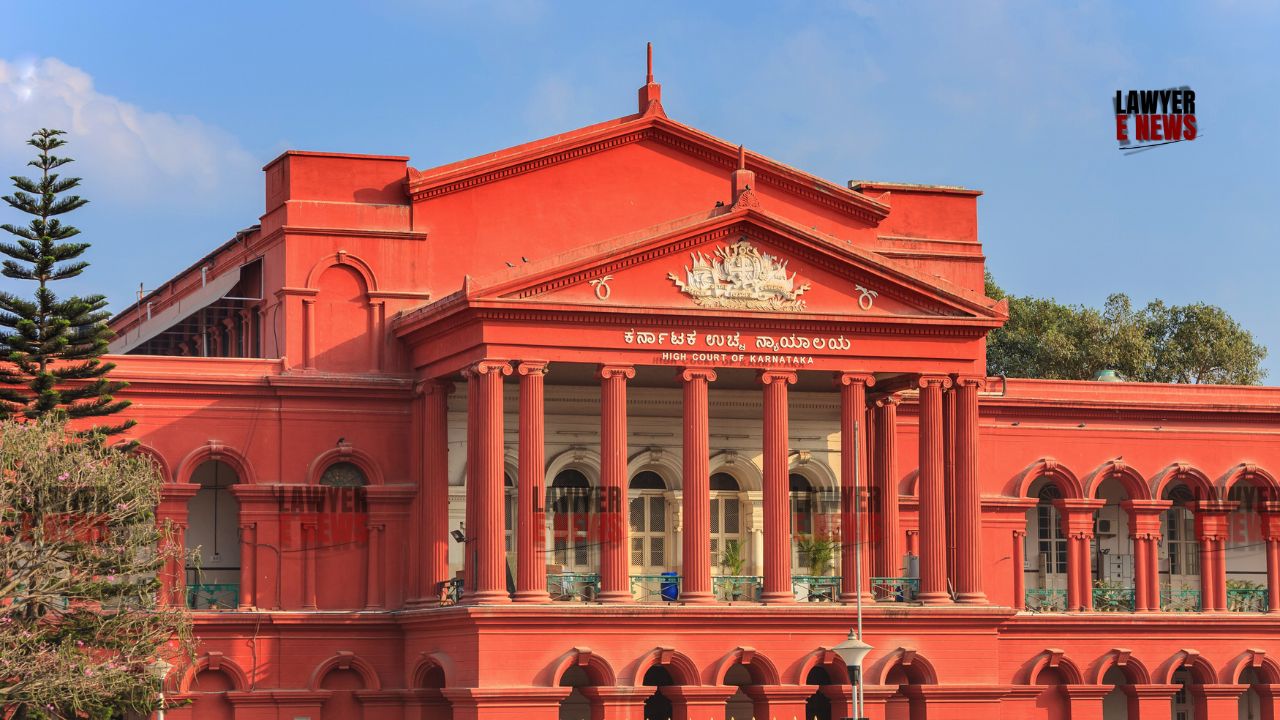
The Karnataka High Court affirmed this order on 12.08.2022, observing that the charges against the respondent were "absurd" and that his father's loan had been lawfully sanctioned.
Upholding Disciplinary Sovereignty and Rule of Law
Delivering the judgment, Justice Vijay Bishnoi categorically held that both the Tribunal and the High Court had erred by assuming an appellate role despite the disciplinary enquiry being fair and based on cogent material.
The Court observed: “The Tribunal had already decided that the enquiry was fair and proper. Despite that, it re-appreciated evidence, questioned the handwriting, and disregarded the respondent’s own admissions. This was impermissible.”
Citing binding precedents such as Ajai Kumar Srivastava [(2021) 2 SCC 612] and Indian Overseas Bank v. Om Prakash Lal Srivastava [(2022) 3 SCC 803], the Court underscored that strict rules of evidence do not apply in departmental enquiries, and findings are valid if they meet the standard of preponderance of probabilities.
Crucially, the Court reiterated: “Where an employee has been found guilty in a properly conducted domestic enquiry and the punishment imposed is not shockingly disproportionate, the Tribunal ought not to interfere. The respondent was a beneficiary of serious irregularities, and even admitted to them.”
The Court found the following disciplinary findings well-supported:
Unauthorized debits in customer accounts (SB 1550 of one Shri Ramakrishnaiah).
Loans sanctioned in names of wife and father without necessary controlling office sanctions.
Tampering of official records to conceal fraudulent entries.
Coercion of branch managers, evidenced by recorded statements and corroborative documentation.
“It is established that the Respondent has unauthorisedly made debits… coerced the Manager… and tampered with records to tally books fraudulently. His admissions, handwriting evidence, and circumstantial chain point unmistakably to guilt.”
The Supreme Court also took note of the broader consequences of financial misconduct by bank employees: “Such conduct erodes public faith in the banking system. When employees manipulate accounts for personal gain, the repercussions are systemic.”
Reinstatement Reversed, Compulsory Retirement Restored
The Supreme Court found the Tribunal’s award and the High Court’s affirmance untenable and restored the original punishment:
“We are of the opinion that the Tribunal and the High Court committed gross error in interfering with the well-reasoned disciplinary action. The appeal is allowed. The award dated 25.09.2019 and the High Court’s order dated 12.08.2022 are set aside. The penalty of compulsory retirement stands restored.”
Date of Decision: 9th September 2025