-
by sayum
29 August 2026 3:15 PM








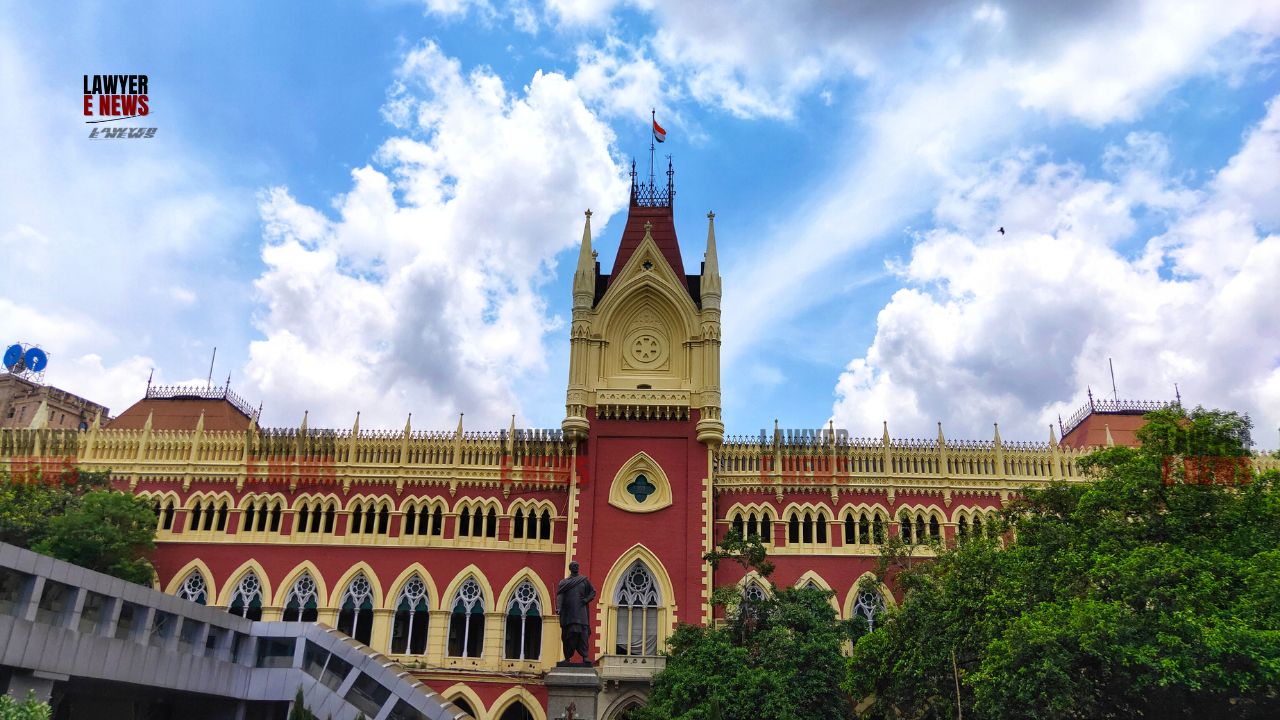
“Tribunal’s Conclusion of ‘Short Period’ Absence Is Beyond Comprehension” – Calcutta High Court quashed an Industrial Tribunal award that had directed reinstatement with 50% back wages to a workman dismissed for prolonged unauthorized absence. Justice Shampa Dutt (Paul) found the Tribunal’s reasoning “clearly not in accordance with law”, holding that it ignored uncontroverted evidence from the enquiry report and reached an “erroneous finding of absence of short period” despite records proving more than two years of continuous absence.
The respondent, a permanent underground loader at Dhemomain Colliery, Sodepur Area, stopped attending work from 28 February 1997. On 9 October 1998, the management issued a charge sheet detailing his continuous absence and habitual truancy—he had worked only 159 days in 1995 and 154 in 1996. Repeated notices to attend the disciplinary enquiry were ignored.
The enquiry was conducted ex parte, and on 13 March 1999 the Enquiry Officer found him guilty of unauthorized absence. The Disciplinary Authority agreed and dismissed him from service on 26 April 1999.
Years later, following a reference under the Industrial Disputes Act, the Central Government Industrial Tribunal at Asansol held that the dismissal was “disproportionate to the absence” and described the absence as “short period”, ordering reinstatement with half back wages and consequential benefits.
Justice Dutt found that the Tribunal’s reasoning “suffered from serious irregularity” and that it had failed to meaningfully consider the enquiry report or the procedural history. The Court pointed out that the records “categorically noted” the workman’s prolonged absence from 28 February 1997 until 13 March 1999 and described the Tribunal’s “short period” characterisation as “completely beyond the understanding of this Court.”
Quoting Supreme Court precedents such as P. Gunasekaran, Abrar Ali, and Heem Singh, the judgment stressed that under Articles 226 and 227 of the Constitution, a High Court does not act as an appellate forum in disciplinary matters and cannot reappreciate evidence. It may interfere only if there is perversity, violation of natural justice, or findings unsupported by evidence.
The Court noted that the enquiry was conducted by a competent authority, in accordance with prescribed procedure, and consistent with principles of natural justice, observing that “there is sufficient evidence in the enquiry proceeding to support the charge of misconduct and there is no perversity, and thus the interference of the tribunal was not called for.”
The judgment also criticised the Tribunal for awarding back wages without the employee having proved non-gainful employment during the intervening period, citing Kendriya Vidyalaya Sangathan v. S.C. Sharma that “an employee is entitled to back wages only after he proves that he was not gainfully employed in the interim period.”
Answering the industrial dispute reference in favour of the management, the Court held that “the action of the management… in dismissing Sh. Uttam Bouri from services is legal and justified.” The employee, it ruled, was “not entitled to any relief under the law, save and except if any leave is due to him the same may be adjusted.”
By setting aside the Tribunal’s award, the High Court reinforced that when a domestic enquiry is properly conducted and supported by evidence, judicial interference must be minimal. The ruling makes clear that prolonged, repeated absence in a discipline-driven workplace such as a coal mine can justifiably lead to dismissal, and that labelling such absence as “short period” without evidence is judicial overreach.
Date of Decision: 24 July 2025