-
by sayum
10 August 2026 1:57 PM







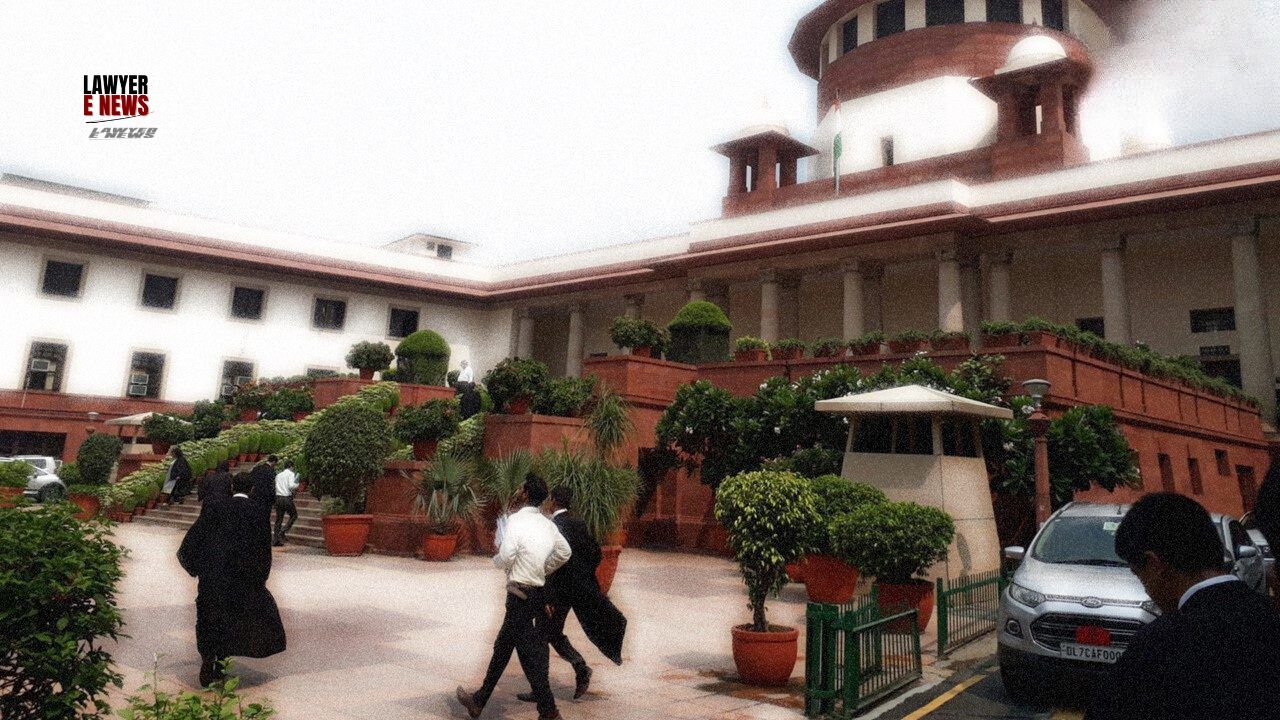
“CDs Were Already Referred to in the Chargesheet — They Were Not New Articles”: In a key ruling Supreme Court of India dismissed the challenge to the CBI’s move to place two Compact Discs (CDs) on record during an ongoing corruption trial, despite the CDs not being submitted earlier with the chargesheet. In Sameer Sandhir v. Central Bureau of Investigation, the apex court upheld the orders of the Special Court and the Delhi High Court, clarifying that the CDs, although omitted initially, were referenced in the supplementary chargesheet and could be filed later with the court’s permission.
Justice Abhay S. Oka, writing for the bench, made it unequivocally clear: “If some mistake is committed in not producing the relevant documents at the time of submitting the charge-sheet, it is always open to the investigating officer to produce the same with the permission of the court.”
The Court, however, carefully added that the question of the CDs' authenticity and their evidentiary value under Section 65B of the Evidence Act remains open to be determined at trial.
The case originates from a corruption investigation registered by the CBI under the Prevention of Corruption Act, 1988 and Section 120-B of the Indian Penal Code. The appellant, Sameer Sandhir (Accused No. 7), was one of several accused whose phone calls had been intercepted under authorization from the Ministry of Home Affairs in early 2013.
Two CDs containing intercepted calls—189 in one and 101 in the other—were seized in May 2013 and sent to the Central Forensic Science Laboratory (CFSL) for analysis. When the supplementary chargesheet was filed on October 30, 2013, the CDs were referenced and a forensic report from CFSL was enclosed. However, the CDs themselves were not filed with the court.
The prosecution sought to play these CDs in court during witness examination in September 2014, but the defense raised a strong objection:
“The CDs were neither relied upon nor filed in the Court. Moreover, copies of the CDs were not supplied to the accused.”
This triggered litigation over whether such material—omitted initially but already part of the investigation and referenced in the charge sheet—could be subsequently introduced.
The main contention was whether documents not filed with the original or supplementary chargesheet could later be introduced by the prosecution. The defense argued that once the chargesheet was filed, only new material obtained through “further investigation” under Section 173(8) CrPC could be added. They emphasized that the CDs were not "new" and thus inadmissible, relying on the decision in Mariam Fasihuddin v. State, where it was observed:
“No new material was unearthed... Instead, the supplementary chargesheet relies upon a report already available when the original chargesheet was filed.”
The Supreme Court rejected this argument and strongly reaffirmed the principle laid down in CBI v. R.S. Pai:
“Normally, the investigating officer is required to produce all the relevant documents at the time of submitting the charge-sheet. At the same time, as there is no specific prohibition, it cannot be held that the additional documents cannot be produced subsequently.”
The Court clarified that the CDs in question were not new materials. Justice Oka emphasized:
“The CDs were very much referred to in the supplementary chargesheet filed on 13th October 2013. There was only an omission on the part of the respondent-CBI to produce the CDs.”
In doing so, the bench brushed aside the contention that the R.S. Pai decision required reconsideration. It noted that this very precedent had been followed by a larger three-judge bench in Arjun Panditrao Khotkar v. Kailash Gorantyal, where the Court reiterated:
“If the prosecution had mistakenly not filed a document, the said document can be allowed to be placed on record.”
On Premature Judicial Determination of Authenticity:
The Supreme Court took issue with certain observations made by the Delhi High Court regarding the CDs’ authenticity. The High Court had opined:
“Since these documents are supported by required certificates under Section 65B of Indian Evidence Act, their authenticity cannot be suspected at this stage.”
Correcting this, the Supreme Court stated: “The High Court ought not to have gone into the issue of the authenticity of the CDs allowed to be produced. Whether the CDs produced were the same which were seized… is something which will have to be proved by the prosecution.”
The bench left three key questions open for trial:
Whether the CDs filed were indeed the ones seized.
Whether the Section 65B certificate accompanying them is valid.
Whether the contents of the CDs are authentic and admissible.
“Even if the production was allowed, the issue of the CDs’ authenticity remains open.”
The Supreme Court upheld the Delhi High Court’s decision to permit the CDs to be filed, but with important caveats. It ensured that the accused’s right to a fair trial remains intact:
“It will also be open for the appellant to recall the prosecution witnesses for cross-examination on a limited aspect of the CDs.”
The appeals were dismissed, but the ruling makes it clear that mere omission in filing evidence—if unintentional—does not bar the prosecution from placing such material on record, provided due process is followed and the accused’s rights are protected.
This judgment reinforces judicial pragmatism while maintaining procedural fairness. It signals to investigating agencies that inadvertent lapses in filing may be corrected with court permission, but also warns that any such late filing will face full scrutiny at trial.
Date of Decision: May 23, 2025