-
by sayum
05 August 2026 3:07 PM







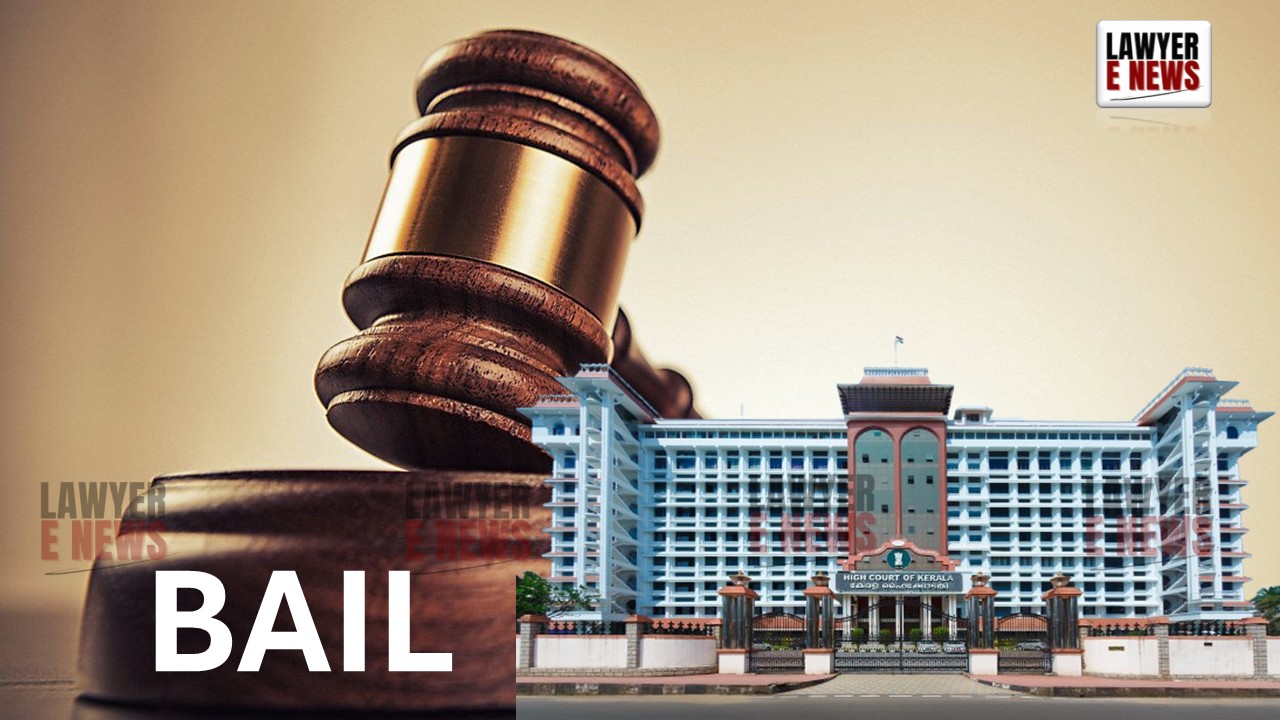
"Custodial Interrogation Is Not a Ritual" — In a strongly worded judgment Kerala High Court refused to grant anticipatory bail to nine accused, including political leaders, who were alleged to have brutally assaulted a practicing advocate. The case arose under the newly enacted Bharatiya Nyaya Sanhitha, 2023 (BNS), and was heard by Justice Bechu Kurian Thomas.
The Court observed that the assault was not random, but rooted in professional enmity, as the injured lawyer had drafted a legal complaint against the petitioners. Denying protection under Section 482 of the Bharatiya Nagarik Suraksha Sanhita, 2023 (BNSS), the Court held: Assaulting an Advocate for drafting a complaint cannot be viewed lightly. The fundamental right to have access to courts of law is enabled largely through Advocates. If Advocates are attacked for drafting complaints, rule of law will suffer.
An Advocate Beaten for Doing His Job
According to the prosecution, the incident occurred on 29 April 2025 at around 10:00 p.m., when the defacto complainant, a practicing advocate, was intercepted and assaulted with dangerous weapons by the accused while riding his motorcycle. The reason? He had merely drafted a complaint against the petitioners on behalf of his client — a copy of which was produced as Annexure R3(a) before the Court.
The petitioners, including local political leaders, approached the High Court seeking pre-arrest bail, contending that the entire story was fabricated and the alleged injuries were concocted. They even questioned the authenticity of the medical documents.
But the Court was not persuaded.
Justice Bechu Kurian Thomas noted that Annexure R3(a), the complaint drafted by the lawyer, clearly showed that the first petitioner was named as the first opposite party. This, the Court said, was not mere coincidence:
"The said circumstance indicates a motive for the alleged assault on the defacto complainant."
Further, referring to the discharge summary submitted as Annexure R3(c), the Court found the claim of grievous injuries to be prima facie substantiated:
“The petitioner has suffered chest trauma with fracture as well as fracture of the vertebrae.”
The contention that the injuries were fabricated was rejected outright, as the petitioners failed to produce any material to support such a claim.
Court’s Reliance on Supreme Court Precedent
Citing the Supreme Court’s decision in P. Krishna Mohan Reddy v. State of Andhra Pradesh, the Kerala High Court emphasized that granting anticipatory bail too early in the investigation could obstruct the truth from emerging.
Quoting from the Supreme Court ruling, the Court observed: "Custodial interrogation is qualitatively more elicitation oriented than questioning a suspect who is well ensconced with a favourable order of pre-arrest bail."
"Insulating a person from arrest would make his interrogation a mere ritual."
Applying this principle, the High Court ruled that the nature of the attack, the seriousness of the injuries, and the need to recover the weapon of offence made it imperative to deny bail.
No Leniency for Attacking Legal Professionals
The Court viewed the attack not merely as a personal dispute but as a direct assault on the justice delivery mechanism itself. Lawyers, the Court said, are indispensable to the process of enabling access to justice, and violence against them for discharging professional duties is unacceptable in a democratic society governed by the rule of law.
In a pointed observation, the Court stated: “If Advocates are attacked for drafting complaints, rule of law will suffer.”
It added that such conduct, especially by political functionaries, erodes the legitimacy of legal institutions and must be curbed through decisive legal action.
Bail Denied — Custodial Interrogation Required
Rejecting the anticipatory bail plea, the Court concluded: “Having regard to the seriousness of the allegations and the requirement of the recovery of the weapon of the offence, the petitioners cannot be protected with an order of pre-arrest bail.”
Accordingly, the bail application was dismissed, and the petitioners were directed to make themselves available for custodial interrogation.
This judgment stands as a firm reaffirmation of the importance of the legal profession and the safeguards that must surround it. By denying anticipatory bail to accused political leaders, the Kerala High Court sent a clear message: violence against advocates — especially for carrying out their professional duties — strikes at the core of the justice system and cannot be tolerated.
The ruling also emphasizes that pre-arrest bail is not to be granted as a shield where the allegations are serious, the motive clear, and the investigation still unfolding.
Date of Decision: 17 July 2025