-
by sayum
29 August 2026 3:15 PM







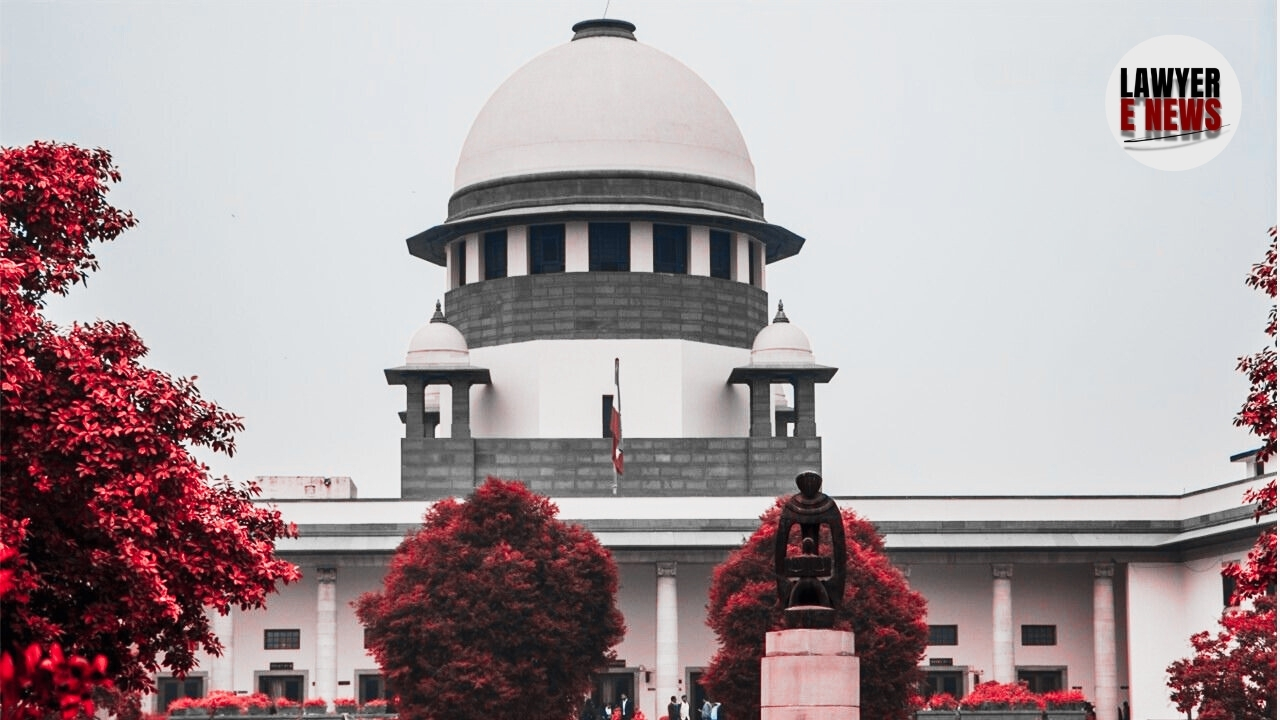
“Having Regard to the Materials on Record, the High Court Erred”, In a sensitive and legally significant ruling Supreme Court of India restored anticipatory bail to a practicing advocate accused of serious offences including outraging modesty, house trespass, assault, and rape, overturning the cancellation order passed by the Allahabad High Court.
A Bench of Justices J.B. Pardiwala and R. Mahadevan observed: “Having regard to the materials on record, the High Court should not have cancelled the anticipatory bail granted by the Sessions Court.”
While refraining from delving into the merits of the case, the Court allowed the appeal and restored the initial anticipatory bail order, highlighting the premature invocation of Section 376 IPC and the contradictory FIRs filed by both parties.
The case arose out of a highly contentious dispute between two practicing advocates in Jaunpur, Uttar Pradesh. The complainant, a woman advocate, lodged an FIR on May 21, 2024, alleging that the appellant, Ajit Kumar Singh, forcibly entered her rented house, tore her clothes, physically assaulted her, and touched her inappropriately after she had refused further contact with him. She further alleged:
“Because of men like these, women are not able to live freely in society... I am in shock because of this incident; they can do anything bad to me.”
Based on this FIR, the police booked Singh under Sections 323, 504, 506, 452, 354 IPC — later adding Section 376 IPC (rape) based on a Section 164 CrPC statement made three weeks later.
However, the appellant filed a counter-FIR on June 1, 2024, alleging that the complainant and her husband had forcibly entered his home, assaulted him, tried to strangle him, and damaged his property.
In his version, Singh stated: “Aarti started strangling me with the intention of killing me... they made a fatal attack on me... while leaving, they threatened to kill me if I took any legal action.”
Ajit Kumar Singh was granted anticipatory bail by the Sessions Court on July 23, 2024, considering both versions and the delay in adding the rape charge. However, the complainant moved to cancel the bail under Section 439(2) CrPC, and the Allahabad High Court, through order dated May 21, 2025, cancelled the anticipatory bail, observing:
“Having regard to the nature of charge, role of the applicant, and evidence available on record, the anticipatory bail is fit to be cancelled.”
The High Court further directed that Singh be taken into custody and imprisoned.
Hearing the appeal, the Supreme Court expressed clear disapproval of the High Court’s approach, stating:
“All that we would like to say is that having regard to the materials on record, the High Court should not have cancelled the anticipatory bail granted by the Sessions Court.”
Without elaborating on the strength of the accusations — presumably to avoid influencing trial — the Supreme Court took a procedural and rights-based approach, restoring the original order of anticipatory bail granted by the Sessions Court.
The Court also noted that investigation is complete and chargesheet has been filed, although the case is yet to be committed to the Sessions Court.
In a pragmatic step, the Court permitted the appellant to appear before the territorial Sessions Court and furnish bail bonds, stating:
“Although the case has not been committed yet, we permit the appellant to appear before the territorial Sessions Court and furnish bail bonds to the satisfaction of the concerned Court.”
In restoring anticipatory bail to an accused facing severe allegations under Section 376 IPC, the Supreme Court reinforced that bail jurisprudence must rest on legal substance, not mere accusation. The Court did not dismiss the gravity of the charges but emphasized the procedural lapse and the need to avoid pre-trial punishment.
This judgment illustrates a careful balancing of personal liberty and public interest, where the Court chose to protect an individual's right to anticipatory bail until trial, even in a case involving cross-allegations of violence and sexual assault.
Date of Decision: 13 August 2025