-
by sayum
29 August 2026 3:15 PM







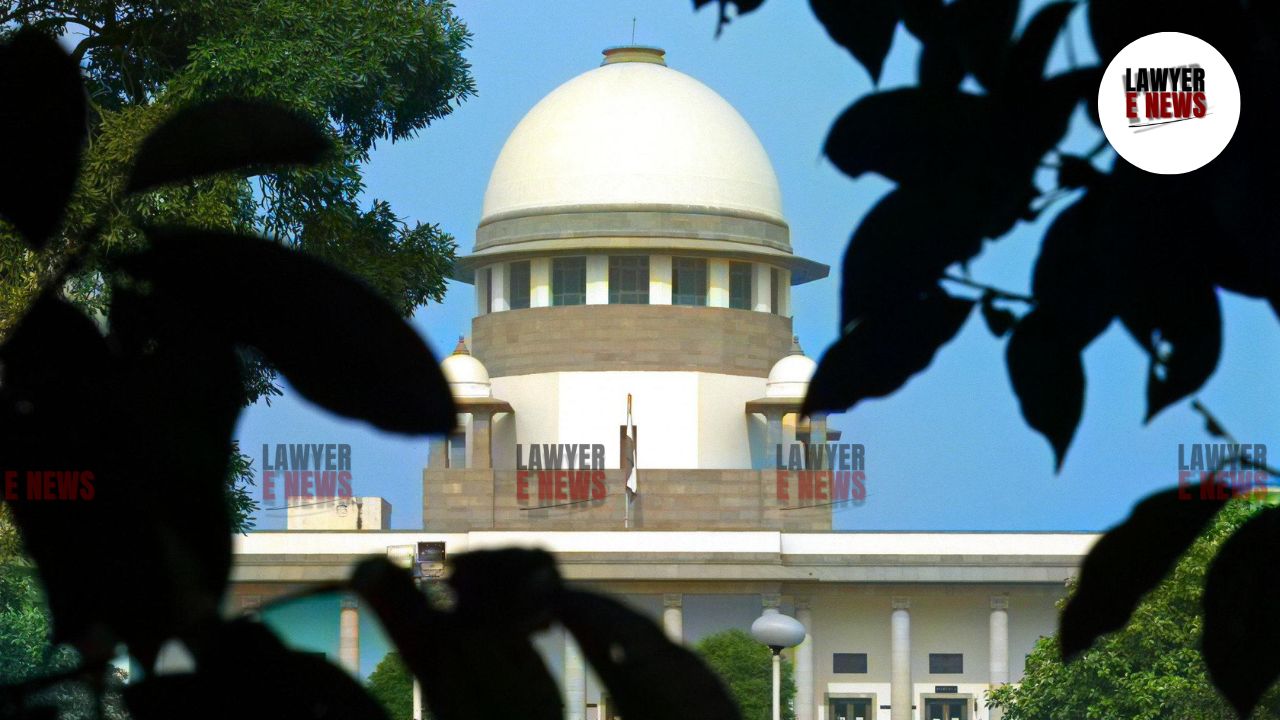
Departmental Authority Not Required To Give Elaborate Reasons If It Agrees With Inquiry Officer’s Findings, Supreme Court of India set aside the orders of the Patna High Court that had reinstated a bank employee removed from service for acting as a conduit in illegal loan disbursements. The Court reaffirmed that judicial review in disciplinary matters is confined to procedural irregularities and does not extend to re-evaluation of evidence.
The bench comprising Justice Rajesh Bindal and Justice Manmohan held that the High Court had erred in reappreciating the facts and interfering with the findings of the Disciplinary Authority which were based on preponderance of probabilities, not proof beyond reasonable doubt, as required in criminal law.
The respondent, Ramadhar Sao, joined State Bank of India as a Class IV employee (messenger) in 1997. In April 2008, complaints surfaced that he was acting as a middleman in the sanction of loans, taking illegal gratification from loan applicants.
Following a show cause notice dated 15.11.2008 and finding his response unsatisfactory, a formal chargesheet was issued on 05.01.2010. The charges included:
Acting as a conduit in six loan sanction cases;
Accepting bribes from loanees;
Executing loan documentation improperly, including at his residence;
Remaining absent without permission during a critical period of internal investigation.
A departmental inquiry was conducted in which several loanees (PW-1 to PW-5) testified that they paid the respondent amounts ranging from ₹4,000 to ₹5,000 to get loans sanctioned, even when their documents were incomplete.
The Inquiry Officer found the charges proved, and the Disciplinary Authority imposed dismissal from service on 08.01.2011.
On statutory appeal, the Appellate Authority, while agreeing with the findings, took a compassionate view and modified the punishment to removal from service with superannuation benefits on 07.12.2012.
The respondent then filed a writ petition before the Patna High Court, which the Single Bench allowed, ordering reinstatement with back wages and liberty to initiate a fresh inquiry. The Division Bench dismissed the Bank’s intra-court appeal, upholding the reinstatement. The Bank approached the Supreme Court.
Whether a Class IV employee can be punished for alleged misconduct in loan sanctioning, despite not having official sanctioning powers?
The Supreme Court noted that while the respondent had no authority to sanction loans, the charges against him were not about sanctioning, but about facilitating loans as a conduit, taking bribes, and misusing his access and influence within the branch.
“The proved charge against the respondent was that he was working as a conduit in getting the loans sanctioned.” – Para 14.2
Whether the High Court exceeded its jurisdiction under Article 226 by reappreciating evidence in a disciplinary matter?
The Court emphasized that judicial review under Article 226 is limited and does not extend to re-evaluation of evidence unless there is manifest perversity, procedural irregularity, or violation of natural justice.
“The power of judicial review... is circumscribed by limits of correcting errors of law or procedural errors leading to manifest injustice or violation of principles of natural justice and it is not akin to adjudication of the case on merits as an appellate authority...” – Para 13, quoting SBI v. Ajai Kumar Srivastava (2021) 2 SCC 612
It held the High Court misread the nature of the proceedings, confusing the initial show cause notice with the chargesheet, and wrongly held that the findings were based on “conjunctures and surmises”.
“The opinion expressed by the Single Bench... cannot be legally sustained... findings were based on preponderance of probabilities and strict proof beyond reasonable doubt was not required.” – Para 14.1
Whether detailed reasoning is required from the Disciplinary Authority if it agrees with the Inquiry Officer?
The Supreme Court reiterated settled law that detailed reasons are not required when the Disciplinary Authority concurs with the Inquiry Officer’s findings.
“...if the disciplinary authority accepts the findings recorded by the enquiry officer and passes an order, no detailed reasons are required to be recorded in the order imposing punishment.” – Para 13.1, quoting Boloram Bordoloi (2021) 3 SCC 806
Whether leniency already granted by the Appellate Authority justified any further relief?
The Appellate Authority had already converted “dismissal” into “removal” with benefits. The Court noted that the respondent’s plea for further relief was unjustified, especially when his own statement during the show cause implied admission of guilt.
“I am innocent. Knowingly or unknowingly whatever mistake I have made, please forgive me…” – Para 11.2, Respondent’s own submission
The Court treated this plea as a partial admission and held that leniency had already been extended.
The Court allowed the appeal, restoring the order dated 07.12.2012 of the Appellate Authority, which had imposed removal from service with superannuation benefits. It set aside the judgments of both the Single and Division Benches of the Patna High Court.
“In our opinion, the impugned orders... cannot be legally sustained. The same are liable to be set aside.” – Para 15
This judgment reinforces the limited scope of judicial review in disciplinary proceedings and the principle of non-interference with factual findings based on evidence and procedure. The Court recognized the importance of administrative discipline in financial institutions and discouraged sympathetic interference when corruption-related charges are established through proper inquiry.
Date of Decision: August 20, 2025