-
by sayum
23 August 2026 2:56 PM







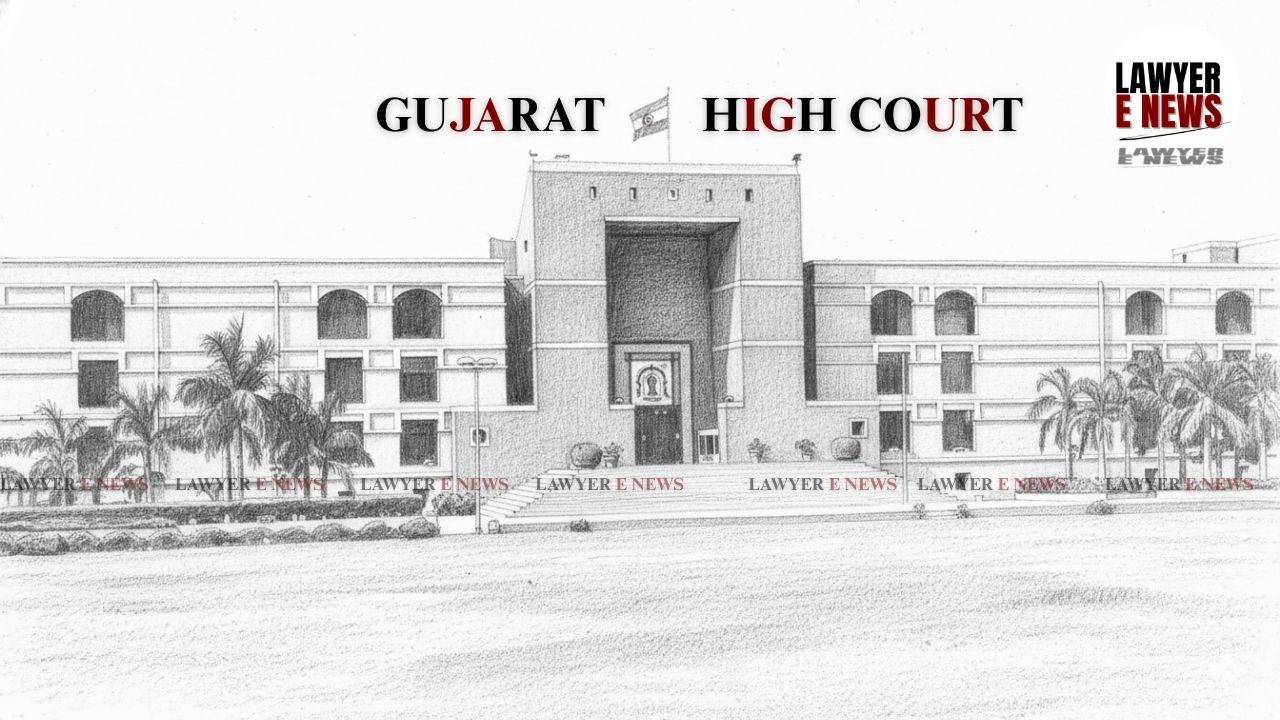
"Writ Jurisdiction Under Article 226 Cannot Be Used to Circumvent Express Legislative Bar on Limitation" – In a judgment that reinforces the legislative sanctity of statutory limitation periods under the GST regime, the Gujarat High Court dismissed a writ petition seeking condonation of a six-day delay in filing an appeal under Section 107 of the Central Goods and Services Tax Act, 2017. The Division Bench of Hon’ble Mr. Justice A.S. Supehia and Hon’ble Mr. Justice Pranav Trivedi firmly held that the Appellate Authority had no jurisdiction to entertain an appeal beyond the prescribed 120-day period, and the High Court’s discretionary powers under Article 226 could not be exercised to defeat this express statutory bar.
“Though the High Court has wide powers under Article 226, it cannot disregard the substantive provisions of a statute and pass orders which run contrary to the legislative intent,” the Court observed, while upholding the rejection of the petitioner’s appeal as time-barred.
“Maximum Condonation Period Under Section 107 Is 30 Days Beyond 3 Months; Delay Beyond 120 Days Is Incurable”
The petitioner, Harsh Deepk Shah, had filed an appeal against an Order-in-Original dated April 24, 2024, under Section 107 of the CGST Act. However, the appeal was filed on October 5, 2024, i.e., six days beyond the outer permissible limit of 120 days (90 days initial limitation + 30 days condonable period).
Citing Section 107(4), the Court held:
“The Appellate Authority may allow the appeal to be presented within a further period of one month, only if satisfied that the appellant was prevented by sufficient cause... Beyond this 120-day period, the authority is rendered functus officio.”
Accordingly, the Commissioner (Appeals) rightly dismissed the appeal as time-barred, observing that it lacked jurisdiction to condone delay beyond the statutory outer limit. The High Court found no infirmity in that conclusion.
“Even Article 226 Powers Cannot Override Legislative Command” – High Court Cites SC Rulings in GlaxoSmithKline and ONGC
The petitioner’s counsel had urged the Court to invoke its extraordinary writ jurisdiction to condone the six-day delay, arguing that substantial GST amounts had already been deposited and that the demand under the Order-in-Original was unjust. However, the Court held such arguments insufficient to invoke writ jurisdiction once the statutory limitation stood exhausted.
Referring to the Supreme Court’s judgment in Glaxo SmithKline Consumer Health Care Ltd. v. Assistant Commissioner, (2020) 19 SCC 681, the Court emphasized:
“Indubitably, the powers of the High Court under Article 226 are wide, but certainly not wider than the plenary powers bestowed on the Apex Court under Article 142. The High Court must act in consonance with legislative intent, not in disregard of it.”
The Court also cited ONGC v. Gujarat Energy Transmission Corporation Ltd., (2017) 5 SCC 42, to reiterate that special statutes prescribing specific limitation periods operate as complete codes, and Section 29(2) of the Limitation Act cannot be invoked to go beyond them.
“The legislative scheme cannot be rendered otiose by allowing writ petitions to bypass clear limitation provisions,” the Court stressed.
“Once Statutory Remedy Is Invoked, Challenge to Order-in-Original Cannot Be Revived via Writ”
In addition to seeking condonation of delay, the petitioner also attempted to challenge the Order-in-Original itself, arguing that substantial GST dues had already been paid and that the demand raised was flawed.
The Court squarely rejected this attempt, observing:
“Once the petitioner has availed the appellate remedy, this Court cannot re-examine the Order-in-Original unless there is a clear case of jurisdictional error or violation of natural justice.”
The Court noted that no such jurisdictional infirmity or denial of fair hearing was pleaded, and the petitioner had merely tried to reopen factual determinations. Citing the principle of alternative efficacious remedy, the Bench held that the proper course was to challenge the Order-in-Original in appeal, within time.
“Closure of Business or Illness of Accountant Not Sufficient Grounds for Condonation Beyond 120 Days”
The Court found the petitioner’s explanation for the delay—namely, illness of the accountant and business closure—lame and insufficient, holding that no extraordinary circumstance had been demonstrated to justify invoking writ jurisdiction beyond statutory timelines.
Citing M/s. Singh Enterprises v. Commissioner of Central Excise, Jamshedpur, Civil Appeal No. 5949/2007, the Court reiterated that pleas of inexperience or operational difficulties cannot excuse failure to act within mandatory limitation periods under tax statutes.
High Court Declines to Reopen Time-Barred GST Appeal
Dismissing the writ petition in its entirety, the Court concluded:
“The delay of six days in filing the appeal under Section 107 of the CGST Act is uncondonable. The Appellate Authority rightly held it lacked jurisdiction to condone such delay. This Court cannot override the legislative framework through writ jurisdiction. The petition is devoid of merit and stands dismissed.”
Date of Decision: December 24, 2025