-
by sayum
28 August 2026 10:07 AM







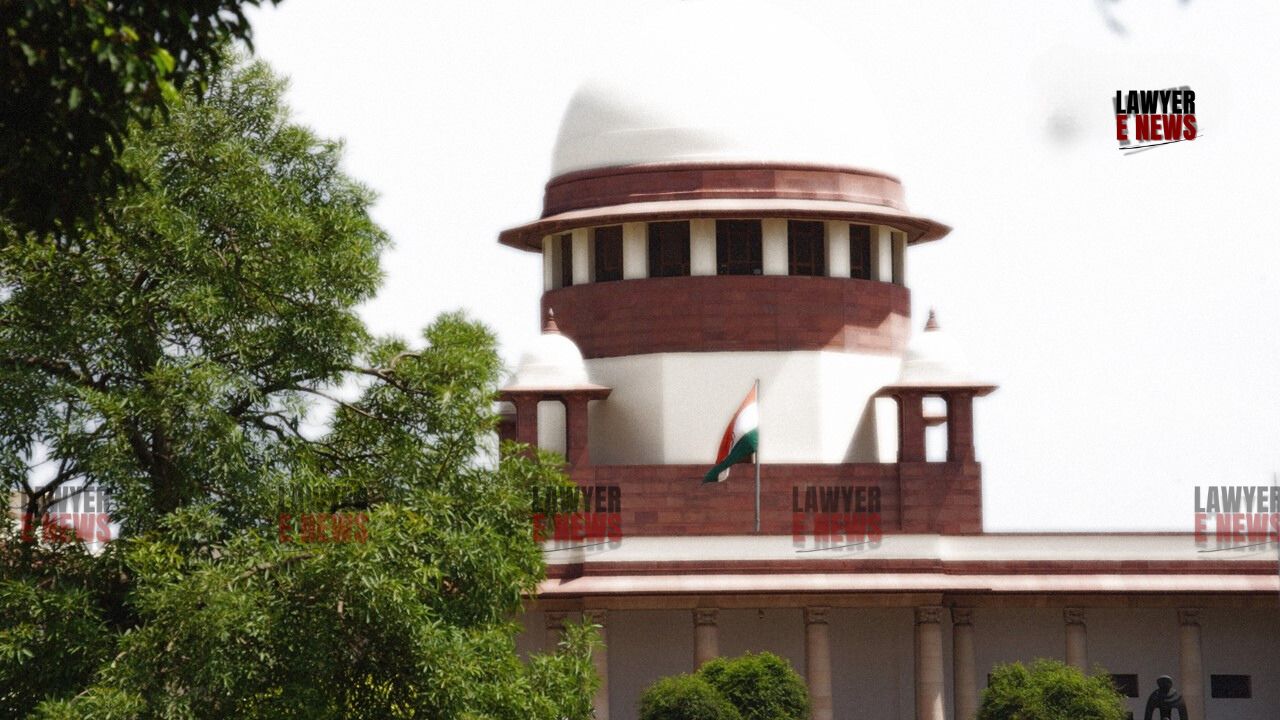
Supreme Court of India passed a strong rebuke to the Kerala High Court for modifying the terms of anticipatory bail granted to Anitha R. Nair, accused in over 31 criminal cases involving massive financial fraud, while the original bail orders were under challenge before the Supreme Court. Holding that such parallel orders during the pendency of a Special Leave Petition (SLP) violated the judicial discipline of a hierarchical court system, a Bench of Justice J.K. Maheshwari and Justice Vipul M. Pancholi declared, “The modification of bail conditions by the High Court during pendency of appeal before this Court is impermissible and contrary to judicial propriety.”
The Court stayed all High Court orders permitting Nair to travel abroad, and directed her to immediately surrender her passport, raising serious concerns about concealment of material facts and misuse of judicial processes.
“Judicial Discipline in a Hierarchical System Must Be Respected”: Supreme Court Questions High Court’s Permission to Accused to Leave Country Amidst Ongoing SLP
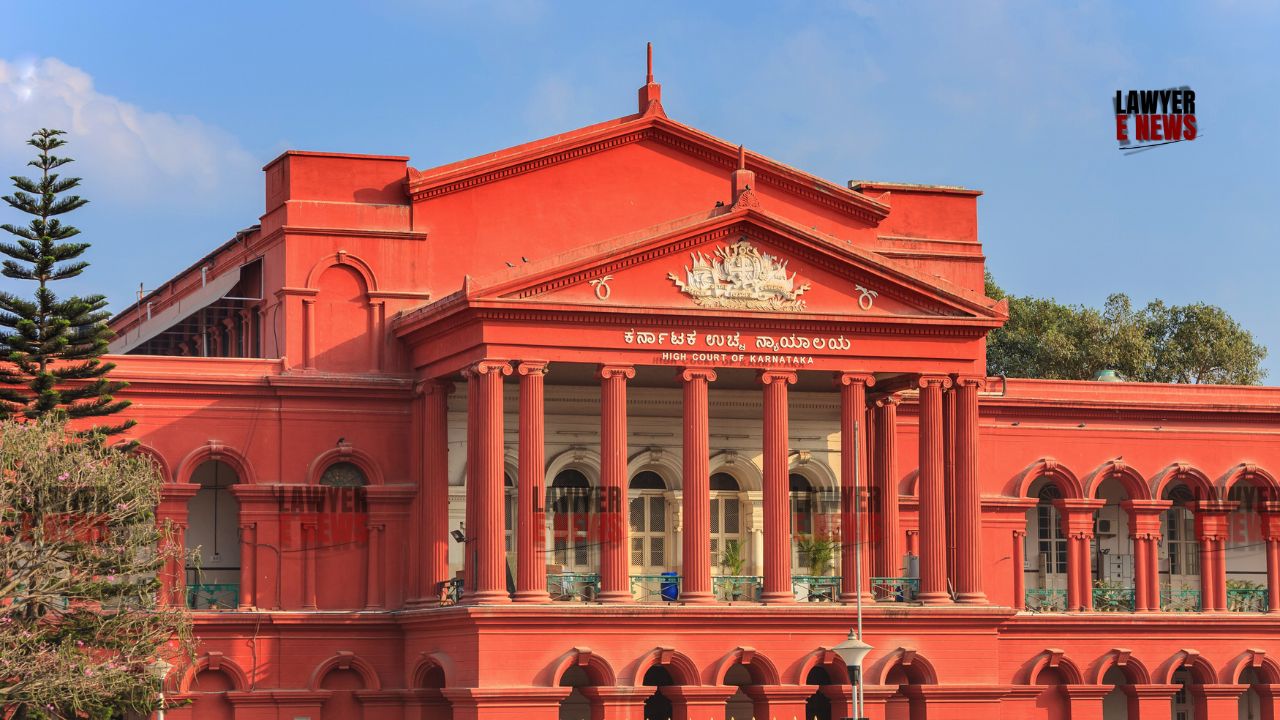
In one of its most unequivocal affirmations of appellate authority, the Supreme Court invoked its previous rulings in Tirupati Balaji Developers and Chhavi Mehrotra to explain why High Courts must exercise restraint once an SLP has been admitted and notice issued. The Bench observed that the High Court, having granted anticipatory bail to Anitha R. Nair in February 2025, later modified the bail terms on 12.08.2025 and released her passport on 23.08.2025, all while the SLP challenging the original bail order was actively being heard by the Supreme Court.
The Court declared, “The modification runs contrary to the principles of judicial propriety and comity,” and stayed both orders, adding that “judicial discipline would require that in a hierarchical system it is imperative that such conflicting exercise of jurisdiction should strictly be avoided.”
In a strongly-worded ruling that reinforces judicial hierarchy and the rule of law, the Supreme Court of India on 4th September 2025 in Sreeja D.G. & Others v. Anitha R. Nair & Another stayed the Kerala High Court's controversial orders allowing the accused—facing investigation in 31 criminal cases relating to unregulated deposit schemes—to travel abroad and reclaim her passport. The accused, Anitha R. Nair, had been granted anticipatory bail in multiple FIRs involving offences under Sections 406 and 420 of the IPC and Sections 21 and 23 of the Banning of Unregulated Deposit Schemes Act, 2019. However, during the pendency of the SLP challenging those bail orders, she successfully moved the High Court to modify the conditions, securing permission to travel to Dubai and Singapore.
The Supreme Court, viewing this as an overreach and concealment, not only stayed the orders but also issued a show cause notice to the accused asking why her bail should not be cancelled for suppressing material facts from the apex court.
Anitha R. Nair was granted anticipatory bail in February 2025 by the Kerala High Court in 31 criminal cases involving allegations of financial misappropriation through fraudulent deposit schemes. The bail orders imposed standard conditions, including a bar on leaving India without court permission.
Subsequently, the complainants approached the Supreme Court, challenging the grant of bail. On 9th April 2025, the Supreme Court admitted the SLP and issued notice. Despite being fully aware of the pending proceedings before the apex court, the accused approached the High Court on 6th July 2025, seeking permission to travel abroad and for release of her passport.
On 12th August 2025, the High Court modified the bail condition, allowing her to leave India for two weeks. This order was later clarified on 23rd August 2025 to include a direction for release of her passport. The accused failed to disclose these developments before the Supreme Court, even though her counter affidavit, filed on 14th July 2025, was completely silent on the travel applications filed before the High Court.
The core legal issue before the Court was whether a High Court can modify its own bail order once that order is under challenge before the Supreme Court and the SLP is pending.
The Supreme Court categorically held that such conduct undermines the structure of judicial hierarchy. Quoting from Tirupati Balaji Developers, the Bench reiterated:
“The appellate jurisdiction inherently carries with it a power to issue corrective directions binding on the forum below… failure to carry out such directions or show disrespect… would be destructive of the hierarchical system.”
The Court further declared: “The High Court must exercise restraint in passing any orders which can possibly have the effect of circumventing, prejudicing, or rendering infructuous the proceedings pending before this Court.”
Equally significant was the Court’s criticism of the accused’s conduct. The Bench noted:
“The Counter Affidavit of respondent no. 1 - accused… has been filed without making a whisper about any such application for modification being filed. We express our grave displeasure.”
Issuing a notice to show cause to Anitha R. Nair, the Court warned that the pre-arrest bail protection itself could be withdrawn for suppression of material facts and for attempting to bypass the authority of the Supreme Court.
The Supreme Court passed the following interim directions:
All High Court orders dated 12.08.2025 and 23.08.2025 permitting the accused to travel and releasing her passport were stayed.
The accused was directed to immediately surrender her passport.
The Court explicitly ordered that she shall not leave India without its permission.
A notice was issued asking the accused to explain why her anticipatory bail should not be cancelled due to concealment and procedural impropriety.
The matter was posted for further hearing on 26.09.2025.
In a matter involving high-stakes financial fraud and multiple criminal cases under serious economic offences, the Supreme Court's ruling in Sreeja D.G. v. Anitha R. Nair sends a strong message: judicial discipline is not optional. Courts within the constitutional hierarchy must function with mutual respect, especially when the apex court is seized of a matter.
By staying the High Court's orders and issuing a show cause notice for possible cancellation of bail, the Court has reinforced that concealment of facts and procedural shortcuts will not be tolerated, even when cloaked in technical legality.
Most importantly, the judgment reaffirms that the liberty of an accused cannot become a license to manipulate or outpace the judicial system, particularly in cases where public trust and large-scale financial fraud are involved.
Date of Decision: 4th September 2025