-
by sayum
28 August 2026 8:44 AM







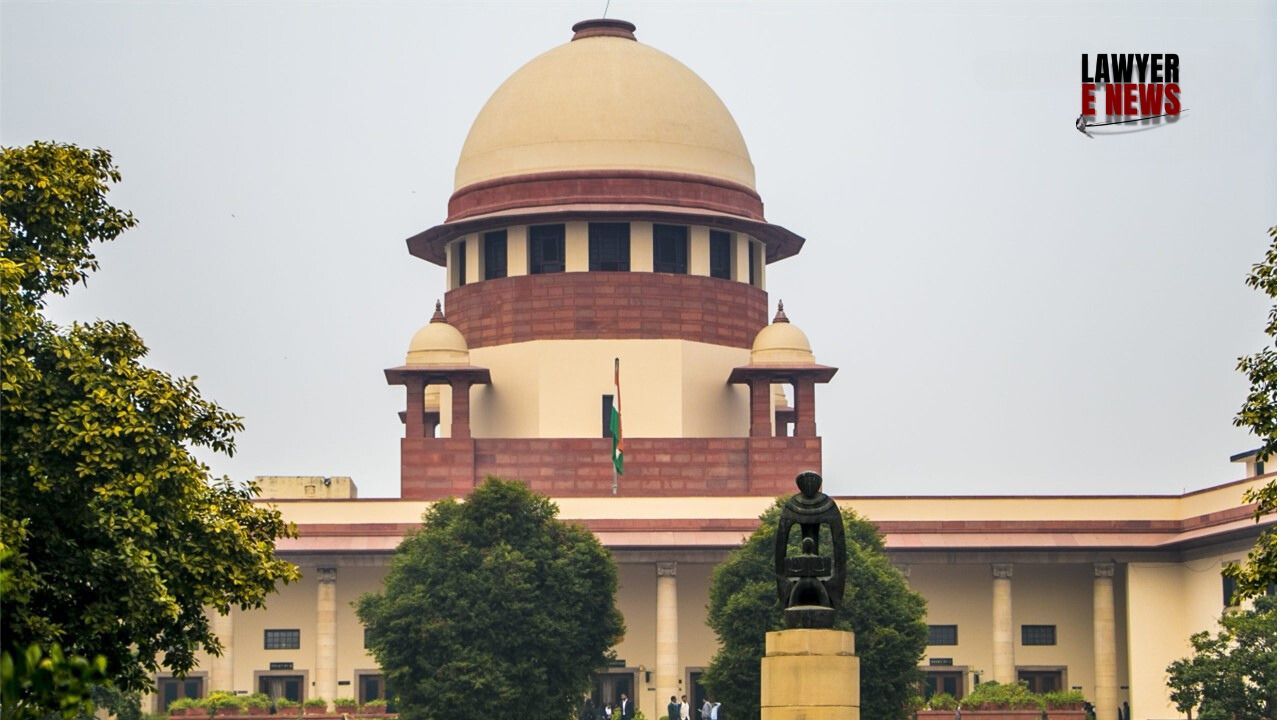
Supreme Court of India setting aside the Telangana High Court’s expansion of the definition of “local candidate” for admissions to MBBS and BDS courses under the State quota. A bench of Chief Justice B.R. Gavai and Justice K. Vinod Chandran held that the High Court had overstepped its jurisdiction by enlarging a definition framed in line with a Presidential Order under Article 371D of the Constitution. The Court upheld the validity of the 2017 Rules, as amended in 2024, while incorporating a narrow proviso to protect children of employees compelled to study outside Telangana due to transfers or postings.
“Mere hardship cannot render a rule unconstitutional”
The core issue was whether the High Court could, under Article 226, read down or expand the statutory definition of a “local candidate” entitled to admission under the Competent Authority quota. The Supreme Court ruled in the negative, emphasizing that the legislative wisdom behind defining local status in consonance with the Presidential Order could not be diluted by judicial innovation. The Court observed that the true basis for such reservation was “not nativity by descent, but residence and continued education within the State,” establishing integration with the local environment and a presumption of future service to the State.
The dispute arose from challenges to the Telangana Medical & Dental Colleges Admission (Admission into MBBS & BDS Courses) Rules, 2017 and the subsequent G.O.Ms. No. 33 of 19.07.2024, which amended the definition of “local candidate.” The High Court of Telangana, in judgments dated August 29, 2023, and September 5, 2024, read down these provisions and broadened eligibility by permitting students with a residence certificate to be treated as locals, even if they had not studied in the State during the required period. The State of Telangana and universities appealed, warning that such dilution would frustrate the intent of Article 371D and Presidential Orders meant to ensure equitable opportunities for truly local candidates.
The Supreme Court framed the central legal question: whether judicial expansion of the statutory definition of “local candidate” was constitutionally permissible. The Court drew upon precedents such as D.P. Joshi v. State of Madhya Bharat (1955), Kumari N. Vasundara v. State of Mysore (1971), and Pradeep Jain v. Union of India (1984), which upheld residential or domicile-based criteria for admissions. The Court stressed that hardship to some individuals—such as children of parents transferred outside the State—“cannot result in the striking down of a rule,” since hardship is inevitable in limited-seat admissions. It reiterated that policymaking and balancing equity with merit fall within the legislature’s domain, not judicial innovation.
The bench categorically rejected the High Court’s reliance on Article 14 to broaden the rule, warning that without a clear statutory framework for residence certification, such judicial directions would cause anomalies and endless litigation.
The Supreme Court upheld the validity of both the 2017 Rules and the 2024 Amendment. It clarified that the definition of local candidate—requiring four years of study or residence culminating in the qualifying examination in Telangana—is in perfect consonance with the Presidential Order of 1974 and long-standing constitutional precedents.
However, acknowledging genuine hardship cases, the Court noted the State’s proposal of a proviso to Rule 3, exempting children of Telangana-origin employees serving outside the State (such as those in All India Services, defence, paramilitary, or public sector corporations). The bench recorded this assurance, holding that such a safeguard would “allay and mitigate the grievances of those taken out of the State by compulsion of their parents’ service.”
The Court also protected admissions already granted in the interim by concession, clarifying that such admissions would not be disturbed. Ultimately, the appeals filed by the State and universities were allowed, and the students’ writ petitions and SLPs were dismissed.
Summing up, the Supreme Court reaffirmed that High Courts cannot judicially expand definitions framed in accordance with Article 371D and Presidential Orders. The carefully balanced rules, reserving 85% seats for local candidates and 15% for All-India quota, were upheld as constitutionally valid. With the added proviso for children of transferred employees, the Court sought to harmonize equity with legislative intent, while cautioning that “policy formulation is the exclusive domain of the legislature.”
Date of Decision: September 1, 2025