-
by sayum
29 August 2026 3:15 PM








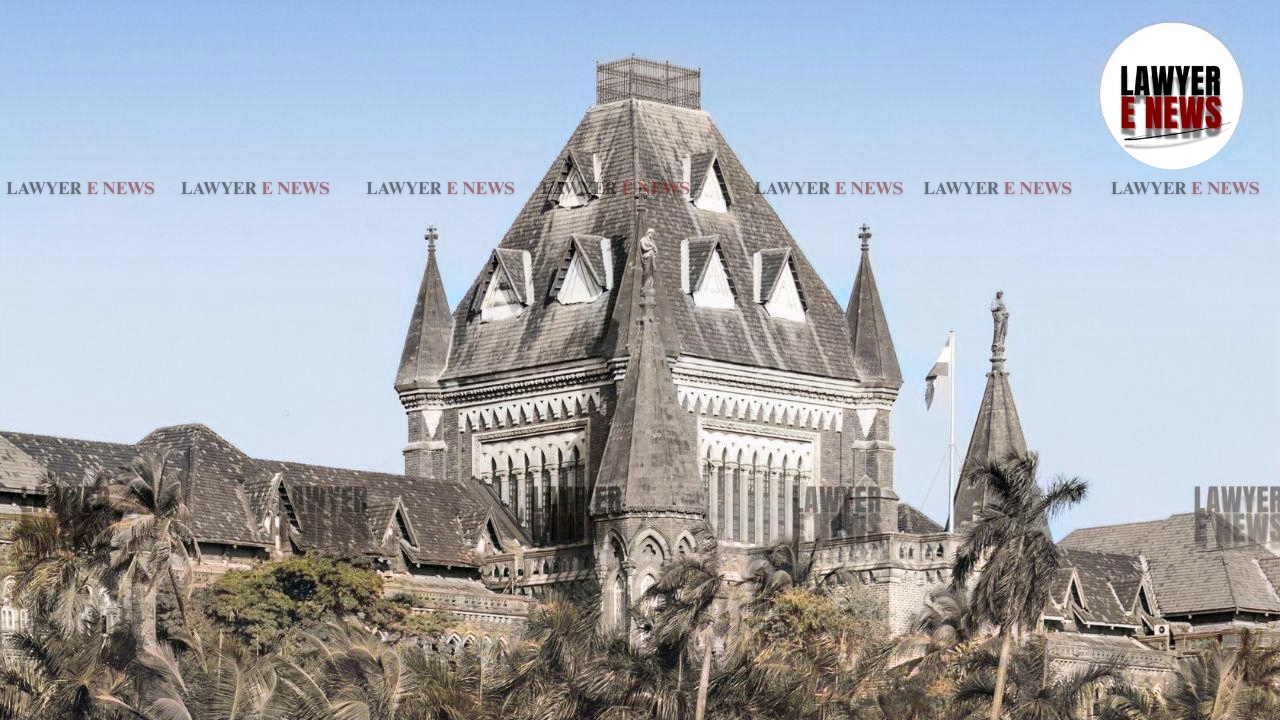
“Scientific material, as of today, does not indicate any identifiable risk of serious harm on account of non-ionized radiation” – In a significant reaffirmation of settled legal and scientific positions, the Bombay High Court on 26 August 2025 dismissed a public interest litigation, challenging the erection of telecommunication towers in residential areas of Pune and Pimpri-Chinchwad. The petition alleged severe health hazards, including cancer and hypertension, from electromagnetic radiation (EMR) emitted by mobile towers, and sought their removal on constitutional and planning grounds.
Pronouncing judgment in Jagruk Nagrik Sanghatana and Others vs. State of Maharashtra and Others, the Division Bench of Chief Justice Alok Aradhe and Justice Sandeep V. Marne decisively ruled that such fears are "not rooted in facts and supported by reliable scientific material", and hence not sufficient to interfere with the operation of legally regulated telecom infrastructure.
“Apprehensions Not Rooted in Scientific Facts Cannot Drive Judicial Action”
The Court began by summarising the essence of the petition, noting that the grievance of the petitioners had two facets—first, an allegation of severe health effects due to EMR from mobile towers, and second, the claim that such towers were erected without proper municipal permissions.
The petition had been converted from an Article 226 writ petition to a public interest litigation in 2023, after the Bench noted that it raised wider concerns beyond private rights.
However, the Bench made it clear that "the issue of telecommunication towers causing any health hazard has been conclusively decided" and is no longer res integra. Referring to its earlier decision in Biju K. Balan and Others vs. State of Maharashtra, the Court observed:
“Scientific material, as of today, does not indicate any identifiable risk of serious harm on account of non-ionized radiation emanating from TCS/BS and Equipment for Telecommunication Network. Thus, we are not inclined to exercise our jurisdiction under Article 226... on the basis of apprehensions which are not rooted in facts.”
The Court further emphasised that a detailed regulatory framework already exists to control radiation levels, ensuring they are "1/10th of the limits prescribed by ICNIRP guidelines", and noted that World Health Organization (WHO) studies to date do not indicate cancer risks from base stations.
“Fear Cannot Override Facts – No Basis to Disrupt Telecom Infrastructure”
While petitioners had relied heavily on health incidents—including deaths from cancer and chronic ailments of residents near mobile towers—the Court stressed that such anecdotal claims lacked scientific substantiation. Rejecting the reliance on the Rajasthan High Court judgment in Justice I.S. Israni (Retd.) v. Union of India, the Bench explained:
“In that case, the validity of byelaws restricting tower installation was under challenge. In the case at hand, the State Government has taken a policy decision to permit erection of towers under regulated conditions.”
Drawing on precedents from the Himachal Pradesh High Court (Vijay Verma v. State of HP) and its own recent rulings (Indus Towers Ltd. v. Grampanchayat Tanang), the Court reiterated that mere fears—especially unaccompanied by peer-reviewed, credible medical data—cannot justify action against mobile towers.
In a telling remark, the Court declared: “The fear expressed by villagers is without any basis… the Grampanchayat has failed to discharge the special burden of proof which was on its shoulders.”
“Telecom Towers Do Not Require Development Permission Under MRTP Act” – Court Upholds Supremacy of New Telecom Law
Addressing the second leg of the petitioners' claim—that many towers were erected without development permission from local authorities—the Court undertook an exhaustive analysis of recent telecom law reforms.
It found that the Telecommunications Act, 2023, and the Right of Way Rules, 2024, had introduced a comprehensive framework for the erection and maintenance of telecom infrastructure, particularly on private property.
The Court noted that Rule 15 of the Right of Way Rules, 2024 provides: “A public entity shall not levy any fees, charges, rent, annuity, compensation, or require any bank guarantee or any other financial contribution for the establishment, operation and maintenance of telecommunication network in property other than public property.”
Crucially, the Bench quoted Section 14(3) of the 2023 Act: “The telecommunication network installed on any property shall not be considered as part of such property, including for the purposes of any transaction related to that property, or any property tax, levy, cess, fees or duties.”
The Court underlined that the modern regime allows installation upon mere intimation and submission of structural safety certification—thereby making traditional MRTP permissions redundant.
It acknowledged that the State Government had also issued GRs and circulars in April and May 2025 instructing local bodies to comply with the new regime.
“We are not inclined to grant the relief of removal of any telecommunication tower site complained of by the Petitioners,” the Court concluded.
“Modern Necessity Cannot Be Stifled By Misplaced Fears”
In a wider reflection on the societal role of mobile connectivity, the Court echoed the reasoning of Indus Tower Ltd. v. Gram Panchayat Tanang, stating:
“In the modern age, mobile phones are no longer a luxury but an inevitable necessity… Mobile towers cannot be summarily dispensed with on misplaced information.”
The judgment balances public interest, technological progress, and legal certainty. The Bench emphasised that the field of mobile tower installation is highly regulated, and courts must tread carefully before entertaining speculative or emotionally charged objections.
Dismissal of PIL Without Costs
The Court dismissed the PIL in its entirety, refusing to interfere either on grounds of public health or alleged illegality of installation. Recognising the public interest intent behind the petition, it made no order as to costs.
“Petitioners have not placed any independent conclusive material for this Court to take a different view… We are, therefore, not inclined to accept Petitioners’ prayer for removal of any mobile tower.”
Date of Decision: 26 August 2025