-
by sayum
29 August 2026 3:15 PM







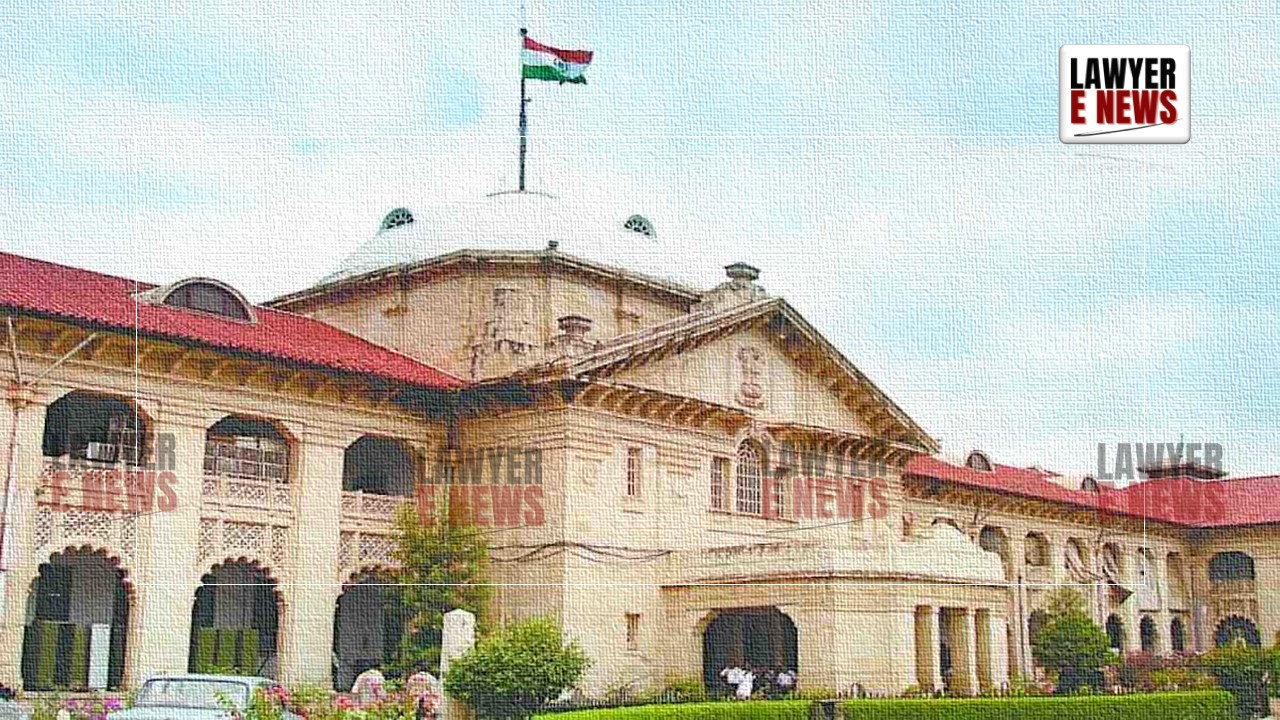
“Mere report of the medical officer that the constable ‘appears to be under influence of alcohol clinically’ is not sufficient to arrive at a definite conclusion.” — Allahabad High Court (Division Bench of Justices Mahesh Chandra Tripathi and Kshitij Shailendra) delivered a significant ruling. The Allahabad High Court held that once the disciplinary authority itself invoked Section 11 of the CRPF Act, 1949 (Minor Punishments), it could not impose the extreme penalty of dismissal. In moulding relief, the Bench directed reinstatement of the constable with all notional benefits and 25% back wages, thereby re-emphasising that disciplinary punishment must be proportionate to the proven misconduct.
The respondent was serving as a Constable Driver in the CRPF. On 19 June 1999, while on duty, he was alleged to have been under the influence of alcohol and negligently hit a cyclist’s vehicle at about 7:30 p.m., causing minor damage. Importantly, no injuries occurred. A departmental inquiry followed, and on 21 October 1999 the constable was dismissed from service. His statutory appeal and revision were both dismissed in early 2000.
Challenging the dismissal, he approached the High Court. A Single Judge set aside the punishment, observing that even if intoxication and negligence were proved, the punishment of dismissal was “too harsh and totally disproportionate.” The matter was remanded for fresh consideration. The Union of India filed a special appeal in 2007, which remained pending for nearly two decades due to repeated defaults and delays. Finally, the Division Bench took up the matter in August 2025.
The central legal question was whether the CRPF authorities, having proceeded throughout under Section 11 (Minor Punishments), could legally inflict the major punishment of dismissal. The Court carefully contrasted the statutory scheme of Section 9 (heinous offences), Section 10 (less heinous offences), and Section 11 (minor punishments).
The Bench held: “Once the department itself has invoked Section 11, the authority was bound to consider the range of minor penalties enumerated therein. To impose dismissal, without classifying the misconduct under Section 9 or Section 10, amounts to misapplication of the Act.”
The Court further scrutinised the evidence regarding intoxication. The prosecution’s medical witness only opined:
“In my opinion Ct/Drv G.S. Tomar has consumed alcohol and effects of alcohol are obvious and he appears to be under influence of alcohol clinically.”
However, no blood test was conducted, and a co-passenger stated he had not seen the constable consuming alcohol. The Court concluded:
“Mere report of the medical officer that the delinquent appears to be under influence of alcohol clinically was not sufficient to arrive at a definite conclusion, particularly in view of contradictory statements of witnesses.”
On proportionality, the Bench relied on celebrated precedents of the Supreme Court. Quoting Ranjit Thakur v. Union of India, the Court reiterated:
“The sentence has to suit the offence and the offender. It should not be vindictive or unduly harsh. It should not be so disproportionate to the offence as to shock the conscience and amount in itself to conclusive evidence of bias.”
It also referred to Giriraj Sharma v. BSF, where dismissal for overstaying leave was set aside, and to Alexandar Pal Singh, where removal was reduced to a lesser penalty.
The Division Bench refused to remand the matter back to the authorities, citing the inordinate delay of over twenty years and the fact that the respondent had already crossed the age of fifty-four with only about six years left for superannuation. The Court observed:
“A remand at this stage would be wholly inappropriate. It would only prolong the litigation and deprive the respondent of the fruits of relief to which he is entitled.”
Accordingly, the Court moulded the relief:
The constable was directed to be reinstated within three weeks in the present pay scale of Constable Driver.
He would be entitled to all notional benefits of service continuity.
The dismissal would not stand in the way of his pensionary or service length calculations.
He would receive 25% back wages from 21.10.1999 till reinstatement, with arrears to be computed and released within two months.
The Allahabad High Court has reaffirmed a crucial principle of service jurisprudence: disciplinary punishment must match both the misconduct and the statutory framework under which proceedings are initiated. A mere clinical suspicion of intoxication, without corroborative proof, cannot justify the severest penalty of dismissal. By restoring the constable to service and tempering relief with only partial back wages, the Court struck a careful balance between legality, fairness, and equity.
Date of Decision: 22 August 2025