No Work No Pay Is Not a Universal Rule: Punjab & Haryana High Court Dock Identification Without Prior TIP Is Absolutely Useless: P&H High Court Upholds Acquittal in Attempt to Murder Case Filing Forged Court Pleadings in Union Government’s Name is Criminal Contempt: Karnataka High Court Sentences Litigant to Jail Execution of Will Proved, But Probate Justly Denied Due to Concealment of Property Sale: Delhi High Court Mere Designation Doesn’t Establish Criminal Liability: Bombay High Court Quashes Proceedings Against ICICI Officials in Octroi Evasion Case Law of Limitation Binds All Equally, Including the State: Allahabad High Court Dismisses Review Petition with 5743 Days’ Delay Once Selected, All Are Equals: Allahabad High Court Slams State for Withholding Pay Protection From Later Batches of Ex-Servicemen Constables Non-Compliance With Section 42 of NDPS Act Is Fatal to Prosecution: Punjab & Haryana High Court Acquits Two Accused In 160 Kg Poppy Husk Case Unregistered Agreement Creating Right of Way Inadmissible in Evidence: Punjab & Haryana High Court Summary Decree in Partition Suit Denied: Unequivocal Admissions Absent, Full Trial Necessary: Delhi High Court No Court Can Allow Itself to Be Used as an Instrument of Fraud: Delhi High Court Exposes Forged Writ Petition Filed in Name of Unaware Citizen "Deliberate Wage Splitting to Evade Provident Fund Dues Is Illegal": Bombay High Court Restores PF Authority's 7A Order Against Saket College and Centrum Direct Identification Vitiated, Diamonds Not Produced, Last Seen Theory Unreliable: Bombay High Court Acquits Two in 2011 Diamond Courier Murder Deposit of ₹5100 Crores Brings Quietus to Entire Criminal Web of Proceedings: Supreme Court Exercises Extraordinary Powers to Quash All Cases Against Hemant Hathi in Landmark Settlement-Driven Order Presumption Under Section 139 Can't Be Rebutted Pre-Trial: Supreme Court Restores Cheque Bounce Complaint Quashed By Patna High Court Supreme Court Invokes Article 142 to End Discrimination Against Ad-Hoc Employees in Allahabad High Court: Orders Reinstatement and Regularization Supreme Court Declares CSR a Constitutional Duty to Protect Environment: Orders Undergrounding of Powerlines in Great Indian Bustard Habitat A Minor’s Sole Testimony, If Credible, Is Sufficient for Conviction: Supreme Court Upholds Child Trafficking Conviction Under IPC and ITPA You Can’t Invent Disqualifications After the Bid: Supreme Court Holds Joint Venture Experience Can’t Be Ignored in Tenders High Court Can't Re-Appreciate Evidence or Rewrite Contract to Set Aside Arbitral Award: Supreme Court Reinstates Award Under Quantum Meruit Once Arbitration Invoked, Criminal Prosecution Cannot Be Weaponised in Civil Disputes: Supreme Court Quashes FIR Against Former Director in Rent Row Section 319 CrPC | Pursuing Legal Remedies in Higher Forums Is Not ‘Evasion of Trial’; Custody Not Required for Summoned Accused: Supreme Court Order 21 Rule 90 CPC | Undervaluation or Procedural Lapses Constitute ‘Material Irregularity’, Not ‘Fraud’; Separate Suit to Bypass Limitation Impermissible: Supreme Court Order 21 CPC | Separate Suit Challenging Auction Sale Barred for Pendente Lite Transferees; Remedy Lies in Execution Proceedings: Supreme Court Non-Signatories Cannot Force Arbitration: Supreme Court Blocks Claim by Sub-Contractor Against HPCL Resignation Forfeits Pension Rights, But Gratuity Is Statutory: Supreme Court Partly Allows Appeal of DTC Employee’s Legal Heirs Appellate Courts Can’t Blanket-Exempt Convicted Directors from Deposit under NI Act Merely Because Company Wound Up: Supreme Court Refers Interpretation of Section 148 to Larger Bench Inordinate Delay Cannot Be Condoned Without Reasons: Supreme Court Slams Madhya Pradesh High Court for Casual Approach in Condoning 1612 Days’ Delay Constitutional Rights & Witness Protection | State Authorities Cannot Victimise Litigants for Approaching Court: Supreme Court Review Jurisdiction is Not an Appeal in Disguise: Supreme Court Dismisses Konkan Railway’s Plea Over Employee’s Resignation Withdrawal Agreement to Sell Does Not Create Any Right in Property, Hence No Right to Compensation on Acquisition: Allahabad High Court Sexual Harassment Complaint Can Be Inquired by ICC at Woman’s Workplace Even if Accused Works Elsewhere: Supreme Court Settles Jurisdiction Under POSH Act Mandate Expired, Arbitrator Functus Officio: Supreme Court Orders Substitution After Delay in Arbitral Award

Frivolous Contempt Petition Amounts to Abuse of Process – Punjab & Haryana High Court Slaps ₹50,000 Costs

21 August 2025 11:10 AM

By: Deepak Kumar


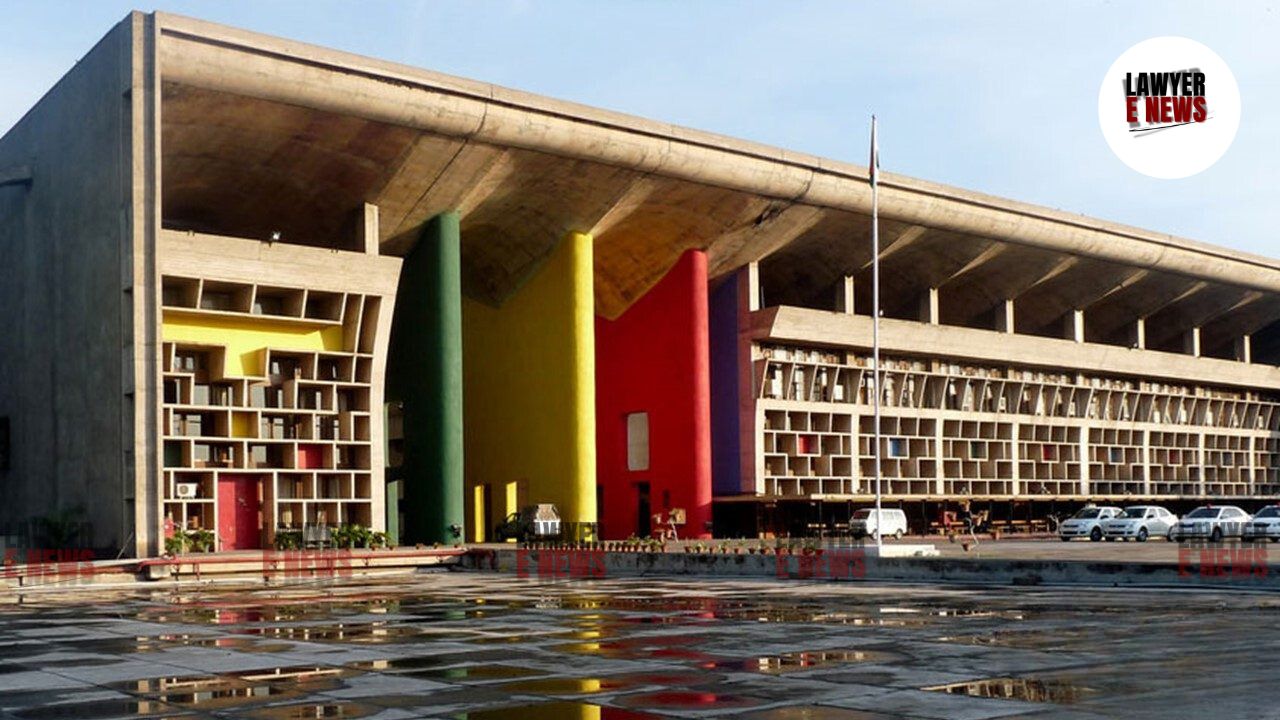
“A litigant who attempts to pollute the stream of justice… is not entitled to any relief” – Supreme Court principle invoked against petitioner - Punjab & Haryana High Court at Chandigarh delivered a stinging rebuke to what it termed as “a frivolous and vexatious litigation spree,” dismissing a contempt petition filed by a Zirakpur resident and imposing ₹50,000 in exemplary costs.

Justice Sudeep­ti Sharma, speaking for the Bench, ruled that the dispute between the petitioner, Payal Chaudhary, and the builder of Savitry Greens 2 housing project was “entirely civil in nature” and could not be dressed up as a case of willful disobedience of a Supreme Court judgment to attract contempt jurisdiction.

The petitioner had approached the Court under Article 215 of the Constitution and Sections 2(c), 10 and 12 of the Contempt of Courts Act, alleging that the builder’s action in disconnecting her water supply violated the Supreme Court’s directions in Rajeeb Kalita v. Union of India decided on 15 January 2025. She claimed that the apex court had affirmed the principle that essential services such as water and electricity cannot be used as coercive measures to recover dues.

According to her, on 18 July 2025, water to her flat and several others was cut off “without any prior notice, court order, or lawful justification,” solely to compel residents to pay maintenance charges. She argued that such disconnection was not only unlawful but contemptuous, particularly when the builder had failed to provide basic amenities promised in the agreement.

Her notice to the builder painted a grim picture of persistent deficiencies – no flat-wise parking, absence of functional fire hydrants, non-operational sewage treatment plants, and even a fire incident on 17 September 2024 in her own flat, which she alleged was worsened by defunct fire safety infrastructure.

“The installed fire-fighting equipment was nonfunctional, outdated, and disconnected from any water source,” she stated, adding that she had suffered property loss worth ₹12–15 lakh.

The petitioner also cited National Consumer Disputes Redressal Commission rulings that essential utilities cannot be withheld to force payment of maintenance dues. She maintained that residents had lawfully withheld maintenance charges “under protest” due to the builder’s decade-long failure to meet contractual and statutory obligations.

Justice Sharma, however, found no merit in the plea.

“The grievance raised by the petitioner stems from a private civil dispute between her and the private respondents. The petitioner has not placed any cogent material on record to establish even a prima facie case of willful disobedience or violation of the judgment of the Hon’ble Supreme Court,” the Court observed.

The judge pointed out that despite being advised to pursue appropriate civil remedies, the petitioner had persisted with the contempt petition “without any tenable basis.”

Citing the Supreme Court’s caution in Dalip Singh v. State of Uttar Pradesh (2010) 2 SCC 114 against “unscrupulous litigants who, devoid of respect for truth, resort to falsehood and unethical practices,” Justice Sharma reiterated:

“A litigant who attempts to pollute the stream of justice or touches the pure fountain of justice with tainted hands is not entitled to any relief, interim or final.”

The Court also referred to Subrata Roy Sahara v. Union of India (2014) 8 SCC 470, which lamented that “the Indian judicial system is grossly afflicted with frivolous litigation,” and stressed the need for deterrence through costs, as underlined in K.C. Tharakan v. State Bank of India (2023).

“This petition is a stark example of such abuse,” the Court declared, noting that the time and resources of the judiciary “are finite and must be preserved for genuine grievances deserving of judicial intervention.”

To send “a strong deterrent message,” the High Court dismissed the contempt petition and directed the petitioner to deposit ₹50,000 with the Punjab & Haryana High Court Bar Association within two months. The sum will be used for the construction and renovation of the Women Bar Room at the High Court.

In case of default, the amount is to be recovered as arrears of land revenue.

The ruling is a reminder that contempt jurisdiction is not a tool for pursuing private vendettas and that litigants who misuse judicial forums risk both reputational and financial consequences.

Date of Decision: 24 July 2025

Latest Legal News