-
by sayum
05 August 2026 3:07 PM







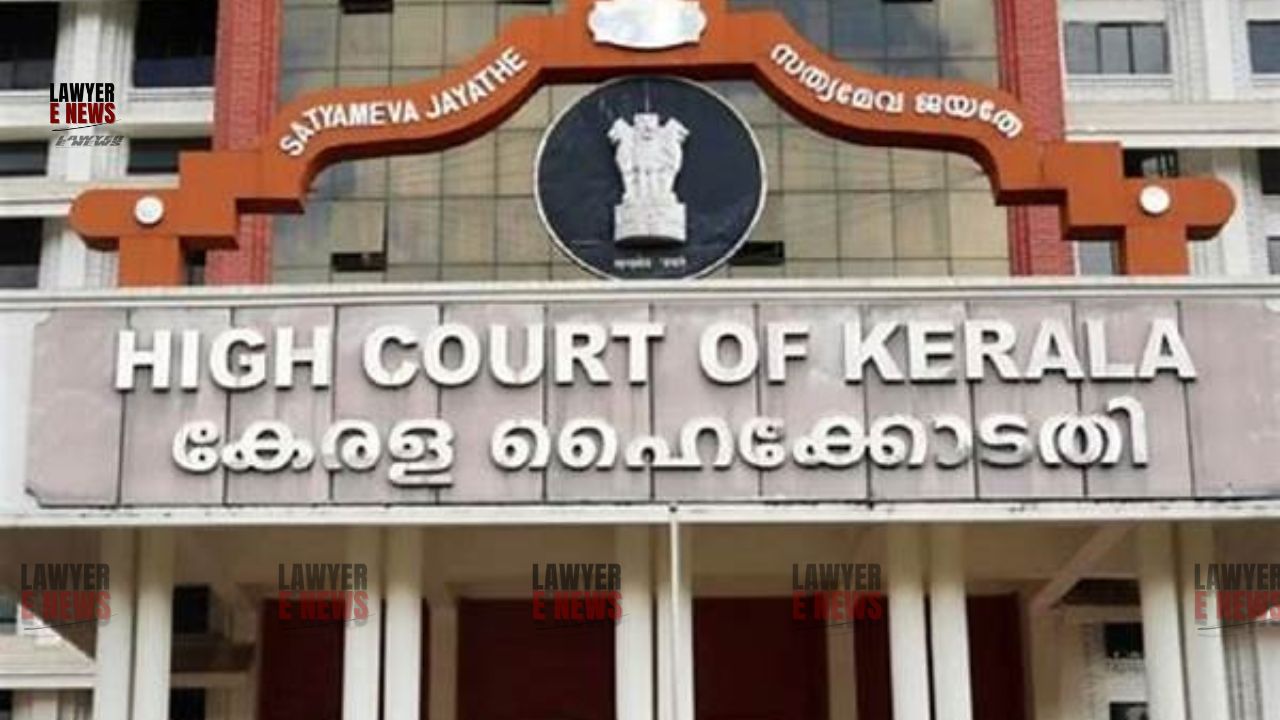
“Deliberate, Malicious Vilification of Judiciary Will Not Be Tolerated”, Kerala High Court, comprising Justice Raja Vijayaraghavan V and Justice Jobin Sebastian, delivered a landmark judgment in Suo Motu Criminal Contempt Case, sentencing one P.K. Suresh Kumar to three days simple imprisonment and a fine of Rs. 2000 for making scandalous social media posts targeting sitting Judges of the Court. The Court observed in unequivocal terms, “Criticism must not be allowed to degenerate into scandalising the judiciary, undermining its independence, and eroding public confidence.”
The suo motu contempt proceedings arose after the respondent, through his Facebook account, published a string of defamatory posts between March 9 and 17, 2024, accusing High Court Judges of political bias, dishonesty, and motivated judgments, particularly targeting the Devaswom Bench. The Court took grave note of the respondent’s conduct, remarking: “These posts reveal a concerted and sustained attempt to portray Judges of this Court as lacking independence and acting with improper motives. Such conduct strikes at the very foundation of public confidence in the administration of justice.”
The case assumed further seriousness as the Court noted that the respondent had earlier been discharged from contempt proceedings in 2024 after tendering an unconditional apology. However, he soon resumed defamatory conduct. Justice Vijayaraghavan, writing for the Bench, observed, “The respondent’s attempt to trivialise the solemnity of this Court by boasting about evading punishment in prior contempt proceedings displays a shocking lack of remorse and an entrenched contumacious attitude.”
Limits of Free Speech: Court Highlights Distinction Between Fair Criticism and Scandalisation
Rejecting the defence of free speech under Article 19 of the Constitution, the Court held, “Every citizen enjoys the right to freedom of speech, but this right is curtailed by the necessity to preserve the dignity and integrity of judicial institutions. Freedom of speech is not a shield for defamation, abuse, and undermining the impartiality of Courts.”
Quoting from settled jurisprudence, the Court reinforced the principle laid down in E.M. Sankaran Nampoothiripad v. Narayanan Nambiar: “Acts which bring the court into disrepute or disrespect, or affront its majesty, constitute criminal contempt.” The Court reiterated the line of distinction: “Fair, temperate, and good-faith criticism is permissible, but imputations of improper motives and public vilification are punishable.”
In a damning indictment of the respondent’s conduct, the judgment noted, “The respondent’s posts go far beyond the bounds of legitimate criticism. They portray Judges as puppets of political and communal forces and cast aspersions on their integrity and motives without a shred of evidence.”
Repeated Contempt, Absence of Remorse, and Derogatory Conduct Lead to Jail Sentence
The High Court found the respondent guilty under Section 12 of the Contempt of Courts Act, 1971, observing that his conduct warranted exemplary action to safeguard the majesty of law. The Court stated: “Despite having once been discharged upon apology, the respondent’s conduct displays complete disregard for judicial dignity. His posts are malicious, deliberate, and aimed at lowering the authority of the Court in the public eye.”
Declining to extend any leniency, the Court sentenced him to three days simple imprisonment and a fine of Rs. 2000. It further directed, “In default of payment, the contemnor shall undergo a further period of one month simple imprisonment.” Refusing his request for suspension of sentence, the Bench remarked, “Considering his antecedents and continued defamatory behaviour, this Court is not inclined to exercise discretion in his favour.”
The verdict serves as a stern reminder that the right to free speech cannot be misused to scandalise the judiciary and that repeated contemnors will face the full force of law.
Date of Decision: 16th July 2025