-
by sayum
25 August 2026 11:12 PM








“Once the Gold Is Admitted to Be Taken, the Burden Is on the Husband to Prove Its Return”, In a significant matrimonial ruling Kerala High Court ruled in favour of both finality and fairness in a long-drawn marital dispute.
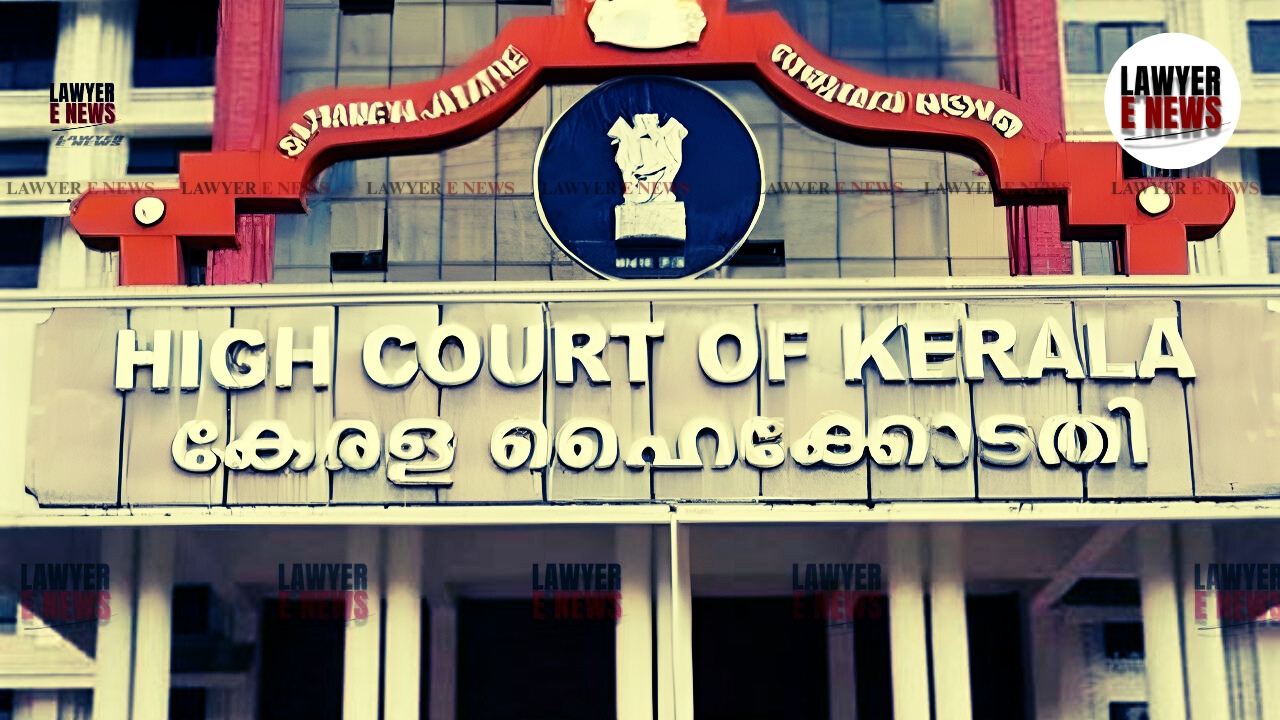
Allowing cross-appeals by both husband and wife arising from a common judgment of the Family Court, Ottappalam, the Division Bench of Justice Sathish Ninan and Justice P. Krishna Kumar dissolved the marriage on the ground of cruelty and irretrievable breakdown, directed the husband and his parents to return 15½ sovereigns of gold ornaments to the wife, and awarded her ₹10,000 per month as future maintenance until remarriage.
“Where the marriage is only a legal tie, devoid of emotional or physical connection, forcing it to continue amounts to cruelty,” observed the Court, drawing from Supreme Court precedents including Samar Ghosh v. Jaya Ghosh and Shilpa Sailesh v. Varun Sreenivasan.
Marriage Broken Beyond Repair: Evidence Shows Cruelty and Hostility
The parties were married on 1 May 2011. They have lived separately since 16 April 2014, and multiple efforts at reconciliation, including mediation and counseling, failed.
The husband alleged that the wife had a quarrelsome disposition, threatened to commit suicide by jumping off a balcony, threw stones at his mother, and frequently fought over minor matters. He contended that any possibility of restoring the relationship had completely vanished.
The Court held that the husband had substantiated his claim of mental cruelty. “His testimony stood resilient during cross-examination,” the judgment noted, adding that “requiring him to continue in the marriage would itself be cruel.”
The Bench further found that the long separation had created a permanent fracture in the marriage. “The facts clearly establish irretrievable breakdown. Courts cannot keep the legal shell of marriage intact when the soul of the relationship is long dead,” said the Court. It added that “the solemn tie has dissolved in substance; all that remains is to grant formal legal closure.”
Gold Ornaments: Husband's Custody Admitted, Return Unproven
The wife had claimed that 40½ sovereigns of gold ornaments gifted to her at marriage were entrusted to the husband and his family, and later misappropriated. She produced photographs and bills supporting her possession of 51 sovereigns.
The husband admitted that the ornaments were once in his custody but claimed they were returned to the wife before he left for abroad. To support this, he submitted a few photographs showing the wife wearing jewellery at his brother’s engagement.
The High Court rejected this defence as insufficient. “Once the husband admits that the gold was entrusted to him, the burden squarely lies on him to prove its return. The vague explanation and photos do not discharge that burden,” it held.
Referring to the Family Court’s rejection of the wife's claim on account of inconsistencies, the High Court took a more balanced view. “While her statements may have varied in expression, the core of her version remained the same — that the gold was taken and not returned,” it said.
Quoting her testimony during cross-examination, the Court observed: “She consistently stated that her husband and in-laws took the ornaments and later sold or utilised them to buy property.”
“In matrimonial matters, minor inconsistencies should not override the consistency of the main allegation,” the Court declared. It concluded that the wife had successfully proved her claim to 15½ sovereigns, finding her version exaggerated but substantially credible.
Future Maintenance Awarded Despite Denial of Past Claim
While the Family Court had denied the wife’s claim for past maintenance, it awarded maintenance for the minor child. The High Court upheld this finding, observing that the wife had not proved that she lived separately with sufficient cause.
However, in view of the decree of divorce granted in favour of the husband, the Bench held that the wife was entitled to future maintenance.
Taking note of the husband’s stated income of ₹30,000 per month, the Court awarded ₹10,000 per month to the wife, chargeable on the husband’s immovable properties, and clarified that this maintenance would continue until her remarriage.
“Though the wife’s claim of cruelty could not be wholly proved, the grant of divorce today entitles her to future support under law,” said the Court, applying principles under Section 18 of the Hindu Adoptions and Maintenance Act, 1956.
Court Criticises the Family Court’s “Hyper-technical” Reading of Evidence
The High Court found that the Family Court erred in disbelieving the wife’s case regarding the gold ornaments. “The Family Judge adopted an unnecessarily technical view, picking minor contradictions while ignoring the broader narrative. This approach is flawed, especially in sensitive matrimonial matters,” the Bench remarked.
It added: “Where both parties admit that the gold existed and was with the husband at some point, disbelieving the wife merely for not knowing whether the ornaments were sold or pledged, is a misapplication of legal standards.”
The Court emphasized that while documentary proof is always ideal, “oral testimony and conduct, especially in the domestic context, must be appreciated with nuance and realism.”
This judgment brings to closure a protracted marital conflict, delivering reasoned relief to both spouses. It grants divorce to the husband, holding that “forcing cohabitation would be punitive,” while also protecting the wife's financial and property interests, awarding her future maintenance and part return of entrusted gold.
As the Court noted, “marriage is not a legal contract alone — it is an emotional partnership. Once the relationship degenerates into accusations and long separation, the law must step in to grant dignified separation, not forced reunion.”
Mat.Appeal No. 672/2017 filed by the wife was partly allowed, entitling her to 15½ sovereigns of gold or its market value.
Mat.Appeal No. 763/2017 filed by the husband was allowed, and the marriage was dissolved by decree of divorce.
Mat.Appeal No. 671/2017 filed by the wife was partly allowed, granting her future maintenance of ₹10,000 per month, charged on the husband's immovable property.
Mat.Appeal No. 667/2017 filed by the husband was dismissed, confirming the maintenance awarded to the minor child.
Date of Decision: 2 July 2025