-
by sayum
24 August 2026 3:22 PM







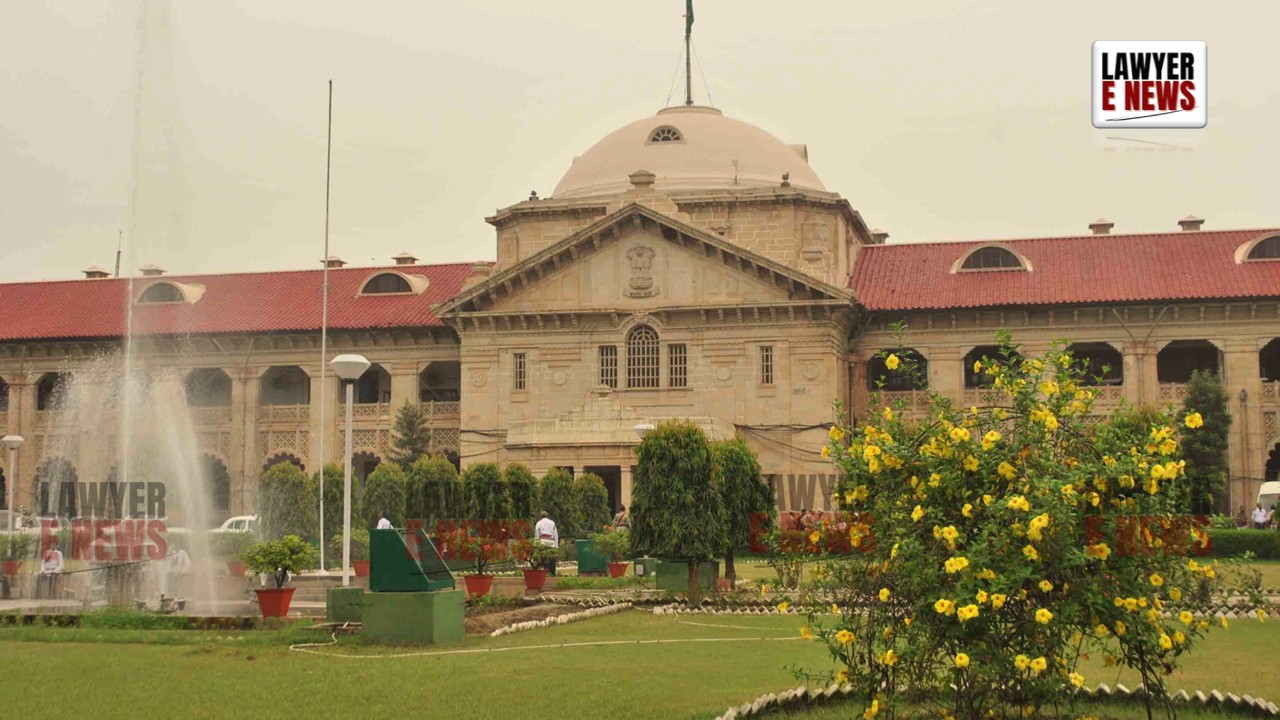
“Even an Erroneous Order Is Binding Inter-Partes Unless Set Aside”, In a landmark judgment with far-reaching consequences for the rule of law and government accountability, the Allahabad High Court held top officers of the Uttar Pradesh Government, including the Chief Secretary, in contempt for willfully disobeying its 2016 final judgment declaring land acquisition proceedings to have lapsed under Section 24(2) of the Right to Fair Compensation and Transparency in Land Acquisition, Rehabilitation and Resettlement Act, 2013.
Justice Salil Kumar Rai, sitting in civil contempt jurisdiction, decisively rejected the State’s principal defence — that compliance with the 2016 judgment was not legally possible due to the Supreme Court’s overruling of Pune Municipal Corporation v. Harakchand Misirimal Solanki, (2014) 2 SCC 183 by the Constitution Bench in Indore Development Authority v. Manoharlal, (2020) 8 SCC 129.
“Overruling Only Removes Precedential Value, Not Binding Effect Between Parties”: High Court
The Court's 2016 order, passed in Writ-C No. 62677 of 2015, had declared that land acquisition proceedings initiated under the Land Acquisition Act, 1894 stood lapsed for non-payment of compensation and absence of physical possession. The State’s SLP against the judgment was dismissed by the Supreme Court on 12.09.2017. Despite this, the State failed to comply, prompting the petitioner, Vinay Kumar Singh, to initiate contempt proceedings.
The State later attempted to justify its non-compliance by citing the Constitution Bench ruling in Manoharlal, which reversed the precedent laid down in Pune Municipal Corporation. The High Court, however, rejected this as a legally untenable defence in contempt.
Justice Rai held:
"Overruling a judgment only removes its precedential value. It does not nullify the final adjudication inter-partes. A judgment binds the parties unless it is set aside through appropriate legal remedy."
Citing the Supreme Court’s rulings in K.L. Rathi Steels Ltd., (2024) 7 SCC 315, and DDA v. Tejpal, (2024) 7 SCC 433, the High Court reaffirmed that:
"Subsequent overruling of Pune Municipal Corporation by Manoharlal does not obliterate the judgment between parties already attained finality. Even an erroneous judgment operates as res judicata unless reversed."
“Misuse of Departmental Structure to Evade Compliance”: Court Rebukes State Conduct
The Court came down heavily on the State Government’s conduct, characterising the continued defiance and inter-departmental blame-shifting as “high-handed,” “calculated,” and a “deliberate attempt to deny the applicant the fruits of judicial success.”
Referring to a 2022 assurance made in Court by the Chief Standing Counsel that compensation would be paid within a week, which went unfulfilled, the Court observed:
"All tricks have been employed by the State-respondents to prevent implementation of the order of this Court and deprive the petitioners of their claim as acknowledged and recognized by this Court."
Earlier, in its order dated 28.04.2022, the Court had noted:
"The applicant cannot be made to be used as a shuttlecock by two departments... Such conduct reflects mal-administration not expected from State officers."
Article 141 and 144 Do Not Authorize Disobedience of Final Judgments
Rejecting the State’s argument that Articles 141 and 144 of the Constitution obliged it to follow Manoharlal rather than the High Court’s 2016 ruling, Justice Rai clarified:
"Article 141 does not authorize the executive to unilaterally declare a binding judgment as void due to a subsequent precedent. Article 144 does not empower State officials to disregard Court orders citing later Supreme Court pronouncements."
The Court cited Kapildeo Prasad Sah v. State of Bihar, (1999) 7 SCC 569 and Ram Kishan v. Tarun Bajaj, (2014) 16 SCC 204 to reinforce the principle that contempt jurisdiction exists to ensure compliance with judicial mandates and preserve the authority of courts.
Contempt Established – Compliance Ordered by 05.01.2026 or Personal Appearance for Framing of Charges
While holding the State officials in contempt, the Court granted them a final opportunity to comply. The Chief Secretary, Additional Chief Secretaries of Irrigation and Urban Development Departments, and District Magistrate of Prayagraj were directed to either file compliance affidavits by 05.01.2026 or appear personally before the Court for framing of charges.
Justice Rai held: "An order of a writ court against any officer of the State is an order against the State itself... Distribution of work between departments cannot be used as a pretext to not implement the order."
The Court concluded: "Failure to implement the 2016 judgment amounts to willful disobedience, and the defence raised by the State is a legal fallacy intended to escape the consequences of contempt."
This ruling reinforces a vital constitutional principle — that final judgments between parties cannot be ignored or bypassed by citing later changes in precedent. The Allahabad High Court has made it clear that executive officers are not free to interpret binding judgments into obsolescence and must comply unless the judgment is lawfully set aside. The case sets a precedent in contempt jurisprudence on the limits of judicial overruling and the enduring sanctity of final court orders.
Date of Decision: 28 November 2025