-
by sayum
23 August 2026 2:56 PM







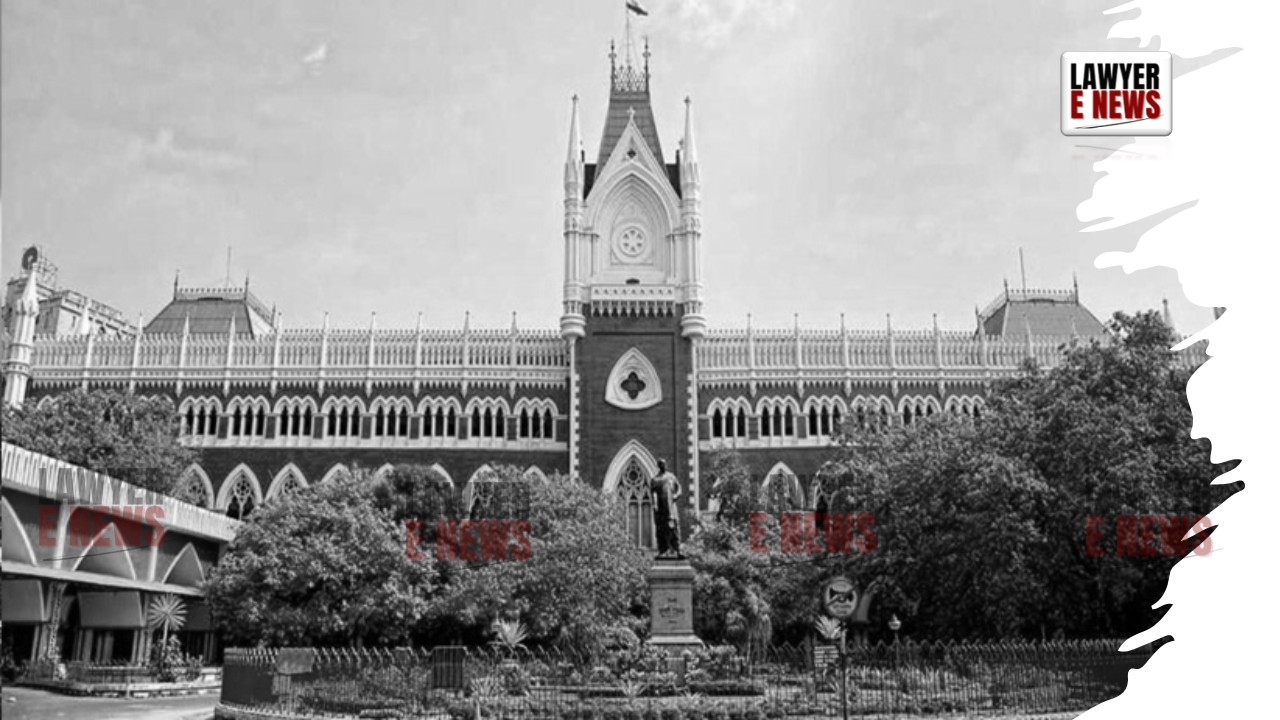
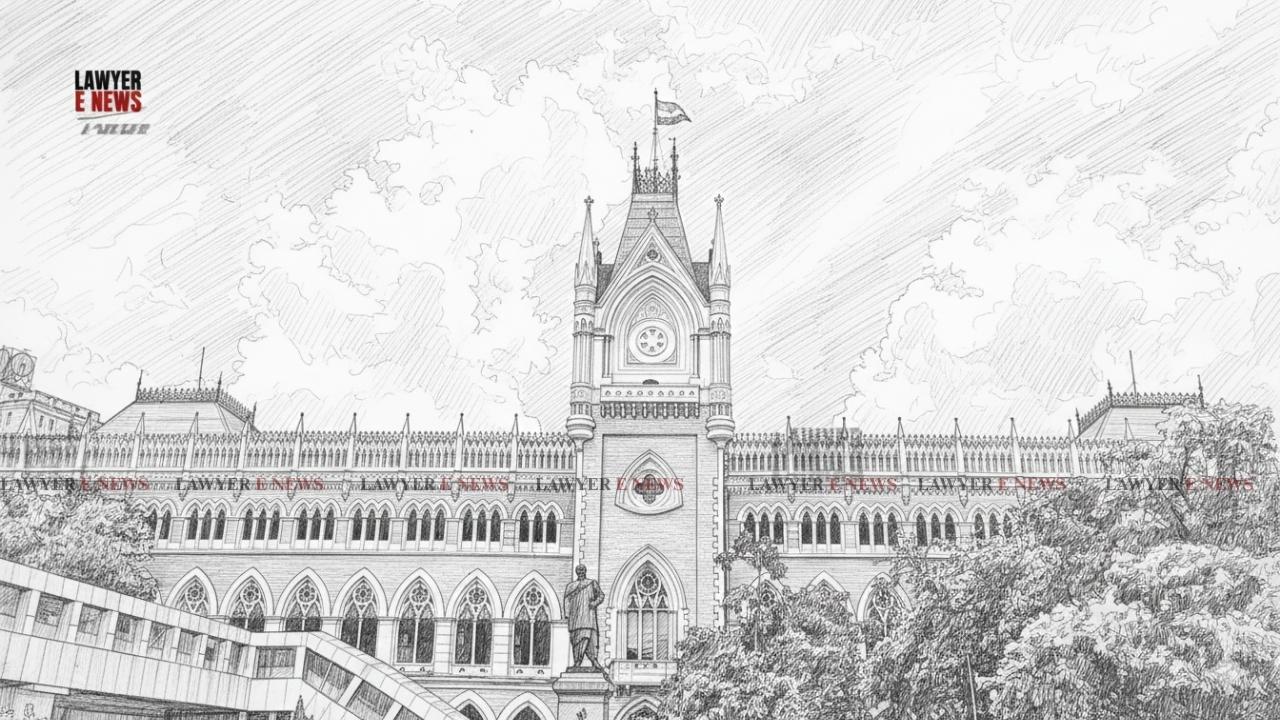
“Executing Court Practically Granted Automatic Stay In Absence Of Appellate Stay Order, Which Is Impermissible In Law” – Calcutta High Court quashing an ex parte ad interim injunction issued by the executing court that had restrained the decree-holder from disturbing the possession of a third party licensee occupying the decretal property under a dealership agreement. Justice Shampa Sarkar categorically held that an executing court cannot go behind the decree nor can it grant a blanket injunction in the absence of a stay order from the appellate court.
In exercise of its supervisory jurisdiction under Article 227 of the Constitution, the High Court found the order of the executing court to be perverse, arbitrary, and passed in excess of its jurisdiction, especially since it created an anomalous situation amounting to an automatic stay of execution proceedings without any such direction from the appellate forum.
“A Licensee Cannot Set Up Hostile Title Against the Judgment-Debtor and Resist Execution by Claiming Thika Tenancy” – Observes High Court
The judgment arose out of a challenge to the executing court’s ex parte order dated September 25, 2025, passed in Misc. Case No. 211 of 2025 (arising out of Title Execution Case No. 8 of 2025), where the lower court had granted an injunction in favour of Opposite Party No. 1 (a dealer/licensee), despite there being a decree for eviction passed against the lessee (IOCL – Opposite Party No. 2) in Title Suit No. 39 of 2000, decreed on November 20, 2024.
The High Court found that the licensee’s entry into the property was strictly under the dealership agreement with IOCL, which expressly barred any claim of exclusive possession, tenancy, or independent rights. The dealership agreement unambiguously stated:
“The Dealer shall have no right, title or interest in the said premises or outfit and shall not be entitled to claim the right of lessee, sublessee, tenant or any other interest in the premises or outfit… the Dealer shall not be deemed to be in exclusive possession of the premises.”
Yet, the executing court treated the licensee as an independent party raising a credible claim of thika tenancy and thereby capable of resisting execution under Order 21 Rules 97–103 CPC.
Justice Sarkar held such reasoning to be legally unsustainable. She emphasized that a party claiming through the judgment-debtor cannot simultaneously assert independent possession hostile to the same judgment-debtor, particularly where the basis of occupation is a permissive dealership license.
“Executing Court Cannot Question the Validity of a Decree Passed After 24 Years of Litigation” – No Jurisdiction to Declare Decree Inoperative
The High Court held that the executing court’s observation, treating the eviction decree as prima facie a nullity on the ground that the property was a thika land, was entirely misconceived. The decree had been passed by a competent civil court after a 24-year litigation and was under appeal without any stay. Justice Sarkar underlined: “Before coming to a prima facie finding that the decree was a nullity and inoperative, the findings of the suit court on the claim of the opposite party No. 2 of being a thika tenant should have been considered… Both the opposite parties could not be thika tenants at the same time.”
The lease deed between IOCL and the original owners dated February 21, 1970 was for a duration of 20 years with a renewal clause of 10 years – a duration that excluded the applicability of the 1949 Calcutta Thika Tenancy Act under Section 2(5), which specifically excluded leases for over 12 years from the definition of thika tenancy.
Moreover, the High Court clarified that permanent (pucca) structures on leased land prior to 1.11.2010 did not qualify as thika tenancies under the 1981 and 2001 Acts, relying on binding precedents including Jatadhari Daw, Lakshmimoni Das, and the Supreme Court’s 2022 decision in Nemai Chandra Kumar v. Mani Square Ltd..
“A Pending Appeal Does Not Bar Execution – Unless A Stay Is Granted” – Reiterates High Court With Reference to Atma Ram’s Case
The High Court heavily relied on the Supreme Court’s landmark ruling in Atma Ram Properties Pvt. Ltd. v. Federal Motors (P) Ltd., (2005) 1 SCC 705, where it was held that:
“Mere preferring of an appeal does not operate as a stay on the decree… the appellate court must exercise equitable discretion to grant stay… and the decree-holder must be compensated for loss due to delay in execution.”
Justice Sarkar noted with disapproval that the executing court had granted multiple extensions of stay merely to allow the judgment-debtor to obtain a stay from the appellate court, and eventually allowed a third party (the dealer/licensee) to block execution by claiming a right under the Thika Tenancy Act — without any prima facie case, or assessment of balance of convenience.
“The order impugned has practically created an anomalous situation and an automatic stay of execution,” the High Court remarked, calling it “contrary to law and settled principles.”
“Perversity And Failure To Follow Settled Legal Principles Justifies Interference Under Article 227” – High Court Reminds Subordinate Courts of Limits
Justice Sarkar concluded that the executing court had committed serious jurisdictional errors by:
Going behind the decree which was passed by a competent court.
Entertaining an ex parte injunction without applying the settled tests of prima facie case, balance of convenience, or irreparable injury.
Assuming jurisdiction to declare the decree inoperative due to alleged Thika Tenancy, despite findings already recorded in the suit and no stay being granted by the appellate court.
The High Court exercised its supervisory powers under Article 227 to set aside the impugned order, vacated the injunction, and directed the executing court to decide the application under Section 151 CPC afresh after hearing the decree-holder, uninfluenced by prior observations.
Justice Sarkar clarified:
“It is not the order alone, which is being considered by the court, but the way the learned court had proceeded in the matter.”
She concluded with a caution that High Courts must ensure that subordinate courts do not act in contravention of well-settled legal principles, especially in matters affecting enforcement of decrees and property rights.
Date of Decision: December 24, 2025