-
by sayum
05 August 2026 9:31 AM







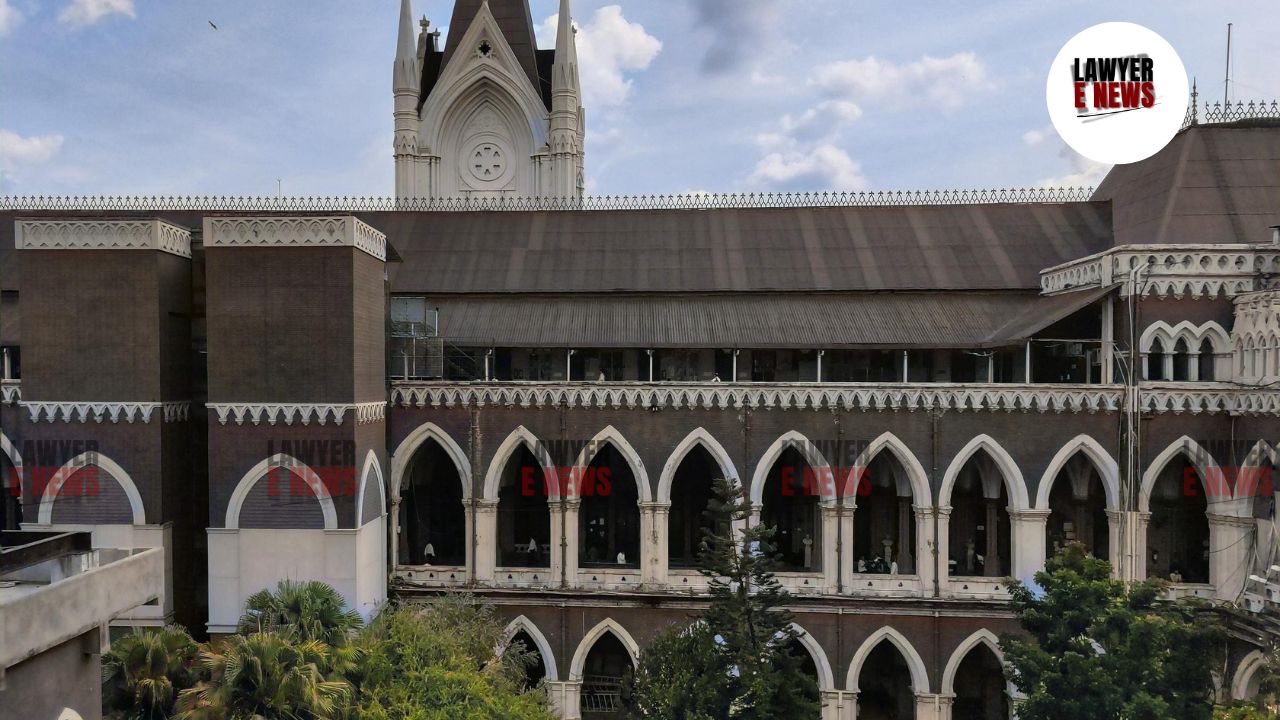
“Legitimate Expectation Yields To Overarching Public Interest”, In a significant ruling delivered on 16th July 2025, the Calcutta High Court, through Justice Partha Sarathi Sen, pronounced judgment in the consolidated writ petitions). Addressing challenges against the West Bengal Madrasah Service Commission’s decision to conduct a second written examination in 2024 for recruitment under the First State Level Selection Test, 2010, the Court ruled in favour of administrative rectification in recruitment, observing that “in matters of public employment, legitimate expectation must give way to greater public interest.” This decision not only impacts thousands of candidates but also reinforces constitutional mandates of fairness and non-arbitrariness in state recruitment processes.
The Long Road from 2010 to 2025
The genesis of the dispute traces back to a recruitment advertisement published on 27th March 2010 by the West Bengal Madrasah Service Commission for filling Group D posts in non-aided Madrasahs. The recruitment process remained incomplete for over a decade, leading to protracted litigation beginning with Soumen Malakar’s petition in 2018. Justice Sen noted the timeline: “Despite conducting the written examination on 29th May 2011, the Commission failed to publish the results, forcing candidates to knock at the doors of the judiciary.”
Prior judicial orders, including the Division Bench judgment in MAT 907 of 2018, directed the Commission to publish results without delay but were silent on re-examination provisions. In 2023, the Commission unearthed that nearly 73,978 candidates were wrongly eliminated at the screening stage due to incorrect answer keys. To rectify this, a fresh written examination was held on 1st September 2024, triggering challenges from candidates who had cleared the 2011 examination.
Rectification Vs. Restriction
Justice Sen meticulously recorded the core legal conundrum: “Whether the Commission acted in defiance of judicial orders by holding a second written examination or exercised its inherent authority to correct grave injustices?”
Senior counsels for petitioners vehemently argued that holding a second test contravened the binding directions in the Soumen Malakar case. Mr. Soumya Majumdar submitted, “The Commission cannot act contrary to judicial dictates by stealthily introducing a fresh examination.” Mr. Biswaroop Bhattacharya highlighted the absence of express provisions in the 2010 Rules for multiple written tests, stating, “The rules mandate one written examination; anything more amounts to arbitrariness under Article 14.”
Judicial Orders Do Not Foreclose Corrective Action
Justice Sen rejected the contention that previous judicial pronouncements barred rectificatory action. The Court observed, “This Court finds that the so-called prohibitions are neither the ratio decidendi nor a substantive direction precluding the Commission from correcting evaluation errors” (para 102).
Referring to the governing recruitment rules, the Court clarified, “The 2010 Rules do not contain any express prohibition against conducting a second written examination where administrative errors affecting fairness have been detected” (para 121).
Importantly, the Court declared, “It is fallacious to interpret prior judgments as handcuffs preventing the Commission from discharging its constitutional obligations under Articles 14 and 16” (para 93).
Balancing Fairness And Expectation: Doctrine of Legitimate Expectation
Justice Sen leaned on the Constitution Bench ruling in Sivanandan C.T. v. High Court of Kerala (2024) 3 SCC 799 to expound the doctrine of legitimate expectation, stating,
“The doctrine cannot fetter lawful administrative decisions made in public interest. Where administrative errors deprive candidates of their fair chance, correction of such errors cannot be sacrificed at the altar of expectation” (para 106).
He further clarified, “The legitimate expectation of the petitioners who took the 2011 exam cannot translate into an absolute right to prevent participation of others wrongly excluded” (para 110).
In a telling observation, the Court said, “No legitimate expectation can override the constitutional commitment to equality, especially when the rectification of injustice restores fairness in recruitment” (para 111).
On Equality and Level Playing Field: Same Test, Same Standards
Responding to the claim of discrimination, the Court conducted an independent comparison of the two question papers from the 2011 and 2024 exams. Justice Sen unequivocally stated,
“On meticulous comparison, it never transpires to this Court that the two question papers are of different standards; the same level playing field has been maintained” (para 119).
He further dismissed the grievance regarding normalization, observing,
“The absence of normalization does not vitiate the process when there is no demonstrable disparity in difficulty levels of the examinations” (para 120).
Applying Wednesbury and Proportionality Tests: Correction over Convenience
Invoking the principles laid down by the Supreme Court in State of Assam v. Arubindo Rabha (2025 SCC Online SC 523), Justice Sen reasoned that the Commission acted within reasonableness parameters. He observed,
“The decision to conduct a second written examination was not only reasonable but was the only logical course open to the Commission without violating Article 14” (para 116).
Rejecting the plea of arbitrariness, the Court concluded,
“This Court finds the Commission’s actions pass both the Wednesbury unreasonableness test and the proportionality test” (para 116).
Dismissal of Petitions, Endorsement of Corrective Process
Summarizing the findings, the High Court held: “Public interest cannot be overridden by misplaced expectations. The decision to hold a second written examination is justified, fair, and legally sustainable” (para 123).
The Court accordingly dismissed all nine writ petitions challenging the second written examination and directed the Commission to conclude the selection process within 21 working days, ensuring finality to the recruitment process delayed for 15 years.
This ruling is a testament to the principle that administrative agencies must remain vigilant custodians of fairness, even if it means revisiting concluded stages of recruitment. Justice Sen succinctly captured this ethos by stating,
“The ultimate goal of public employment is to ensure that the best candidates get selected through a process that is transparent, fair, and constitutionally compliant” (para 127).
The judgment harmoniously balances individual expectations with the collective imperative of equitable opportunity, marking an essential precedent in public employment jurisprudence.
Date of Judgment: 16th July 2025