-
by sayum
05 August 2026 3:07 PM







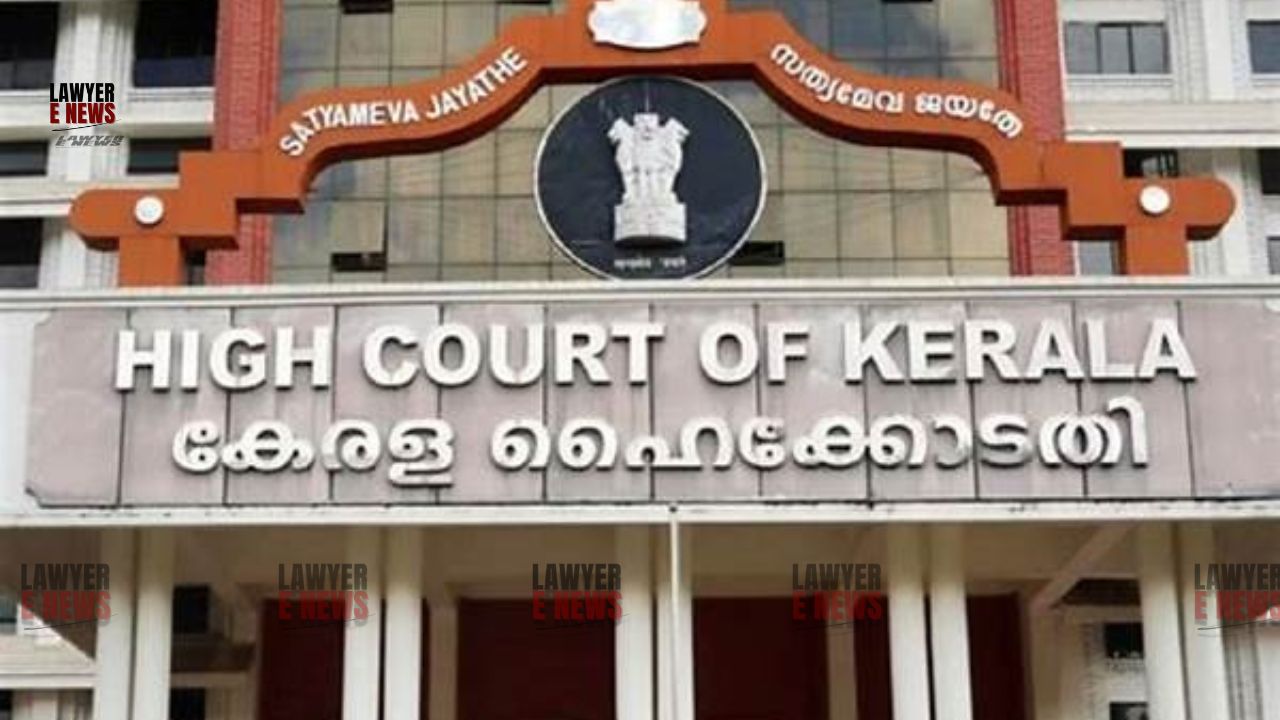
"Chancellor’s Powers Are Not Ceremonial But Supervisory And Binding On University Authorities", High Court of Kerala, in a significant ruling delivered a scathing verdict holding that the Chancellor of a University is not a ceremonial head but holds binding supervisory powers under the Kerala Veterinary and Animal Sciences University Act, 2010.
The Court observed that "the powers conferred upon the Chancellor under Section 9 are wide-ranging and mandatory in nature. The University authorities are duty-bound to comply with the directions issued by the Chancellor in the interest of the institution and its stakeholders."
In the same breath, the Court came down heavily on the University’s failure to prevent the ragging-related suicide of a veterinary student, noting that "despite stringent UGC anti-ragging regulations, the system failed a young student, resulting in a tragedy of immense proportions."
“Ragging Is Not Mere Misconduct, It Is An Abuse Of Human Rights” — Court Recalls Supreme Court Mandates
The case arose out of a tragic incident on February 18, 2024, when Sidharthan J S, a 21-year-old second-year student of BVSc and AH at the College of Veterinary and Animal Sciences, Pookode, was found hanging in the hostel bathroom. The Court noted that "the anti-ragging squad's report revealed that the deceased was subjected to brutal physical abuse, public humiliation, and harassment that undoubtedly qualifies as ragging under the law."
Citing the Supreme Court’s landmark judgment in University of Kerala v. Council of Principals of Colleges, Kerala, the Court reminded that “ragging is in essence a gross abuse of human rights... It is not a prank, not mischief, but a serious offence impacting life, dignity, and fundamental rights.”
The Court observed that "the guidelines issued by the Supreme Court and the UGC’s 2009 Anti-Ragging Regulations are not mere formalities but binding mandates, requiring institutions to take strict preventive and punitive measures."
Administrative Lethargy Amounted To Gross Negligence — Dean And Assistant Warden Found Guilty Of Dereliction Of Duty
The facts presented showed that both the Dean, Dr. M.K. Narayanan, and the Assistant Warden, Dr. Kanthanathan R, were directly responsible for maintaining discipline in the UG Men’s Hostel where the incident occurred. The Three-Member Internal Inquiry Committee, constituted by the University, concluded that both had “failed in their statutory duty to maintain discipline, ensure routine inspections, and enforce anti-ragging measures, leading to a breakdown in law and order inside the hostel.”
The report further stated, “No inmate was willing to reveal the matter or alert the authorities, which reflected a complete erosion of confidence in the University’s mechanisms of redress.”
The Chancellor-appointed Commission of Inquiry, headed by Justice A. Hariprasad (Retd.), was even more damning in its conclusions, observing that, “The Dean seldom visited the hostel. The Assistant Warden’s presence was negligible. In effect, senior students were ruling the roost.”
The report recorded that the Assistant Warden “failed to act even after being directly informed about the assault on Sidharthan during the night of February 16-17, 2024. Not taking him to the hospital, failing to inform authorities, and displaying complete insensitivity amounted to culpable negligence.”
“Supervisory Powers Of The Chancellor Are Not Cosmetic — They Are Meant To Ensure Accountability”
The core legal issue before the Court was whether the Chancellor’s directions under Section 9 of the KVASU Act could override the decisions of the Management Council, which had, shockingly, decided to revoke the suspension of the Dean and the Assistant Warden and transfer them to another college, despite the adverse findings.
Rejecting the petitioners' arguments that the Chancellor was merely a ceremonial figure, the Court held emphatically that "the Chancellor, as the head of the University under Section 9, has the power to order inquiries, demand reports, suspend decisions, and ensure that the objectives of the University are met. These powers are supervisory, binding, and essential for the healthy functioning of the institution."
The Court elaborated, “Section 9(7) of the KVASU Act is not an ornamental provision. It empowers the Chancellor to cause an inspection, require a report from the Board of Management, and issue binding directives. This is the backbone of administrative accountability within the University structure.”
The Court was critical of the University’s Management Council for “misreading a mere communication from the Chancellor dated 12.08.2024 as a bar to proceed with disciplinary action. It was nothing but a deliberate attempt to shield delinquent officials.”
Court's Stern Words: “The University's Decision To Reinstate The Petitioners Is Unjustified, Insensitive, And A Betrayal Of Student Safety”
Slamming the University's decision, the Court recorded, “Despite concurrent findings from both the Internal Committee and the Commission of Inquiry, the University shockingly proceeded to reinstate the very officials whose gross negligence led to the student’s death. Such a decision reflects administrative apathy and a complete abdication of responsibility.”
The Court held that “the letter dated 12.08.2024 from the Chancellor neither restrains nor prevents the University from continuing with disciplinary proceedings. The University’s contrary reading is untenable, dishonest, and legally incorrect.”
Directions And Conclusion — State Told To Frame Stricter Anti-Ragging Laws
Issuing unequivocal directions, the Court ordered that “the disciplinary proceedings against Dr. M.K. Narayanan and Dr. Kanthanathan R shall proceed forthwith and be concluded within three months.”
The Court further directed the University to “take strict action against the students involved in the ragging incident that led to the death of Sidharthan J S.”
Expressing deep concern over the failure of the existing legal framework to prevent ragging, the Court observed, “Though UGC Anti-Ragging Regulations are stringent, they have clearly failed to deter such heinous conduct. This Court strongly recommends that the State of Kerala frame a stringent anti-ragging law prescribing severe penalties to effectively eradicate this menace from educational institutions.”
The judgment concluded with a somber reflection: “The insensitivity of the University in handling this tragedy leaves this Court in shock and disbelief. The memory of a young life lost should compel the entire educational ecosystem to introspect and reform.”
Date of Decision: 25th June 2025