-
by sayum
29 August 2026 3:15 PM







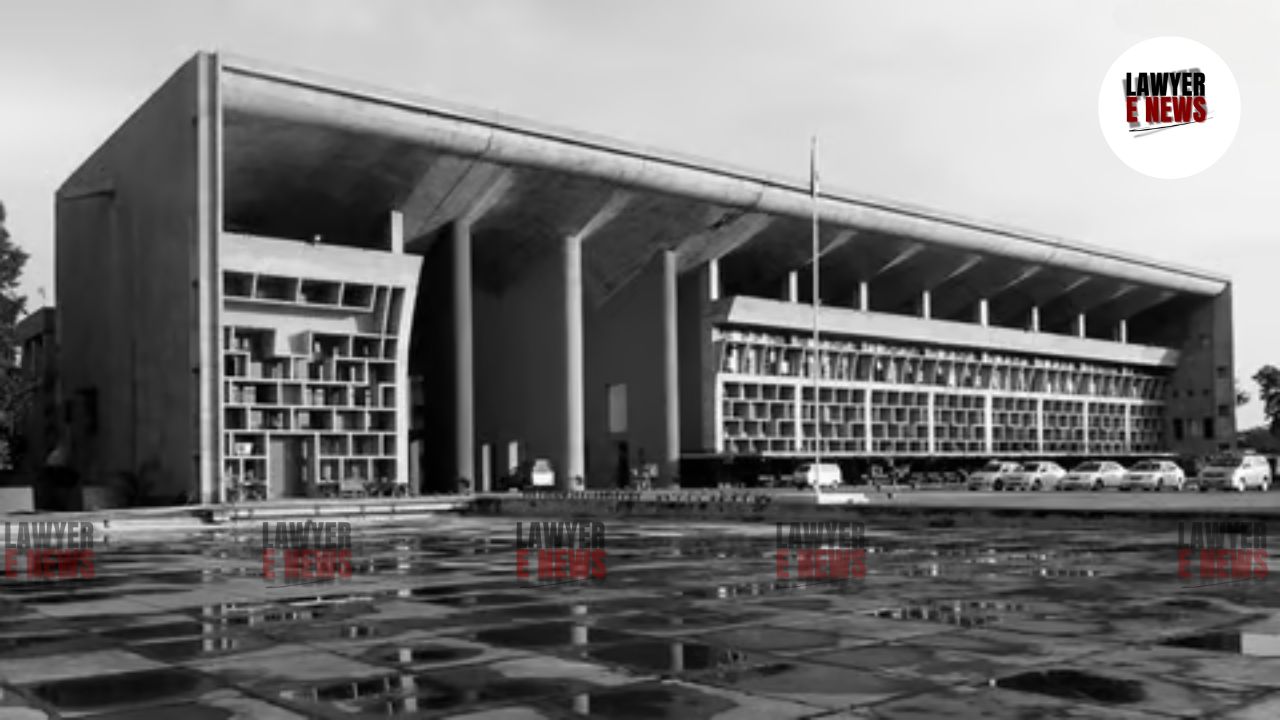
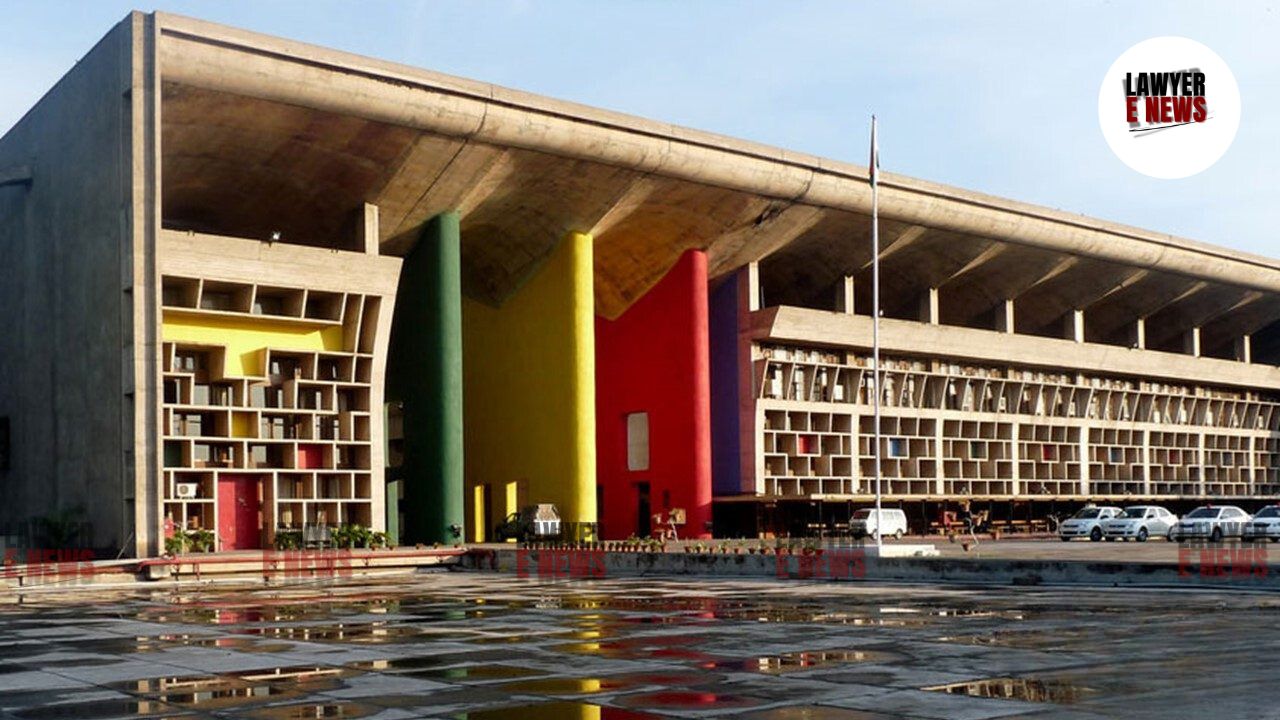
“This Repeated Abdication of Authority Erodes Public Faith in the Judiciary”: Punjab & Haryana High Court delivered a damning verdict, addressing a troubling delay in execution of a civil court decree passed over a decade ago. The High Court held that the conduct of the Executing Court reflected a “manifest abdication of authority” and a “complete disregard” for judicial discipline.
The case involved enforcement of a 2014 decree, wherein the State of Punjab was directed to acquire private land and pay compensation within six months, failing which possession was to be returned to the landowner. Despite the decree attaining finality in 2017, execution proceedings filed in 2015 remain unresolved even in 2025.
“The Executing Court is not a post office. It must enforce the decree with firmness and promptness,” the High Court observed, slamming the subordinate judiciary for submitting multiple applications seeking extensions based on what it called “untenable and vague excuses.”
“Decree Passed in 2014, Upheld in 2017, Yet in 2025 the Landowner is Still Seeking Justice”
The suit, filed by Kanwar Naresh Singh Sodhi, was decreed on 13.08.2014 by the Civil Judge (Senior Division), Guru Har Sahai. The judgment clearly mandated:
“A mandate is issued to the defendants to make the payment of compensation to plaintiff after acquiring the suit land in accordance with the provision of the Land Acquisition Act within a period of six months from today, failing which, the plaintiff will be entitled to recover the possession of the suit land from defendants.”
The decree was unsuccessfully challenged in appeal and then in RSA-3843-2017 before the High Court, which was dismissed on 02.08.2017. Yet, execution proceedings initiated by the decree-holder in 2015 have faced persistent obstruction, in what the Court labelled as “a classic case of judicial and administrative evasion.”
“Execution Court Has Repeatedly Sought Extension on Frivolous Grounds — This Is a Disturbing Pattern”
The High Court took serious note of five successive applications filed by Judicial Officers seeking more time to execute the decree. Each of these was supported by nearly identical claims — absence of police assistance, pending legal opinion, awaiting reports from SDMs, or expectations of settlement.
“Such kind of applications show incompetency,” the Court noted. “A bare perusal… shows that learned Executing Court has expressed its inability to issue direction to Senior Superintendent of Police and Deputy Commissioner to provide necessary police assistance… such conduct shows a casual approach.”
Even more disturbingly, the Court found that State officials and executing judges were effectively re-arguing the case on merits—a case that stood conclusively decided back in 2017.
“State's Repeated Affidavits Show No Intention to Comply—Only to Re-Litigate and Delay”
The Court severely criticized the affidavit filed by Ms. Hargunjit Kaur, IAS, Special Secretary, Public Works Department, Punjab. Instead of indicating compliance, the affidavit contested the decree and attempted to revive legal arguments already settled.
“Such an affidavit is wholly unwarranted from an officer of the rank of Secretary… it reflects an intentional effort to avoid compliance under one pretext or another.”
The Court further observed that despite multiple letters, affidavits, and hearings, “not a single para in the affidavit explains the prolonged non-execution of a final judgment.”
“Executing Court Has Acted More Like a Shield for the State Than a Guardian of Justice”
Taking serious exception to the passive attitude of the Executing Court, the Bench stated:
“Learned Judicial Magistrate First Class has shown his/her helplessness, weakness, lack of control and powerlessness… Such repeated expressions of inability… suggest a manifest abdication of authority.”
“This Court pains to observe that the Executing Court/judicial officers exercising the powers of Executing Court are not abiding by the oath administered to them at the time of their induction in judicial services.”
The Court emphasised that merely listing a case does not amount to progress when no action is taken to enforce a decree. The repeated indulgence to the State was, in the Court’s words, “not legally sustainable in the eyes of law.”
“The Law Is Clear: Decrees Must Be Executed Within Six Months” – Supreme Court Mandate Reaffirmed
The High Court placed reliance on the landmark Supreme Court judgment in Rahul S. Shah v. Jinendra Kumar Gandhi, (2021) 6 SCC 418, which mandates:
“The executing court must dispose of the execution proceedings within six months from the date of filing, which may be extended only by recording reasons in writing.”
Further, in Bhoj Raj Garg v. Goval Education and Welfare Society (SLP(C) No. 19654 of 2022), the apex court reiterated:
“Every effort should be made to dispose of the execution petition within the said time limit… The Execution Court is duty-bound to record reasons in writing when it is unable to dispose of the matter.”
The High Court found the present conduct in direct violation of these principles, stating that State and judiciary cannot conspire to deny justice to a successful litigant.
“This Is Not Mere Delay—It Is Evasion. It Is Systemic Injustice.”
The judgment concludes by emphasizing that justice delayed in such cases erodes faith in the entire legal system. The State, instead of complying with a final decree, was seen weaponizing procedure and misusing the executing machinery to stall compensation.
“This recurring pattern of seeking extension shows that the Executing Court is apparently trying to help the judgment debtors… the delay is solely attributable to respondent-State.”
The Court, while refraining from coercive action at this stage, made it absolutely clear that no further indulgence would be shown, and that compliance with the decree is not optional.
Date of decision: 01/08/2025