-
by sayum
10 August 2026 10:54 AM







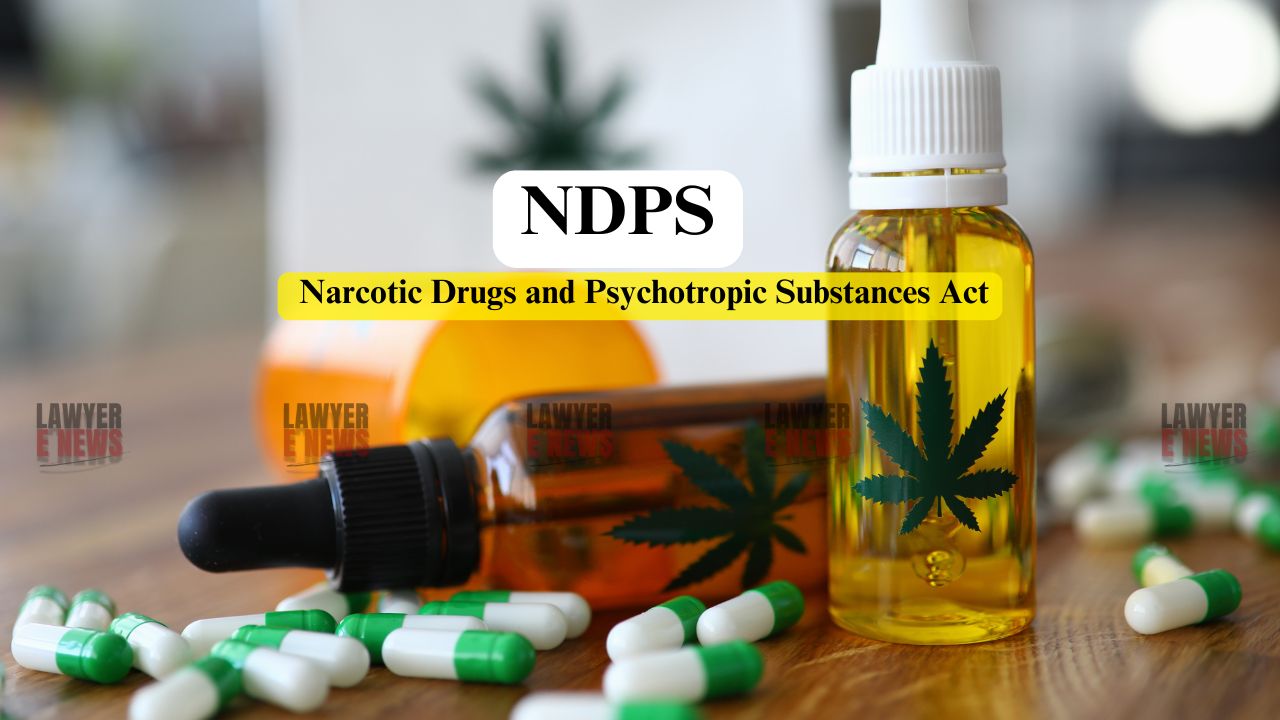
“Liberty Cannot Be Sacrificed When Trial Stagnates”, In a significant ruling Supreme Court of India quashed the Calcutta High Court's refusal to grant bail to two individuals arrested under the Narcotic Drugs and Psychotropic Substances Act, 1985. Setting aside the High Court’s March 11 order, the apex court observed that “phensedyl cough syrup is not a strong contraband substance” and that continued incarceration without trial violates the fundamental right to liberty. The Court held that the accused, having no serious criminal antecedents and facing an inactive prosecution, were entitled to bail.
The appellants had been arrested on April 22, 2024, in connection with FIR No. 08/2024 lodged at Andal GRPS, District Howrah. The case alleged offences under Sections 21(c), 27A, and 29 of the NDPS Act, following the seizure of phensedyl cough syrup—a codeine-based medicine. Seeking regular bail, they approached the Calcutta High Court, which rejected their application. The appeal before the Supreme Court challenged this rejection, emphasizing the negligible progress in trial and the nature of the substance recovered.
The Court recorded that the appellants had been in custody for over a year, during which “not even one witness has been examined,” though the prosecution listed only eleven witnesses. This fact formed a cornerstone of the Court’s intervention.
At the center of the appeal was whether bail could be denied under the NDPS Act when the contraband involved was of comparatively less severity, the accused had no significant NDPS-related criminal history, and the trial had seen no advancement.
The Court was unequivocal in its observation: “The contraband that has been recovered from the accused in general is only phensedyl cough syrup and not a strong contraband substance.” It noted that while stringent conditions under the NDPS Act limit bail, these conditions must be harmonized with constitutional guarantees—especially when delays impede the administration of justice.
Justice B.V. Nagarathna, writing for the bench along with Justice Satish Chandra Sharma, emphasized, “Considering the circumstances on record, in our view, the case for bail is made out.” The Court acknowledged that “so far as appellant No.1 is concerned, there are other criminal antecedents though not under the provisions of the NDPS Act,” but clarified that this alone could not justify prolonged detention without any trial activity.
Further, the bench reminded the State that liberty cannot be sacrificed at the altar of procedural stagnation. “If a direction is issued to the concerned Special Court, all endeavours would be made to conclude the trial within a reasonable period,” said the counsel for the State. But the Court found this assurance insufficient against the backdrop of total inaction.
The Supreme Court directed that “the appellants shall be produced before the concerned Trial Court as early as possible and the Trial Court shall release them on bail, subject to such conditions as it may deem appropriate.” The order also included a stern reminder to the appellants: “The appellants shall extend complete cooperation in the ensuing trial. The appellants shall not misuse their liberty and shall not in any way influence the witnesses or tamper with the material on record.”
The Court allowed the criminal appeal and cancelled the earlier order of rejection passed by the High Court, thus restoring the balance between procedural rigour and constitutional liberty.
This ruling underscores the Supreme Court’s evolving jurisprudence on bail under the NDPS Act. The decision sends a clear message: when the accused have no serious criminal history, the seized substance is not of high-level narcotic character, and the prosecution fails to progress the trial, liberty must prevail. The Court’s categorical observation—“phensedyl is not a strong contraband”—may well influence future bail considerations involving similar codeine-based substances.
Date of Decision: May 26, 2025