-
by sayum
10 August 2026 10:54 AM







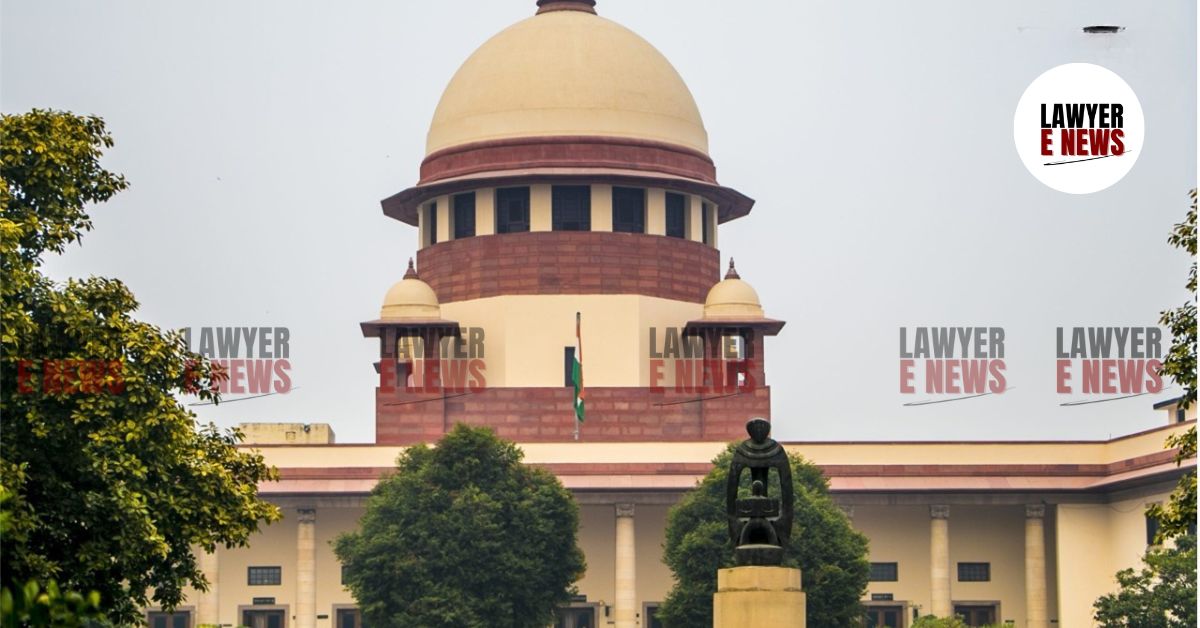
Unregistered Power of Attorney Cannot Confer Title; Sale Based on Revoked Authority Is Void: In a significant reaffirmation of procedural fairness and property law principles, the Supreme Court of India underscores the sanctity of title transfer rules and the limited scope of summary dismissal. Quashing a Rajasthan High Court order that had rejected the plaint in entirety under Order VII Rule 11 of the CPC, the Court emphasized that “documents executed on the basis of a revoked and unregistered power of attorney are legally void” and that “triable issues of title, fraud, and mortgage must be adjudicated by the civil court—not prematurely shut out.”
The Court Begins by Declaring: “Rejection of the plaint under Order VII Rule 11 is permissible only where the plaint, on its face, fails to disclose a cause of action or is barred by law.”
The appellant company had filed a suit for declaration, possession, and injunction in respect of agricultural land situated in Village Pal, Jodhpur. In 2014, the company’s board authorized Respondent No.1—who had extended a loan of ₹7.5 crores—to act via an unregistered power of attorney and agreement to sell. The company later revoked this authority in May 2022. Despite the revocation, Respondent No.1 executed sale deeds in July 2022 transferring the land to himself and other private respondents. These were subsequently registered, and names mutated in revenue records.
The company approached the civil court seeking to declare the sale deeds void, asserting that the power of attorney was revoked and unregistered, and that the transactions were fraudulent. The trial court found triable issues and refused to reject the plaint. However, the High Court reversed this, holding that the suit disclosed no cause of action. The Supreme Court found this to be an erroneous and premature exercise of jurisdiction.
“Unregistered Documents Cannot Transfer Title; Their Revocation Prior to Sale Makes the Transaction a Legal Nullity,” Rules the Apex Court
Citing long-established precedents including Suraj Lamp & Industries v. State of Haryana, the Court held:
“Unregistered agreements to sell or power of attorney documents do not convey title or create interest in immovable property. Such transactions are legally insufficient to complete a sale unless duly registered and followed by proper conveyance.”
Further, the Court ruled that the subsequent revocation of the authority extinguished any rights the attorney-holder might have claimed to execute the sale. It was categoric:
“In the absence of registration and following revocation, Respondent No.1 had no valid authority to execute the sale deeds, rendering the transactions void ab initio.”
The sale deeds dated July 13 and 14, 2022, were executed after the revocation dates of May 24 and 27, 2022. The Court noted this timeline as crucial to establish that Respondent No.1’s acts were without legal sanction.
“If Even One Cause of Action Survives, the Suit Must Proceed; Rejection of Entire Plaint Is Unsustainable,” Holds the Court
The bench invoked its recent judgment in Central Bank of India v. Prabha Jain to remind courts that Order VII Rule 11 does not allow partial rejection based on a perceived weakness in one part of the case. The Supreme Court warned:
“Selective severance of reliefs is impermissible where distinct causes of action are independently pleaded and supported by separate facts.”
The High Court, in the Supreme Court’s words, “erred in treating the second cause of action—relating to sale deeds executed after the revocation—as merely academic” and “proceeded to reject the entire plaint without judicial examination of the triable issue.”
“Issues of Title Must Be Tried by Civil Courts; Revenue Entries and Mutation Are No Substitute for Adjudication of Ownership”
Responding to the respondents’ argument that their names had been mutated in revenue records following registration of the sale deeds, the Court emphasized:
“Revenue entries are for fiscal purposes and do not confer title. Title to immovable property must be established before a civil court.”
The Court also dismissed jurisdictional objections under Section 207 of the Rajasthan Tenancy Act, observing:
“This is not a suit relating to khatedari rights or tenancy—it concerns ownership and sale. Thus, the civil court retains exclusive jurisdiction.”
“Even a Deficiency in Court Fee Must First Be Allowed to Be Cured,” Supreme Court Reaffirms Procedural Protection
On the point of insufficient court fee, the Court invoked Tajender Singh Ghambhir v. Gurpreet Singh, reiterating that:
“The scheme of the Court Fees Act mandates that the plaintiff be afforded an opportunity to make good any deficiency. Rejection without such an opportunity violates procedural fairness.”
By setting aside the High Court’s rejection of the plaint and restoring the trial court’s order, the Supreme Court has laid down a firm precedent against casual dismissal of civil suits on technical grounds, especially in cases involving serious and contested issues of title, fraud, and property rights. The Court concluded:
“The plaint is directed to be taken on file of the trial court, which shall proceed in accordance with law, uninfluenced by any observations made herein.”
Date of Decision: May 23, 2025