-
by sayum
29 August 2026 3:15 PM







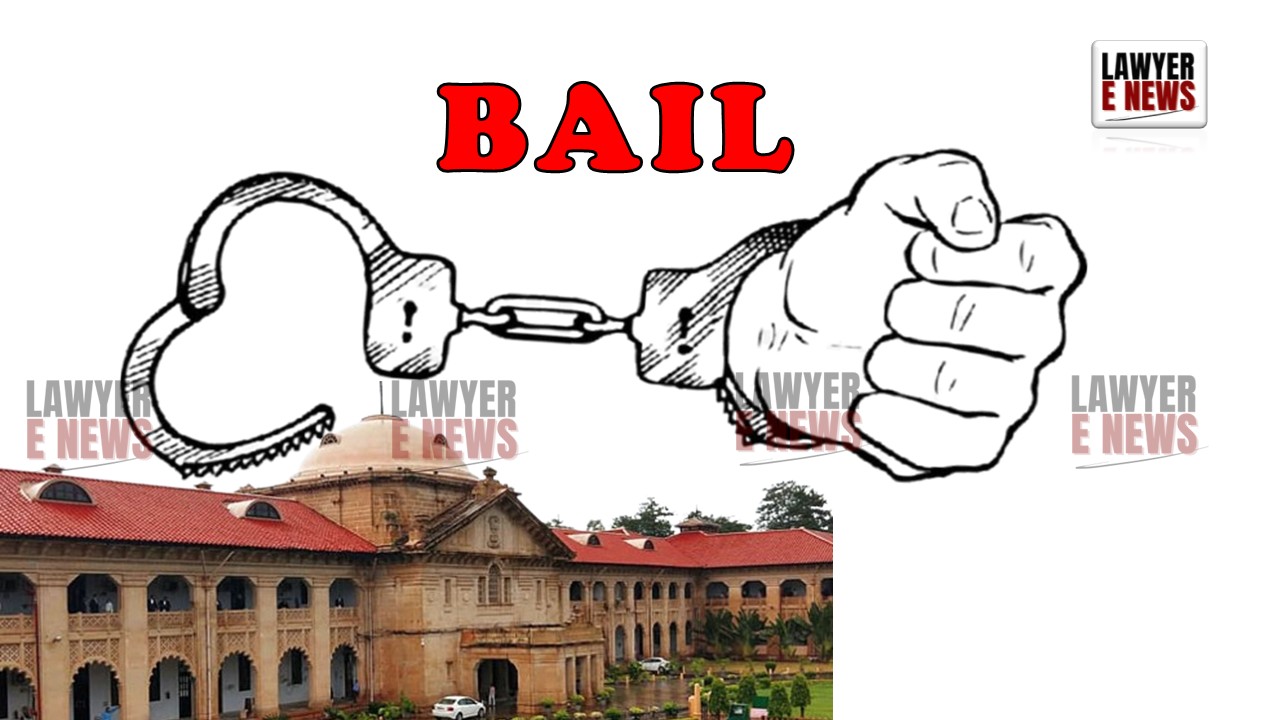
“No medical report supports the prosecution story… essential ingredients to constitute the offence under the SC/ST Act are lacking”—In a significant decision delivered Allahabad High Court allowed the bail appeal of Abdul Raseed, accused of gangrape and offences under the SC/ST (Prevention of Atrocities) Act, citing “material contradictions in the victim’s statement”, absence of medical corroboration, and failure to establish the intent required under the SC/ST Act.
Justice Shekhar Kumar Yadav, hearing the matter in Criminal Appeal No. 4122 of 2025, observed that the rejection of bail by the Special Judge (SC/ST Act), Kushinagar was “suffering from infirmity and illegality”, and that the accused had “made out a case for bail”.
“Victim’s Own Statements Contradict the Prosecution Case”: Court Finds Bail Denial Unjustified
The case involved serious allegations against the appellant Abdul Raseed under various sections of the Indian Penal Code, including Sections 376 and 376D, and sections of the Scheduled Castes and Scheduled Tribes (Prevention of Atrocities) Act. However, the Court held that, based on the material on record at the bail stage, the evidentiary basis was too weak to justify continued incarceration.
Justice Yadav noted: “As per statement of the victim recorded under Sections 180 and 183 of BNSS, there are material contradictions… No medical report supports the prosecution story.”
He further held that: “Essential ingredients to constitute the offence under the SC/ST Act are lacking in the matter.”
The FIR in Case Crime No. 393 of 2024 was lodged at Ahirauli Bazar Police Station, Kushinagar, alleging that on 10 May 2024, the appellant and one Abdul Aziz forcibly entered the victim's home, physically assaulted her, and subjected her to sexual violence. It was alleged that one accused tore her clothes while the appellant sexually assaulted her, after which both fled the scene.
The case invoked charges under:
Sections 147, 323, 376, 452, 504, 506, and 376D of IPC
Sections 3(1)(da), 3(1)(ha), and 3(2)(v) of the SC/ST Act
Sections 180 and 183 of the Bharatiya Nagarik Suraksha Sanhita, 2023
The appellant’s two bail applications were rejected by the Special Judge (SC/ST), on 13 January 2025 and 5 February 2025, prompting the present appeal under Section 14-A(2) of the SC/ST Act.
The Court was called upon to determine whether, at the bail stage, the evidence justified denial of liberty under serious penal provisions. It specifically considered whether:
The prosecution's allegations were corroborated by evidence;
The statutory requirements under the SC/ST Act were satisfied;
The prolonged pre-trial detention was warranted.
Justice Yadav held that the prosecution version failed to inspire confidence, remarking:
“The prosecution story is totally false and fabricated… there are material contradictions in the victim’s statement.”
He also emphasized the absence of medical evidence, stating: “No any medical report supports the prosecution story.”
On the SC/ST Act application, the Court was unequivocal: “Essential ingredients to constitute the offence under the SC/ST Act are lacking.”
This indicates the absence of caste-based motive, which is a critical element under Sections 3(1)(da), 3(1)(ha) and 3(2)(v) of the Act.
The Court also recorded that:
“Trial has not been started as yet and there is no possibility of early conclusion.”
The appellant had no prior criminal history and had been in custody since 26 November 2024.
Setting aside the earlier rejection orders, the High Court allowed the appeal and granted bail with strict conditions to ensure non-interference with the judicial process.
“The impugned order suffers from infirmity and illegality… the same is liable to be set-aside and the appeal is liable to be allowed.”
The Court directed that Abdul Raseed be released on a personal bond and two sureties, with conditions including:
Appearance before trial court on each date unless exempted;
No tampering with evidence or intimidation of witnesses;
No commission of similar offences;
No inducement or threat to anyone acquainted with the facts.
Justice Yadav added a cautionary note: “In case of breach of any of the above conditions, the prosecution shall be at liberty to move bail cancellation application before this Court.”
The judgment reflects a cautious but constitutionally sound approach to bail in sensitive criminal cases. While acknowledging the seriousness of the allegations, the Allahabad High Court reiterated that bail cannot be refused solely on the nature of the charge, especially when the evidence is inconsistent or weak, and the trial is unlikely to conclude promptly.
By underscoring the lack of prima facie compliance with SC/ST Act requirements and emphasizing procedural fairness, the Court reaffirmed the presumption of innocence and the principle of bail as a rule, not an exception, even in cases involving serious charges.
Date of Decision: 13 August 2025