-
by sayum
08 August 2026 1:54 PM







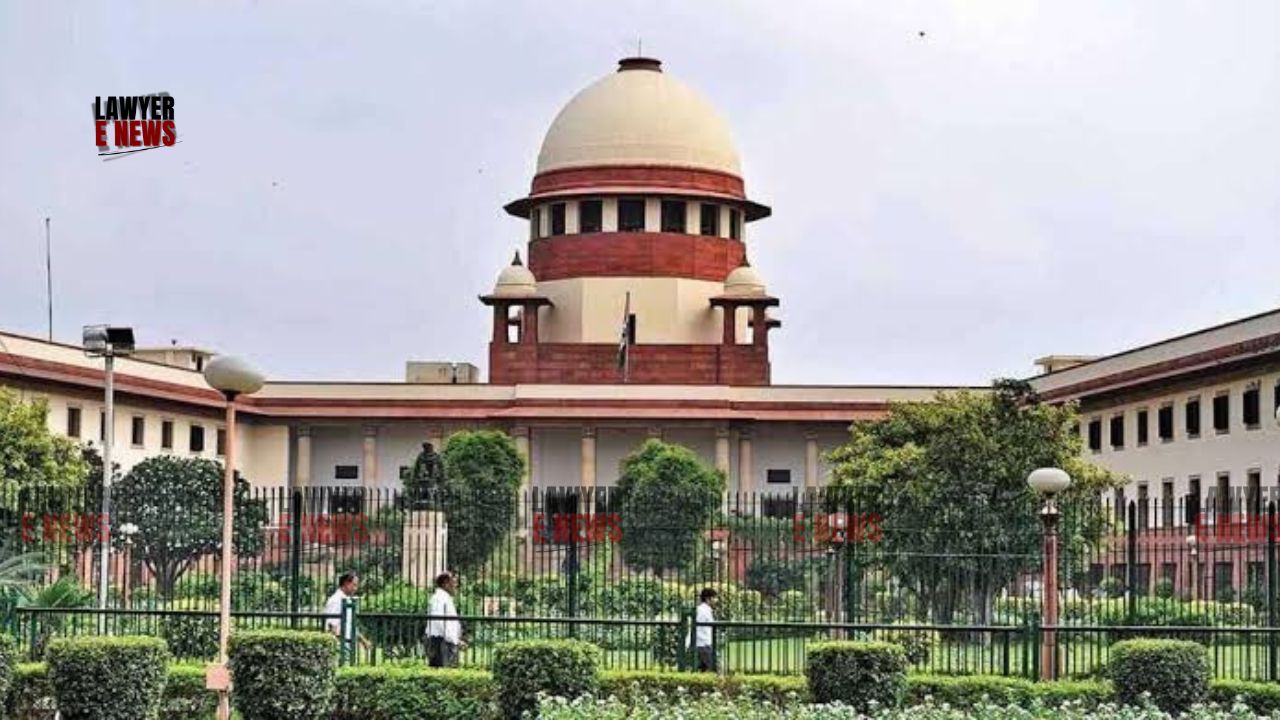
“The employer’s discretion ends where the employee’s dignity begins… The law does not permit the severance of service by the stroke of a medical certificate without first exhausting the possibility of meaningful redeployment.”, Supreme Court of India delivered a landmark decision, significantly reinforcing the rights of employees who acquire disabilities during service. The Court set aside the Telangana High Court’s decision that had upheld the termination of a colour-blind driver without consideration for alternate employment and directed the State Road Transport Corporation (TSRTC) to reinstate the appellant in a suitable post.
This judgment reaffirms the enforceability of binding industrial settlements under the Industrial Disputes Act, 1947 and underlines the constitutional obligation of employers to ensure dignity and equal treatment in cases involving disability acquired during employment.
CH. Joseph, the appellant, was appointed as a driver in the erstwhile Andhra Pradesh State Road Transport Corporation (APSRTC) on 01.05.2014. During a routine medical examination, he was found to be colour blind and subsequently declared unfit for the role of a driver. His appeal to the corporation’s medical board was rejected, and he was retired from service on 06.01.2016 under Regulation 6A(5)(b) of the APSRTC Employees (Service) Regulations, 1964.
Aggrieved by the denial of alternate employment, Joseph invoked Clause 14 of a 1979 Memorandum of Settlement (MOS) between APSRTC and its recognised union, which explicitly promised alternative jobs to drivers found colour blind. He approached the High Court, which initially ruled in his favour, but this was later overturned by the Division Bench relying on the Supreme Court's judgment in B.S. Reddy (2018).
Does Clause 14 of the 1979 Industrial Settlement Remain Binding?
The Court held emphatically in favour of the appellant: “Clause 14 of the binding Memorandum of Settlement dated 17.12.1979… specifically provides for alternate employment to drivers declared colour blind, with pay protection and continuity of service. This clause remains valid and enforceable.”
The Court rejected the TSRTC’s contention that the 1986 settlement superseded the 1979 MOS, observing: “A general provision does not override a specific provision — the 1979 clause continues to govern the case of colour-blind drivers.”
It emphasized that internal circulars from 2014 and 2015, which withdrew the alternate job benefit, “are administrative instructions that cannot override binding service conditions created by a statutory settlement.”
Was There a Bona Fide Assessment of Alternate Employment?
The Bench castigated the corporation’s failure to explore non-driving roles:
“Retirement on medical grounds must be a measure of last resort, only after the employer exhausts all reasonable avenues for redeployment.”
Despite the appellant requesting reassignment to a post like “Shramik,” there was no vacancy analysis or file noting, prompting the Court to call the retirement order a “substantive illegality that violates the Appellant’s right to livelihood and equal treatment.”
Applicability of Section 47 of the Persons with Disabilities Act, 1995
Though the High Court relied on the B.S. Reddy case, which held that colour blindness is not a recognized disability under the 1995 Act, the Supreme Court clarified that:
“The Appellant’s rights do not solely emanate from Section 47, but rather from a contractual settlement which carries independent statutory force under Section 18(3) of the Industrial Disputes Act, 1947.”
However, the Court went further, reaffirming its broader constitutional interpretation:
“The duty to reasonably accommodate such employees is not just a matter of administrative grace, but a constitutional and statutory imperative, rooted in the principles of non-discrimination, dignity, and equal treatment.”
It cited Kunal Singh v. Union of India (2003) 4 SCC 524 and Mohamed Ibrahim v. CMD (CA No. 6785/2023) to assert that even in cases not covered by statutory definitions, employers are duty-bound to provide alternate roles where feasible.
The Supreme Court categorically invalidated the High Court’s decision and directed the following:
“The Respondent–Corporation is directed to appoint the Appellant to a suitable post, consistent with his condition, and on the same pay grade as he held on 06.01.2016, within eight weeks from the date of receipt of this order.”
Additionally: “The Appellant shall be entitled to 25% of the arrears of salary, allowances, and benefits from the date of his termination to the date of reinstatement. The intervening period shall be reckoned as continuous service for all purposes.”
This judgment not only restores justice to an individual worker but also sends a powerful signal to public employers regarding the sanctity of industrial settlements and the constitutional duty to protect the livelihood of disabled employees. As the Court poignantly remarked:
“Judicial restraint must not become an excuse for disengagement from injustice… When an employee is removed from service for a condition he did not choose, and where viable alternatives are ignored, the Court is not crossing a line by intervening—it is upholding one drawn by the Constitution itself.”
Date of Decision: August 1, 2025