-
by sayum
29 August 2026 9:28 AM








"Even a Singular Omission of Material Fact Justifies Dismissal of Election Petition at the Threshold Under Order VII Rule 11 CPC", Bombay High Court (Ordinary Original Civil Jurisdiction) dismissed an election challenge brought by Mr. Ganesh Kumar Yadav, the runner-up in the 2024 Maharashtra Assembly elections for 179 Sion–Koliwada Constituency, against the elected candidate Capt. R. Tamil Selvan (Respondent No.1).
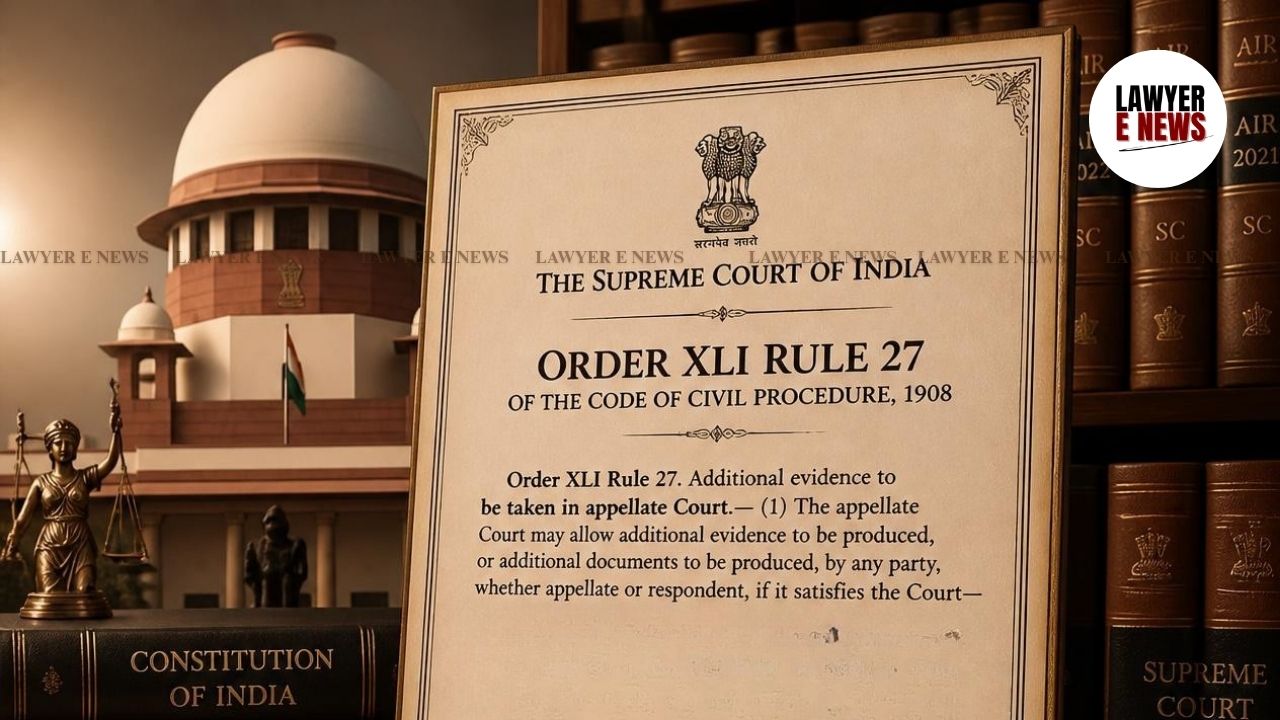
The Court, in a detailed 33-paragraph judgment authored by Justice Milind N. Jadhav, allowed the respondent’s application under Order VII Rule 11 CPC, holding that the petition failed to disclose a cause of action under Section 100(1)(d)(iv) of the Representation of the People Act, 1951 (“RP Act”). The Court found the petition lacked material facts, failed to demonstrate how the alleged omissions materially affected the election result, and attempted to rely on documents not originally pleaded.
“Election Petition Must Contain the Entire Cause of Action on the Face of Itself; It Cannot Be Built at Trial”
The Court emphasized the sacrosanct nature of pleadings in election petitions, stating:
“If Petition has to be maintained under Section 100(1)(d)(iv)… then entire cause of action in the form of specific material facts… needs to be stated specifically in the Petition.” (Para 12)
Citing Section 83(1)(a) of the RP Act, the Court reiterated that an election petition “shall contain a concise statement of the material facts” on which the petitioner relies, and failure to meet this requirement renders the petition non-maintainable.
The petitioner had sought to invalidate the respondent’s election on grounds of alleged non-disclosure in Form No.26, including:
A Rs. 90 lakh housing loan allegedly not disclosed,
A Rs. 2.72 crore arbitral award, and
Omission of various other financial liabilities reflected in CIBIL/CRIF reports.
However, the Court held that the petitioner not only failed to annex these documents with the original petition, but also did not establish how such omissions materially affected the election outcome.
“Materially Affected Result Is the Sine Qua Non Under Section 100(1)(d)(iv); Mere Allegations of Suppression Are Not Enough”
On the crucial issue of the arbitral award, the Court noted that the liability arising under the award had been stayed by judicial order, and hence, did not constitute a due or enforceable liability requiring disclosure.
“Once the Arbitration Award is stayed by the Competent Court… liability is not required to be disclosed as the said liability is not crystallised.” (Para 25)
Similarly, on the issue of the housing loan, the Court found that the loan had been availed solely by the respondent’s daughter, though the respondent was a co-applicant. Since the property ownership and loan servicing rested exclusively with the daughter, the Court held:
“It is prima facie seen that flat is acquired by availing the above loan by the daughter of Respondent No.1… there is no ambiguity about Respondent No.1’s case.” (Para 26)
Further, the Court found no discrepancy in the respondent’s disclosure of liabilities worth Rs. 51.97 lakhs, which included all loans and guarantees as per statutory requirements.
“Pleadings Cannot Be Improved Later; Petition Must Succeed or Fail on the Original Statement of Facts”
One of the most striking findings of the Court was the petitioner’s attempt to rely on documents like CIBIL and CRIF reports not annexed to the original petition but introduced during reply affidavits. The Court found this practice impermissible:
“Petitioner cannot improve his case in further pleadings… which is the attempt of Petitioner before me.” (Para 27)
Noting that the Returning Officer had accepted the nomination after scrutiny, and that no objection had been raised during the process, the Court held:
“Once scrutiny is held by Returning Officer and he endorses each nomination paper… his decision of accepting the same… is a statutory process.” (Para 28)
“Election Law Is a Code Unto Itself—Strict Compliance with Statutory Framework Is Not Optional”
The Court relied extensively on Supreme Court precedents, especially Jyoti Basu v. Debi Ghosal (AIR 1982 SC 983), and held that election petitions are not actions in equity, but are purely statutory proceedings, requiring rigorous adherence to the RP Act’s provisions.
Citing Mangani Lal Mandal v. Bishnu Deo Bhandari, the Court reiterated:
“A mere non-compliance or breach… does not result in invalidating the election… The sine qua non… is further proof that such breach… has resulted in materially affecting the result…” (Quoted in Para 28)
“Even a Singular Omission of Statutory Requirement Must Entail Dismissal”
In a concluding passage reaffirming the seriousness of statutory requirements, Justice Jadhav observed:
“Even a singular omission of statutory requirement must entail dismissal of the Election Petition by having recourse to provisions of Order VII Rule 11 of CPC.” (Para 31)
Consequently, the application for rejection of the petition was allowed, and the election petition was dismissed in limine.
“Election Petition No.36 of 2025 is accordingly dismissed.