-
by sayum
29 August 2026 3:15 PM







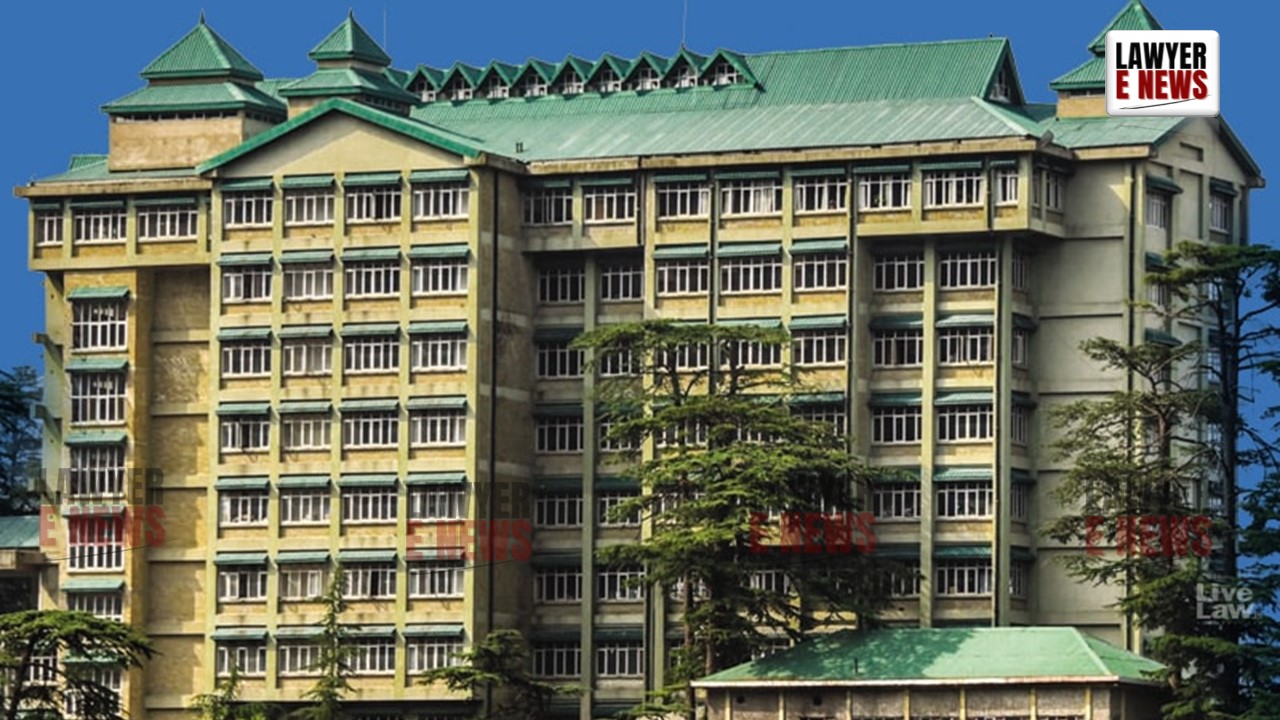
“An Inordinate Delay in Conclusion of Trial Would Infringe the Right of an Accused Guaranteed Under Article 21” — In a significant decision High Court of Himachal Pradesh granted regular bail to Rakesh Kumar, who had been incarcerated for over 16 months in connection with a murder case under Section 302 read with Section 34 IPC, registered in FIR No. 99 of 2023, Police Station Baddi, District Solan. While the nature of the offence remained grave, the Court observed that prolonged pre-trial incarceration coupled with slow judicial process constitutes a serious violation of the fundamental right to a fair and speedy trial.
The Court eloquently underscored the human cost of custodial delay by quoting Oscar Wilde’s haunting verse from The Ballad of Reading Gaol:
“All that we know who be in jail / Is that the wall is strong; / And that each day is like a year, / A year whose days are long.”
A Brutal Killing Allegedly Motivated by Harassment
The prosecution alleged that Rakesh Kumar, along with his co-accused Shiv Kumar, abducted the deceased, Devinder Kumar, on 11th April 2023. The two allegedly beat him first with fists, then with bamboo sticks purchased at Chakka Road, before finally dumping his body at NH 105 Malpur, near a petrol pump. The deceased reportedly died from the injuries inflicted during this series of assaults.
It was further alleged that the deceased had hacked the petitioner’s Instagram account and sent vulgar messages to the petitioner and his sister, which allegedly triggered the fatal assault. The investigation was completed, and the challan was filed on 3rd July 2023.
“Right to Speedy Trial Is a Fundamental Right Under Article 21” — Court Decries Judicial Delay
Despite the seriousness of the offence, the Court turned its attention to the constitutional right of the accused to a speedy trial, lamenting the delay in progress. Of the 52 witnesses listed by the prosecution, only 12 had been examined over the course of a year, and the matter was now listed for examination of witnesses again on 6th and 7th November 2025.
Observing the stagnation in the trial, Justice Bipin Chander Negi emphatically held:
“The accused has a right for a speedy trial. The same emanates under Article 21 of the Constitution of India.”
Relying on precedents such as Umarmia Alias Mamumia v. State of Gujarat (2017) 2 SCC 731 and Zahur Haider Zaidi v. CBI (2019) 20 SCC 404, the Court reiterated that custody beyond a reasonable period without conclusion of trial amounts to a denial of liberty.
The Court further quoted from the Supreme Court’s 2021 ruling in Balwinder Singh v. State of Punjab:
“An accused has a right to a fair trial... an inordinate delay in conclusion of the trial would infringe the right of an accused guaranteed under Article 21 of the Constitution.”
“Personal Liberty Is a Very Precious Fundamental Right” — Bail Not Punitive or Preventive, But Meant to Secure Justice
In powerful terms, the Court reinforced the guiding principles of bail jurisprudence:
“Personal liberty is to be curtailed only when it becomes imperative, according to the peculiar facts and circumstances of each case.”
Reiterating that bail is not meant to be punitive, the Court stated:
“The object of bail is to secure the attendance of the accused person at his trial by reasonable amount of bail. The object of bail is neither punitive nor preventative.”
The judgment also acknowledged the psychological and physical deprivations suffered by an undertrial prisoner, emphasizing that such incarceration prevents the accused from contributing to the preparation of his defence, while simultaneously placing emotional and economic burden on his innocent family.
“Nothing Unfavourable Has Been Stated Regarding Petitioner’s Conduct or Social Circumstances” — Court Orders Conditional Release
Justice Negi noted that Rakesh Kumar is a permanent resident of District Solan, and the State had not expressed any apprehension of flight or tampering with evidence. The Court observed:
“It can safely be inferred that the petitioner is not likely to betray the confidence that the Court may place in him.”
Accordingly, the Court exercised its discretion and directed that Rakesh Kumar be released on bail upon furnishing personal bond of ₹1,00,000/- with one local surety, while laying down strict conditions to ensure attendance at trial, non-interference with witnesses, and non-abscondence.
A Thoughtful Balance Between Law’s Rigour and Liberty’s Demand
The High Court’s decision in Rakesh Kumar vs. State of Himachal Pradesh reflects a deep understanding of the tension between the seriousness of criminal allegations and the constitutional guarantee of personal liberty. Even in a Section 302 IPC case, where public sentiment often leans toward incarceration, the Court prioritized due process, fair trial, and the presumption of innocence.
By citing Oscar Wilde, the Court not only rendered a legal verdict, but also a moral and humane reminder of the value of time, dignity, and liberty — especially for those awaiting their day in court.
Date of Decision: 19th August, 2025